What a Decades-long Study of Arsenic Poisoning Can Tell Us About Human Health
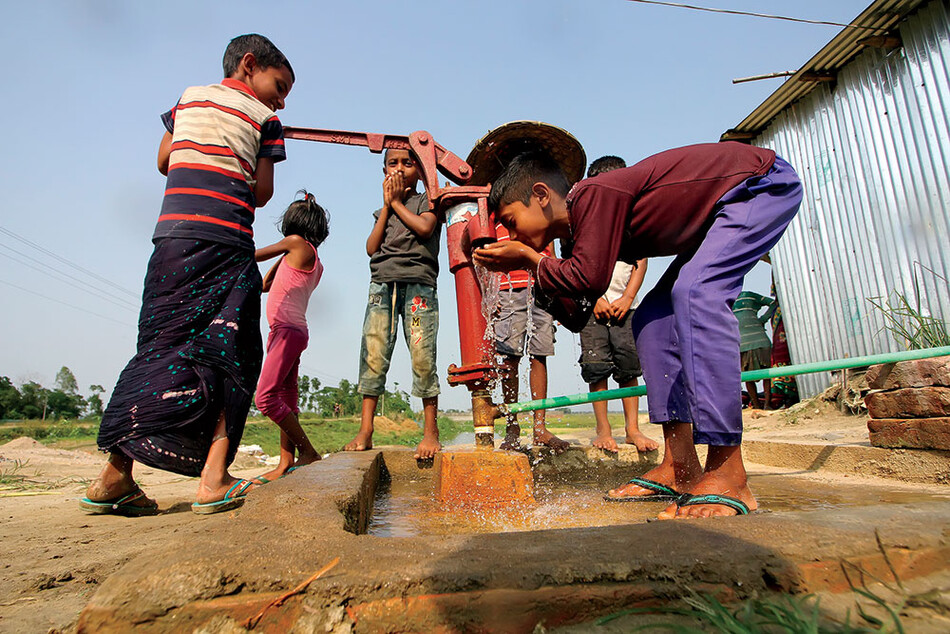
More than twenty-five years ago, an interdisciplinary team of Columbia public-health experts, doctors, and earth scientists set off to Bangladesh to help solve what the World Health Organization called “the largest mass poisoning in history.” Decades earlier, international aid workers had encouraged Bangladeshis to dig wells rather than rely on polluted rivers and streams for drinking water. Only when people started developing painful skin lesions — a hallmark of advanced arsenic poisoning — did scientists realize that Bangladesh sits atop some of the world’s most arsenic-contaminated aquifers. By then, tens of millions of people were affected.
So, what was to be done? To help the country respond, the Columbia researchers had to answer a multitude of questions that had never been investigated before. Chief among them: What are the health effects of arsenic exposure at various levels of concentration, and what is the most reliable way for people to get clean water?
The Columbia team got to work testing wells in the semirural region of Araihazar, population seventy-five thousand, where they also set up a health clinic. The people whose wells tested as contaminated were then directed to other nearby wells that were arsenic-free, with the aim of sharing the clean water. The scientists eventually succeeded in helping about two-thirds of the local residents get access to clean groundwater. However, some people with unsafe wells did not stop using them, even when offered subsidies to dig new ones. “There were sometimes cultural or personal reasons, like they just preferred the way their water tasted or were averse to change,” says Joseph Graziano, a Columbia pharmacologist and environmental-health scientist who oversaw the project for many years. Although these outcomes were often tragic, the team’s work would ultimately reveal the health consequences of chronic exposure.
The Columbia project has evolved over time. After the development of well-testing, drilling, and public-education programs that have directly benefited tens of thousands of people, many of the team’s core initiatives have been transferred to locals. But several faculty members continue to work in Bangladesh, advising the government on how their interventions can be scaled up to help others who still lack clean water, and the original team continues to publish findings from a long-term health study. Here’s a snapshot of what they’ve learned.
Our bodies are exceptionally sensitive to chemical elements
When the Columbia team first arrived in Bangladesh in 2000, scientific knowledge of chronic arsenic exposure was limited. “The dogma was that it caused skin lesions and contributed to certain types of cancer, but that was about it,” says Graziano.
He and his colleagues would eventually stun the medical community with what they found. Beginning in the mid-2000s, the Columbia team would show in dozens of papers that arsenic causes not only cancers of the skin, liver, bladder, and lung, but also heart disease, diabetes, fatty-liver disease, and a range of neurocognitive problems.
These discoveries have since prompted the scientific community to look more closely at the health risks posed by exposure to chemical elements in general. For example, scientists have in recent years found that even trace amounts of lead and cadmium, which are ubiquitous contaminants in the industrialized world, significantly increase one’s risk of heart disease, much as arsenic does. And research led by Allison Kupsco and Ana Navas-Acien, both Columbia professors of environmental-health science, has shown that members of American Indian communities are aging more rapidly, in part as a result of exposure to arsenic, cadmium, selenium, and other elements in their water supplies and other sources.
Children are at greatest risk
Some of the cruelest consequences of arsenic exposure are inflicted on children. In a series of groundbreaking papers, the Columbia researchers found that kids who drink water containing arsenic are likelier to have cognitive deficits, developmental delays, and metabolic disorders such as type 1 diabetes. And while these effects are especially pronounced in Bangladesh, where groundwater arsenic levels can be fifty times higher than the WHO’s recommended safety standards, research has shown that even drinking water with arsenic concentrations that do not exceed legally established limits can affect a child’s neurocognitive development. One study led by Columbia psychiatrist Gail Wasserman found that schoolchildren in Maine showed significant declines in intelligence after exposure to levels of arsenic that are commonly found in many parts of the US. Sustained exposure to arsenic, the authors found, shaved five to six points off children’s IQ scores.
What happens when the exposure stops
While the neurocognitive effects of arsenic poisoning in early childhood are thought to be permanent, a recent study published in the journal JAMA by Yu Chen ’05PH and several other members of the Columbia team provides hope for people experiencing other harms. It shows that adults in Bangladesh who drank arsenic-contaminated water for decades saw their physical health largely recover when they finally stopped, with their once sky-high risk of dying from cancer, heart disease, and other chronic ailments returning to normal. “I was extremely surprised by the magnitude of the finding,” says Graziano. “It actually brought tears to my eyes.”
Lex van Geen, a Columbia earth scientist who still works in Bangladesh studying the geological forces that cause arsenic to seep into aquifers, hopes that the new findings will motivate people in the country to use a new smartphone app that he and several colleagues have developed. “It estimates how deep you’ll need to dig a well to reach clean water in a given location, based on geo-referenced data about well depths and water safety that the government has collected over the years,” he says. “Most Bangladeshis now have smartphones, so we hope this will change a lot of people’s lives.”