When the debut issue of Life magazine hit newsstands on November 23, 1936, sales hopes at Time Inc. were guarded. The Great Depression was in its seventh year, and though recovery was flickering — that same day, key stock-market indicators briefly touched pre-Crash levels — Time Inc. was playing it safe: Founder and publisher Henry Luce, whose influential news weekly Time magazine had a circulation of 640,000, ordered a print run for Life of 466,000, including some 250,000 for newsstands. On its face, Life was an irresistible bargain: a glossy, oversized, photo-filled ninety-six-page magazine whose mission, in Luce’s words, was for the reader “to see life; to see the world … to see and to take pleasure in seeing; to see and be amazed; to see and be instructed.” All of that seeing, for just a dime — the cost of two bottles of soda pop or a gallon of gas.
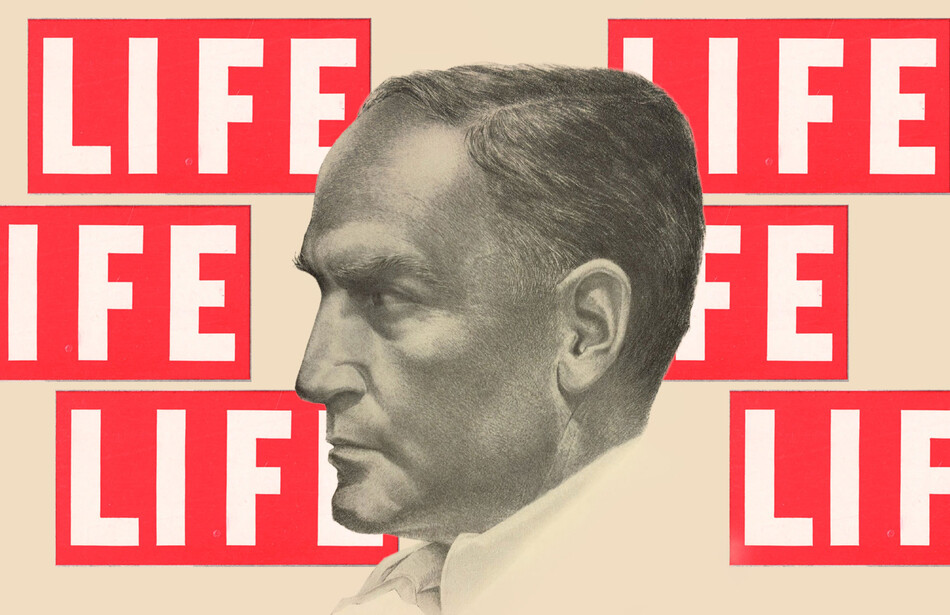
Somewhere up in the Time Inc. offices in the Chrysler Building that cold November day, Daniel Longwell 1922CC anxiously awaited the returns. How would Life do, out in the wild? As executive editor, Longwell, thirty-seven, whom Life’s managing editor, John Shaw Billings, once described as “a bundle of nerves and tall talk,” was the creative force behind Life, an editor with an ear and an eye.
For years, Longwell had been thinking about photographs and how they could complement the written word. After college, he became an editor at Doubleday, where, through the 1920s, his authors included Pulitzer Prize winners Edna Ferber and Ellen Glasgow, and where he also edited and published picture books. Longwell recognized that photography could not only enhance a text, but could itself tell stories. Luce, who had similar inklings, knew of Longwell’s talents, and in 1934 he persuaded him to leave Doubleday and take charge of Time Inc.’s new “experimental picture department.”
Longwell jumped in. He went to Paris and London to research picture magazines and meet editors and photographers, and in New York he worked on a picture book about the making of The March of Time, Time Inc.’s movie-house newsreels of world events. Putting that book together taught Longwell invaluable lessons that he would soon apply to Life: “We learned that plain people were good actors,” he later told Time Inc. historian Alex Groner. “We learned that simple things and great things were equally interesting” and that “You didn’t have to have kings . . . to make good pictures or interesting reading.” The book, he said, was “Life’s Bible … We did it all there.”
Now, outside Longwell’s Midtown office, on the streets and in subway stations, newsstands flaunted Longwell’s baby: a 10½-by-14-inch yacht of a magazine with LIFE stamped on the upper left in bold white Franklin Gothic font on a red background. The logo was particularly eye-catching against the stark black-and-white cover photo by Margaret Bourke-White, which showed hulking concrete structures, like castle battlements, for the spillway of the Fort Peck Dam, a federal public-works project in Montana.
Clearly, the editors were not using sex to sell their product, at least not at first (Marilyn Monroe would later grace the cover six times during her life). No, they wagered that an artful portrait of a concrete edifice in the Great Plains, signifying a triumph of American civil engineering, would cause passersby on Lexington Avenue, or in Penn Station, or on Main Street, to stop, look, and dig into their pockets. And if the dam didn’t seal the deal, then Life’s low price, printed at the bottom in that striking white-on-red — 10 CENTS — might. (By contrast, Luce’s Time magazine sold for fifteen cents an issue, and his Fortune sold for a dollar).
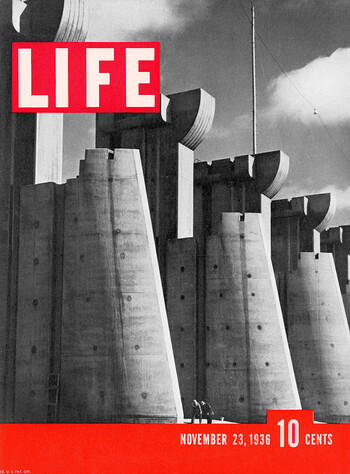
The first issue of Life was a fair reflection of Henry Luce’s basic worldview as a pro-business, pro-democracy, pro-science, anticommunist, antifascist, golf-and-luncheon Republican who believed in America’s destiny as a leader of nations, but who could relax his free-market values for the sake of a great photo: In the case of Bourke-White’s cover, Luce’s awe of machine-age American ingenuity as represented by the dam project eclipsed his contempt for President Franklin D. Roosevelt and his New Deal boondoggles.
Inside the magazine, the reader could find diverting photo essays on the dam builders in eastern Montana, movie star Robert Taylor, and remote places in the Brazilian interior alongside ads for new Plymouths and Fords, Camel cigarettes (“Good food and good tobacco go together naturally”), fine whiskey, fine motor oil, and fine shaving cream (“Limp go whiskers when soaked with Williams”). The written stories were short, punchy, and generally good-humored, with the occasional sardonic quip aimed just above the heads of the readership. A large swath of the real estate was taken up by ads, which Longwell believed should be as visually appealing as the features. As he later stated, “You can look at Life and see that it comes right out of the advertising world of the United States.”
This focus on visuals was the flypaper with which Luce hoped to attract and educate an economically diverse audience, supplying readers with a vocabulary of taste, leisure, and world events — a kind of cultural uplift — while bathing them in a shiny consumerism that had nothing to do with high unemployment or the war clouds amassing in Europe.
The formula worked: The entire print run of Life sold out on the first day. The fever spread, and after a year, circulation topped 1.5 million. This created a very expensive problem: Advertising revenue and the low newsstand price could not keep up with exploding production costs, and Time Inc. spent $5 million to keep the magazine afloat in its first year. Luce renegotiated the ad rates, and by 1939, the ship had turned around, and Life sailed into the black.
“We took a lot of abuse and shed it,” Longwell later recounted. “But if we had known exactly what we were doing we never would have burst all the boundaries.”
Longwell was born in Omaha in 1899. Both his parents were college graduates. He attended high school during the war years (1914 to 1918), worked on the school paper, and was active in the Junior Reserve Officer Training Corps. West Point wanted him, but by 1918 the war was ending, and was a high-ranking member of the Student Army Training Corps. He was invited to attend West Point, but by 1918 the war was ending, and Longwell, whose strength was literature, chose his other suitor, Columbia.
If Longwell’s affection for Columbia can be deduced from the later donation of his papers to the University, it might also be said that the most pivotal event of his college years occurred not in a classroom but in Columbia’s student-employment office. A visit there led to his getting a job at the Doubleday, Page Book Shop (a subsidiary of the Doubleday publishing house), located in the old Pennsylvania Station. Longwell became store manager, and in 1922 he was promoted to the editorial team at Doubleday headquarters in Garden City, Long Island. There, Longwell started out as an editorial assistant and liaison to authors, and shared an apartment with another Doubleday employee, the light-verse poet Ogden Nash.
Many years later, in 1970, at a Columbia Libraries event marking the University’s acquisition of Longwell’s papers, Nash, best known for his 1931 couplet on social icebreaking (Candy/Is Dandy/But liquor/Is quicker), spoke about his old friend. “Dan had, I might say, the most extraordinary eyes I have ever seen,” Nash recalled. “The only thing I can compare them to is the long-seeing eyes of the eagles and the hawks which my wife and I saw at the aviary in the London Zoo. They reminded me a great deal of Dan. Not that Dan was a predatory bird, but his eyes were extraordinarily clear blue, and he had the long vision.” Sometimes, after an intense period of work, Nash and Longwell would repair to the Columbia University Club on West 43rd Street (Nash was a Harvard dropout), where they drank old fashioneds, Prohibition be damned. “At the next table, as a rule when we were there, were some other well-known Columbia men — Corey Ford [1923CC, a writer for the New Yorker], David Cort [1924CC, former editor of the Columbia Jester and future foreign editor at Life], Tom Wenning [1925CC, future theater critic for Newsweek] — and we would chat,” said Nash. “It was very jolly indeed.”
In 1938, in a small church ceremony, Longwell married Mary Douglas Fraser, a graduate of Wellesley College. Nash and his wife were the only attendees. It was a time of change and great ferment for Longwell. As all-out war inched closer in Europe, Life hit its stride. Longwell understood that war provided enormous opportunities for photography, and Luce had a chance to use his considerable platform to espouse his interventionist views. In the February 17, 1941 issue of Life, ten months before Japan attacked Pearl Harbor, Luce, at Longwell’s urging, published a lengthy editorial called “The American Century.” In it, Luce argued that the US, for all intents and purposes, was already in the European war, and should join it militarily to defeat Hitler and shape a postwar global order aligned with American values and interests. The essay was the talk of dinner tables nationwide, and the phrase “the American Century” became a byword for the American influence and dominance that followed the war.
By 1945, Life had become, in the words of the essayist Lewis Lapham, “the most American of American magazines, the best and most popular advertisement for the preferred American reality.” Longwell, who was executive editor until 1944, became managing editor from 1944 to 1946, and chairman of the board of editors from 1946 to 1954. During his eighteen-year tenure, Life was not only massively popular, it was also innovative, taking some big literary and artistic swings and breaking a few barriers.
In the September 20, 1943 issue, for instance, readers encountered a shock: pictures of dead American soldiers on a beach in the South Pacific. It was the first time a US news outlet had published photographs of dead American servicemen during the war. Life’s photographer, George Strock, embedded with US forces, shot what he saw, and the magazine fought a nine-month battle to lift military censorship and publish the images. (Throughout the war, Longwell would work with other giants of photography, such as Alfred Eisenstaedt, W. Eugene Smith, and Robert Capa.) In 1948, Life ran “Harlem Gang Leader,” a photo essay by Gordon Parks that revealed the world of a young Black man named Red Jackson, head of a gang called the Midtowners (Life then hired Parks, the first Black photographer on staff).
Longwell, with pages to fill, did not stop at photography. In 1948, Longwell scored another coup, helping Life strike a $1.4 million deal with former British prime minister Winston Churchill to serialize his memoirs — a major publishing event that elevated Life’s prestige and boosted sales. Then, in 1949, after reading a rave review of a young painter named Jackson Pollock in The Nation, he instructed his staff to fashion a new kind of intimate, character-driven artist profile, in which the artist is shown working in his studio. The result was a feature headlined “Is This the Greatest Painter Living in America Today?” The piece launched Pollock into the popular culture, and Longwell even bought one of his paintings, titled Number 23, 1948 (not to be confused with November 23, Life’s birthday). And in 1952, on a literary footing, Longwell steered Ernest Hemingway’s latest work, a novella called The Old Man and the Sea, into the magazine. “I’m very excited about the book and that it is coming out in Life so that many people will read it who could not afford to buy it,” Hemingway wrote to Longwell from Cuba. “It makes me much happier than to have a Nobel Prize. To have you guys being so careful and good about it and so thoughtful is better than any kind of prize.”
Longwell retired in 1954 due to pneumonia-related health problems, and he and Mary bought a farmhouse in the town of Neosho, Missouri, where Longwell had spent some time in his youth. The couple, who had no children, embraced their new community. Drawing from his earlier experience at Doubleday editing gardening books, Longwell started the “Flower Box City” campaign, a citywide beautification contest in Neosho in which homes and businesses competed to create the best flower boxes. He was an active civic booster until his death in 1968.
By then, Life had lost much of its relevance. Fractures in the country over civil rights and the war in Vietnam belied the vision of uniformity and comity of American identity that Life had successfully endorsed through the 1950s, and the rise of television finished the job. In December 1972, after thirty-six years, Life folded as a weekly. The last number, a double issue titled “The Year in Pictures,” included visual essays of Nixon in China, the terrorist attacks at the Munich Olympics, chess grandmaster Bobby Fischer, and the Apollo 17 moon mission (Luce, who died in 1964, had been a huge supporter of NASA and plugged its projects in his magazines). The final issue was a fitting culmination to the Longwell-led experimental picture department in the mid-1930s, and even in 1972 the magazine was a steal at fifty cents.
As a cultural phenomenon, Life has made juicy fodder for academics and critics. Some claim that Life did the disservice of sanitizing, standardizing, and sentimentalizing national identity; others celebrate the magazine’s democratization of art and information and its breakthroughs in journalism and visual media. Some assail its racism toward nonwhites, whether overt (in the case of the Japanese during wartime) or genteel. Others note its support for the Civil Rights Movement in the 1950s and ’60s (albeit in a mode more Hoagy Carmichael than Stokely). Scholars have examined all the unflattering -isms that might be associated with the magazine (including sensationalism), and some even blame it for eroding the American attention span. The most withering appraisal came from critic and avowed cultural elitist Dwight MacDonald, whose 1960 essay “Masscult and Midcult” attacked Life as an exemplar of that dreaded thing, mass culture, “a dynamic, revolutionary force, breaking down the old barriers of class, tradition, and taste, dissolving all cultural distinctions. It mixes, scrambles everything together, producing what might be called homogenized culture.” A single issue of Life, MacDonald wrote, “will present a serious exposé of atomic energy followed by a disquisition on Rita Hayworth’s love life; photos of starving children picking garbage in Calcutta and of sleek models wearing adhesive brassieres.” To MacDonald, “these scramblings together seem to work all one way, degrading the serious rather than elevating the frivolous.”
Others were less persnickety. To historian Alan Brinkley, former provost of Columbia and author of The Publisher: Henry Luce and His American Century (2010), Life provided a vital service. In a 2003 interview, Brinkley called Life “a window on the world for many people who did not have access to good newspapers. This was how many Americans learned about the rest of the world.” Brinkley observed that Life’s style of visual storytelling cut across lines of race, class, and gender and produced a more informed citizenry. Life, he said, was “a way people could learn what was happening around the world, in succinct form, week after week.”
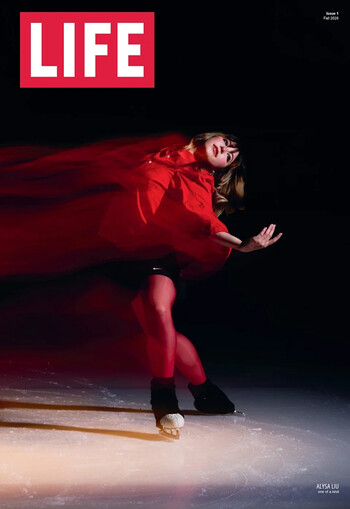
Don’t look now, but it appears that there is Life after death, or at least life after Life. Bedford Media, founded by supermodel and entrepreneur Karlie Kloss and her husband, billionaire venture capitalist Joshua Kushner (brother of Jared), have purchased the rights to relaunch Life, and this November 23, on its ninetieth birthday, Life will return as a 248-page quarterly. The magazine will be ad-free and will sell for the not-so-low price of forty-five dollars.
We’re a long way from 1936: Luce’s American Century came and went, and advertising has gone online. But the old Life remains etched in time, and some argue that the magazine stands as Longwell’s legacy as much as it does Luce’s. In his 1986 book The Great American Magazine: An Inside History of Life, writer Loudon Wainwright, who spent more than twenty years on staff at Life, vouched for Longwell’s primacy: “Possibly more than anyone else, Longwell rates consideration as the father of Life,” Wainwright wrote, and called Longwell “the stubborn guiding spirit whose unshakable conviction about photography as an immensely powerful journalistic force led Luce to take the big gamble.”
Then there’s this tidbit from Ogden Nash, delivered at Columbia in 1970. “As early as 1930,” said Nash,
“when I was working very closely with Dan — he was my boss, but we were close in spite of that — he was collecting every kind of English, French, and German illustrated photographic magazine — not at his desk at Doubleday’s but in his room in the boarding house on Stewart Avenue in Garden City, which was littered with these magazines, scissors, and paste. He was cutting them up, putting them back together, amending them, seeing what he would do with them if he had his own way, and shortly after that he began having what I came to learn were weekly conferences with Henry Luce. Dan was not only an innovator but an extraordinary adapter. He was able to take these magazines and see how they could be improved and how to put them into the one thing he had in mind.
Now, I shall always believe that he put the idea [for Life] into Henry Luce’s mind. From my own association with him, I think the idea was Dan’s completely: that it was time for Luce and his organization to start the most comprehensive and interesting and informative photographic magazine that there had yet been.”
And so they did, producing a feast for the eyes, for the price of a loaf of bread.