When the Supreme Court agreed in June 2025 to hear arguments later that year in the voting-rights case Louisiana v. Callais, constitutional scholars had a good idea of what was coming. For years the court under Chief Justice John Roberts had been chipping away at the Voting Rights Act of 1965 (VRA), which Justice Ruth Bader Ginsburg ’59LAW, ’94HON called “one of the most consequential, efficacious, and amply justified exercises of federal legislative power in our Nation’s history.” Now, with Callais, the court had a further chance to shape the fate of the sixty-year-old law.
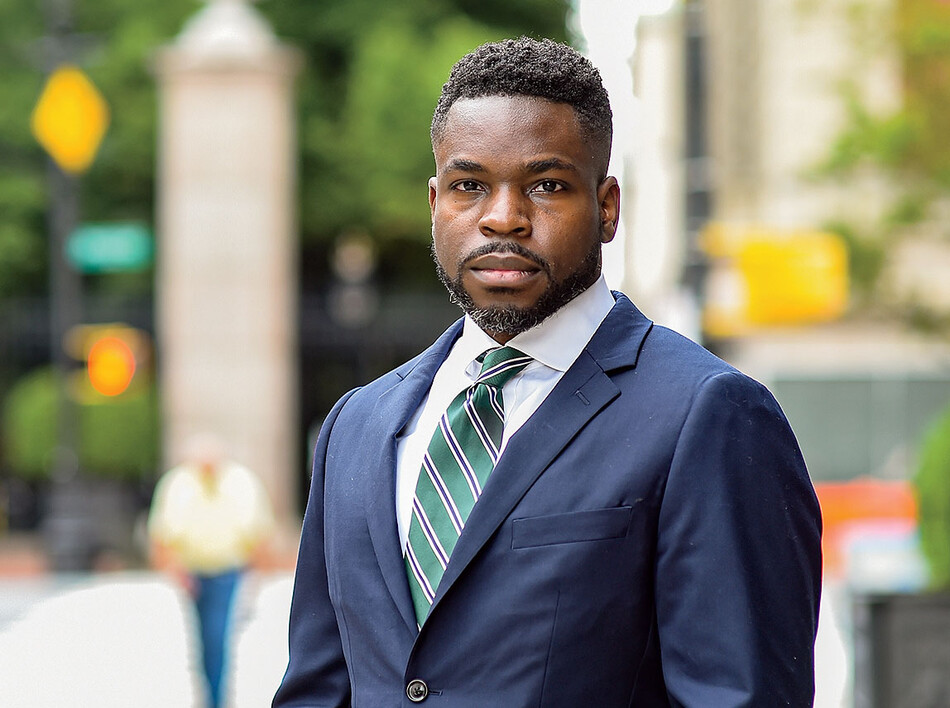
Kerrel Murray felt a need to respond. A Columbia law professor and election-law expert, Murray saw the case as a legal reckoning — not only over the VRA but also over the balance of powers among the branches of government.
Murray had been following Callais closely: A group of voters in Louisiana who described themselves in court filings as “non-African American” alleged that a majority-Black congressional district, which the state had drawn to remedy a VRA violation, itself violated two constitutional amendments: the Fourteenth, which guarantees “equal protection of the laws,” and the Fifteenth, which provides that voting rights “shall not be denied or abridged by the United States or by any State on account of race, color, or previous condition of servitude.” The case made its way to the Supreme Court, whose conservative majority has embraced the legal doctrine known as “constitutional colorblindness” — a favorable sign for the plaintiffs.
“Colorblind theory says that it is presumptively improper for the government to take account of race when it acts in a way that benefits or burdens some persons,” Murray explains. “But to say something is presumptively improper is to say that there are also circumstances when it could be justified.”
For Callais, Murray decided to submit an amicus brief, a legal document filed by nonlitigants who can offer specialized arguments about a case. “I thought, ‘This is my chance to say something,’” says Murray, who clerked for Justice Ketanji Brown Jackson during the 2022–23 Supreme Court term. Murray would base his legal analysis on decades of VRA jurisprudence.
Congress enacted the VRA under its authority to enforce the Fifteenth Amendment, which was ratified in 1870. Despite the amendment, Black voters, especially in the South, continued to face widespread disenfranchisement: States carved up their congressional districts to dilute Black voting power and enacted poll taxes and literacy tests, while the electoral violence of the Ku Klux Klan went unchecked. By the 1960s, tensions had reached a breaking point. On March 7, 1965, state troopers in Selma, Alabama, attacked civil-rights marchers on the Edmund Pettus Bridge. The incident galvanized public opinion, and eight days later, President Lyndon Johnson addressed a joint session of Congress, urging the swift passage of voting-rights legislation.
The resulting bill contained two key enforcement provisions: Section 5, which required states with a history of voter suppression to get federal approval, or “preclearance,” for changes to their election laws and procedures; and Section 2, which was meant to prohibit a variety of methods that could deny or abridge the right to vote “on account of race or color.” On August 6, 1965, before a bipartisan gathering that included Martin Luther King Jr., Rosa Parks, and the Brooklyn lawmaker who steered the bill through the House of Representatives — Emanuel Celler 1910CC, 1912LAW — President Johnson signed the VRA, saying, “This act flows from a clear and simple wrong. Its only purpose is to right that wrong.”
Over the following decades, Congress reauthorized and amended the VRA five times. But the Roberts court issued a series of decisions — starting with Shelby County v. Holder (2013), which effectively rendered the Section 5 preclearance requirement inoperable — that significantly narrowed the scope of the VRA, while also limiting Congress’s enforcement authority.
That pattern promised to continue in Callais, a case that centered on Louisiana’s Congressional district map. These maps are often drawn for partisan or demographic advantage — a practice known as gerrymandering — and for generations states have used gerrymandering to dilute the voting power of Black Americans. A Louisiana map drawn in 2022 appeared to be an example: For a state that was about one-third Black, the Republican legislature redrew the state’s six congressional districts so that five were majority white. Civil-rights groups sued, claiming that the map was drawn in a way that prevented Black voters from having an equal chance to combine their votes with others to elect their preferred candidates — a violation of Section 2 of the VRA.
A lower-court judge agreed. To comply, Louisiana in 2024 drew a new map. This one created a second majority-Black district — a roughly 250-mile-long strip linking parts of several cities with large Black populations. That’s when a group of white plaintiffs led by Phillip Callais, whose district was affected by the plan, challenged the new map as unconstitutional. This created a conflict between the Equal Protection Clause and Congress’s authority under the Fourteenth and Fifteenth Amendments to enforce voting-rights protections through legislation.
“I felt I had a different angle on why the VRA should not pose a problem to the court’s colorblindness approach.”
Murray knew what he was up against. He had already been working on a scholarly article called “False Conflict: Colorblindness and Section 2 of the Voting Rights Act,” and he drew his argument from that paper. “I felt I had a different angle on why the VRA should not pose a problem to the court’s colorblindness approach,” he says.
His amicus brief, filed September 3, 2025, was for the court, of course, but it was also for future justices and scholars — and for history.
In Murray’s view, the colorblind theory, as advanced by the Roberts court, still permits race to be used remedially, to address race-based harms. The theory “has not rejected the idea that if somebody imposes a harm because of race, that you might have to take account of race to fix that,” Murray says. This idea is called the “remedial rationale,” and, Murray contends, it harmonizes perfectly with Section 2.
Murray’s thesis is rooted in VRA legal history. In 1980, the Supreme Court ruled in City of Mobile v. Bolden that the Alabama city’s at-large election system (rather than district-based elections) — which favored the white majority — did not, on its face, discriminate against Black voters, and therefore did not violate Section 2. That meant that plaintiffs in Section 2 cases would now have to prove that the state acted with racially discriminatory intent — an exceedingly difficult bar to clear.
The decision drew fierce backlash, and in 1982, Congress, with bipartisan support in both houses, moved to amend the VRA to restore plaintiffs’ ability to challenge voting laws on the basis of their effects. The new doctrine held that even a seemingly racially neutral law might violate Section 2 if it resulted in a minority group’s members having less opportunity than other members of the electorate to participate in the electoral process.
Not everyone was pleased. Some senators, fearing that any racially imbalanced electoral outcome could trigger a Section 2 claim, insisted on adding language stating that no group has a right to proportional representation. Both Democrats and Republicans agreed, and President Ronald Reagan signed the legislation, saying that “the right to vote is the crown jewel of American liberties, and we will not see its luster diminished.”
But how was a court to determine whether a particular districting map violated Section 2? That question demanded clarification, and in Thornburg v. Gingles (1986) the court, under Chief Justice Warren E. Burger, created the three-part framework at the core of Murray’s argument. Under Gingles, plaintiffs with a Section 2 complaint had to prove that (1) the diluted minority population was large and compact enough to comprise a majority in a single, reasonably drawn district; (2) the group was politically cohesive; and (3) white voting blocs consistently defeated the group’s preferred candidates. If these terms were satisfied, plaintiffs then had to meet a “totality of circumstances” test that weighed the role of past discrimination in present-day conditions.
In his brief, Murray quoted the Burger court’s recognition of Section 2 as a means to “eradicate inequalities in political opportunities that exist due to the vestigial effects of past purposeful discrimination.” For Murray, this is the heart of the matter. “The Gingles framework identifies those circumstances where race is already operating to prevent certain groups of voters from having an equal shot at participating,” he says. “That means that Section 2 is remedial — it isn’t forcing the state to inject race into circumstances where it wasn’t previously present.”
Murray also cited Students for Fair Admissions v. Harvard (2023), or SFFA, in which the Roberts court ruled that the admissions programs at Harvard and the University of North Carolina violated the Fourteenth Amendment’s guarantee of equal protection — a decision that severely limited affirmative action in college admissions. Murray anticipated that the court would evaluate Section 2 through the same colorblind lens it had applied in SFFA. And so his brief laid out the court’s own criteria for constitutional colorblindness: that “race may never be used as a ‘negative’” — meaning that it can’t negate the opportunity of others — “and … may not operate as a stereotype”; there must be “time limits on race-based state action”; and race-based state action can be justified only by a “compelling interest,” and only in “the most extraordinary case.” Then Murray showed, through legal precedent and logic, why Section 2 does not violate these tenets.
On the last point — whether a “compelling interest” exists to warrant race-based state action — Murray again used the court’s own words in SFFA, which said that “remediating specific, identified instances of past discrimination that violated the Constitution or a statute” constitutes a “compelling interest” that “permit[s] resort to race-based state government action.”
So there it was: the remedial rationale, as articulated by the advocates of constitutional colorblindness. Section 2, wrote Murray, “fits comfortably within one of the enduring justifications embraced by this court for governmental consideration of race … The bottom line is that, at its core, Section 2 is concerned with remediating past (or present) intentional discrimination,” and “thus presents no conflict.”
On April 29, 2026, the Supreme Court, in a 6–3 ruling, found in favor of Phillip Callais and the other plaintiffs in Louisiana. The majority opinion, authored by Justice Samuel Alito, declared that “no compelling interest justified the State’s use of race” in creating the second majority-Black district. Louisiana’s remedial map, the one that linked Black areas of three cities, was “an unconstitutional racial gerrymander.”
As Alito wrote, the state’s Section 2 claim “triggered strict scrutiny because the State’s underlying goal was racial,” and Louisiana’s “intentional compliance” with the lower-court order to remedy the districting imbalance was evidence of an “express acknowledgment that race played a role in the drawing of district lines.”
The court also substantially altered the Gingles framework to reflect its view that the country has made “great strides in ending entrenched racial discrimination.” Plaintiffs bringing a Section 2 complaint would now have to “disentangle race from politics” and prove that legislators drew their disputed maps out of racial bias rather than for partisan advantage — regardless of the effects.
As for the “totality of circumstances” question, Alito placed the focus on “present-day intentional racial discrimination regarding voting,” and asserted that “discrimination that occurred some time ago and present-day disparities characterized as ongoing ‘effects of societal discrimination’ are entitled to much less weight.”
Voting-rights activists condemned the decision. Eric Holder ’73CC, ’76LAW, former US attorney general and chair of the National Democratic Redistricting Committee, denounced “this out-of-control, deeply ideological Court,” whose ruling “ensures that it will be remembered as one of the most destructive and deeply irresponsible Courts in the history of our nation.” Michael Waldman ’82CC, president and CEO of the Brennan Center for Justice at NYU School of Law, called the decision a “profoundly unjust historical setback” that “demolished” the VRA.
One of the most incisive analyses of the Roberts court’s voting-rights record comes from Khiara Bridges ’02LAW, ’08GSAS, a law professor at UC Berkeley. Bridges identifies “an anachronistic notion of racism” in the court’s voting-rights decisions, which, she says, “allows the Court to ignore the modern-day techniques that work to achieve the same racial hierarchies.”
Bridges identified this dynamic in 2022, in a Harvard Law Review article titled “Race in the Roberts Court.” Her premise was that the court “invites observers to believe that it is just using simple common sense when it identifies, or refuses to identify, something as racism,” she wrote. “The crux of the Roberts Court’s apparent racial common sense is that racism against people of color is what racism looked like during the pre–Civil Rights Era — in the bad old days.” In a voting-rights context, that means things like poll taxes and literacy tests.
Bridges pointed out that immediately after the Roberts court in 2013 gutted the Section 5 preclearance requirement (its Shelby County decision cited decades of increased minority voter turnout and an outdated congressional formula to determine which jurisdictions needed federal oversight), states began implementing facially race-neutral measures such as voter-ID laws and voter-roll purges. To many, wrote Bridges, these practices looked an awful lot like modern iterations of literacy tests and poll taxes. Justice Ginsburg, in her Shelby County dissent, famously stated that “throwing out preclearance when it has worked and is continuing to work to stop discriminatory changes is like throwing away your umbrella in a rainstorm because you are not getting wet.”
For Bridges, the Roberts court’s notion that modern voter suppression must resemble poll taxes and George Wallace with a bullhorn “allows the Court to implicitly declare that racism against people of color is a thing of the past; it permits the Court to deny the existence and persistence of structural racism.”
“The court is turning a blind eye to the techniques of racial disenfranchisement, and I’m comfortable saying that this is intentional.”
Noting what she calls the court’s pattern of “solicitousness toward white grievance,” Bridges wrote that the conservative majority’s jurisprudence “makes it extremely likely” that nonwhite plaintiffs claiming racial discrimination will lose, and “more likely” that white plaintiffs claiming the same will win. To Bridges, “politics and the desire for an outcome that aligns with the Republican Party platform appear to overdetermine the inquiry.”
The Callais decision did nothing to make Bridges question her 2022 assessment. “The court said essentially that Section 2 cannot prevent states from gerrymandering Black voters out of existence,” she says. “The court is turning a blind eye to the techniques of racial disenfranchisement, and I’m comfortable saying that this is intentional: The court knows precisely what it is doing.”
Following its ruling on Callais, the court promptly applied it, vacating an injunction that had required Alabama to use a remedial map that cured a previously adjudicated violation of Section 2. Other states, mainly in the South, moved to eliminate majority-minority districts. “The Callais decision is a major, major blow to the representation of Black voters throughout the country, and it also fares dangerously for Latino representation,” says Juan Cartagena, ’81LAW, former president and general counsel of the LatinoJustice Puerto Rican Legal Defense and Education Fund and a lecturer in law at Columbia.
As an attorney, Cartagena litigated multiple Section 5 cases in New York, starting in the 1980s when certain counties in the state had fallen under Section 5 coverage due to ongoing discrimination against Black and Latino voters. Cartagena believes that the solution to voting rights must come from Congress.
“Congress has the authority to exercise its legislative powers as an equal branch of government and go beyond what the Fourteenth Amendment would otherwise require,” Cartagena says. “The VRA was passed by Congress, and it is Congress’s right to state what it thinks is a proper balance between the competing interests of intentional discrimination and effects discrimination. These are complex issues, but it’s up to Congress to decide — except that we have a Supreme Court majority that believes Congress, the most democratic of all three of our branches, doesn’t have the authority to interpret the US Constitution.”
So where does that leave us?
Kerrel Murray points to the Constitution and to state legislatures. He was, he says, “disappointed” by the Callais decision, and he doesn’t deny that it leaves the VRA a shadow of its former self.
But in his view, Callais is not the end of the story.
“Obviously, the court’s decision is going to limit what Congress can do under current law,” he says. “But this decision only deals with Congress’s power to enforce the Fourteenth and Fifteenth Amendments.”
Beyond those amendments, Murray notes, Congress has power to regulate the “manner” of federal congressional elections (as stipulated in Article 1, Section 4, Clause 1 of the Constitution), which can include regulating districting. And at the state level, legislatures “have a general authority to regulate the electoral process,” he says. That includes passing laws to protect the voting rights of their citizens, as New York and other states have done.
“There are still plenty of things,” Murray says, “that can be pushed for.”
The Lion of the VRA
On March 15, 1965, eight days after the Bloody Sunday attacks on civil-rights marchers in Selma, President Lyndon B. Johnson addressed the Senate and the House of Representatives: “Wednesday I will send to Congress a law designed to eliminate illegal barriers to the right to vote.”
The point person in the House was Emanuel Celler 1910CC, 1912LAW, a Democrat from Brooklyn’s Tenth District and chair of the House Judiciary Committee. “LBJ sent his voting-rights proposal to Celler, and it was Celler’s job to get that bill through the Congress,” says Wayne Dawkins ’80JRN, author of Emanuel Celler: Immigration and Civil Rights Champion (2020). “That meant getting it through a solid wall of Southern Democrat segregationists.”
Then seventy-six years old, Celler had already been the driving force behind a host of landmark legislative achievements: the Civil Rights Acts of 1957 and 1960, for which he was principal House author; the Civil Rights Act of 1964, which he helped strengthen and guide through Congress; the Hart-Celler Immigration Act of 1965, which he sponsored in the House and which ended the national-origins quota system that had favored immigrants from northern and western Europe; and the Voting Rights Act of 1965, for which he was the main legislative sponsor and floor manager in the House.
“I can say full-throatedly that Celler is the godfather of civil-rights legislation,” says Dawkins, who has taught at Morgan State University and Hampton University. “He started with the 1957 Civil Rights Act, which the NAACP and others thought was toothless. But it was not, because now, for the first time, our government was documenting what was going on in the South — the abuses, the terrorism, everything.”
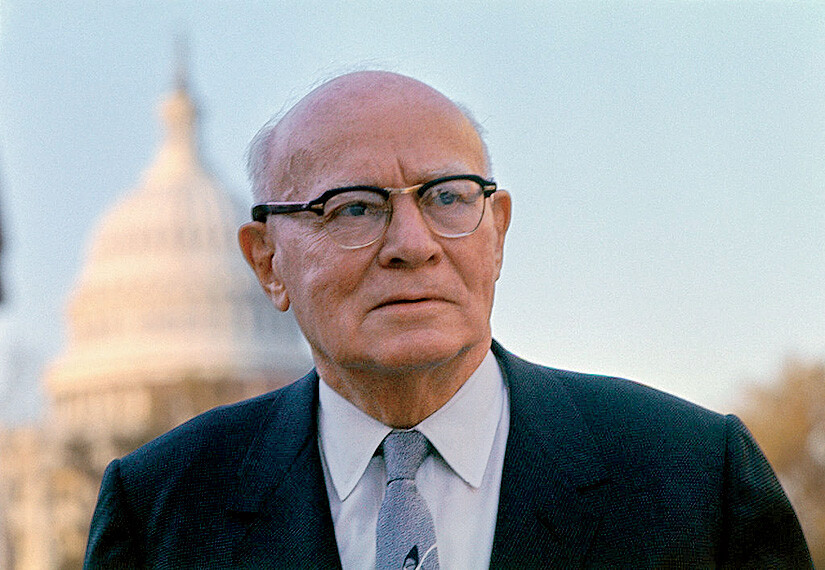
The son of a door-to-door wine merchant, Celler was born in 1888 and grew up in Williamsburg. He went to Boys High School and later commuted to Columbia. His parents died when he was in college, and a wealthy uncle, Sam Grabfelder, a Kentucky liquor wholesaler, stepped in to pay his tuition. “Grabfelder told Celler, ‘You have to promise me that you will use your degrees to work on behalf of others — not just to make money and get rich,’” Dawkins says.
Celler got into Columbia Law School, where his favorite professor was Harlan Fiske Stone 1898LAW, who went on to become Chief Justice of the US Supreme Court. After graduating, Celler opened a law practice focused on helping immigrants, and in 1922 he ran for Congress. He won and would be reelected twenty-five times.
“Celler was a straight shooter, and he wasn’t for everybody, because he was going to go into details,” says Dawkins. “There’s a saying that congresspeople are divided into two types: ‘show horses’ and ‘workhorses.’ Celler was a workhorse.”
He could also be charming and playful, Dawkins says. “He would write verse, little sketches, about the folks in the Congress. He loved opera. He played violin as a child, but he preferred the piano, and his suite at the Mayflower Hotel in Washington had a grand piano, which he played. One journalist called him the last Victorian on Capitol Hill.”
Celler’s language reflects this sensibility. “Clear as a pikestaff” was how he described the wording of the Twenty-fourth Amendment, which prohibited poll taxes in federal elections, and which Celler pushed through Congress in 1962. And he once referred to Herbert Hoover — the second of the nine presidents, from Harding to Nixon, with whom he served — as “a bit Pecksniffian,” referring to the sanctimonious hypocrite Pecksniff in Dickens’s Martin Chuzzlewit. In 1969, Celler explained the decade’s flurry of civil-rights legislation this way: “I think it was Victor Hugo who once said, ‘When the time for an idea has come, nothing can stop it.’”
The voting-rights bill was a case in point: It passed the House 328–74. “There was an attempt to attach fourteen amendments to the bill, which would have weakened it substantially,” says Dawkins. “It was tough, but Celler got the bill through with only three changes.”
By 1972, Celler, then the dean of the House, was eighty-four years old. That year, he lost reelection to thirty-year-old Elizabeth Holtzman, a Harvard-educated lawyer whom Time magazine dubbed “the Lion Killer.” After fifty years of public service, Celler left Washington and returned to New York, where he resumed his law practice and advocated for immigration reform.
Celler died on January 15, 1981, at age ninety-two. It was also Martin Luther King Jr.’s birthday. That same day, in Washington, thousands of people, led by musician Stevie Wonder, marched from the Capitol to the National Mall in support of a federal holiday for King, who had been the public face and moral voice of the civil-rights bills that Celler, the workhorse, had shepherded through Congress to the president’s desk.
This article appears in the Fall 2026 print edition of Columbia Magazine with the title "Is Justice Colorblind?"