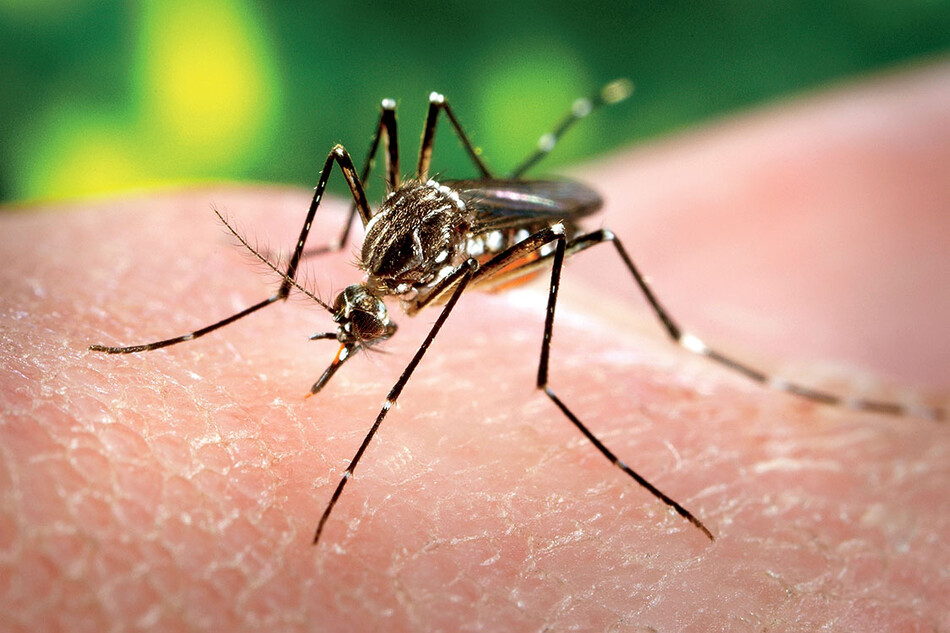
Malaria deaths are surging in many parts of the world today, as the drugs used to fight the disease are losing their effectiveness. In sub-Saharan Africa, hundreds of thousands of children are dying of the mosquito-borne illness each year.
But a major new discovery by Columbia scientists is raising hopes that more-effective drugs could be developed. In a recent issue of the journal Cell, the scientists provide the first detailed description of how malaria parasites attach themselves to red blood cells, drive spiral-shaped proteins into the cells’ outer membranes, and then rip open a hole and slip inside.
According to Chi-Min Ho, a microbiologist and immunologist who oversaw the team, scientists have known for decades that malaria parasites enter blood cells by hoisting themselves in through a distinctive hatch they carve into their membranes. (These attacks occur in synchronized waves as trillions of parasites spread throughout the body, causing severe fever every forty-eight hours or so.) But the invasion occurs so quickly that until now, no one had observed exactly how an individual parasite cuts open a blood cell. The Columbia team accomplished this by freezing parasites at the moment of assault and then using cryo-electron microscopy to produce high-resolution, three-dimensional images of the crime scene. This enabled the scientists to visualize the molecular mechanics of the strike in such detail that they were able to subsequently synthesize a protein that can break a parasite’s grip on a blood cell and foil the raid.
The Columbia researchers say the protective compound they’ve synthesized is not a drug candidate itself but that it could lead to the development of one. “That’s the part we’re most eager to build on,” says Daphne Kaxiras, a medical student in Ho’s lab who led the compound’s development.