
I first met Professor Caroline Walker Bynum in the late 1990s, when I was an undergraduate in her medieval history seminar at Columbia. Over the next twenty-five years, during my time as a graduate student (at Cornell for history and the Vermont College of Fine Arts for creative writing and translation), my early experiences teaching, my decision to leave academia, and my re-formation as a writer, our contact was intermittent but, for me, consequential.
Bynum is the author of nine books, including Fragmentation and Redemption: Essays on Gender and the Human Body in Medieval Religion, her influential 1991collection of essays on medieval religious culture, recently re-released as an eBook by Zone Books. Those essays address what were, for decades, central concerns of her scholarship: how medieval women understood and articulated their religious lives, and how Christian ideas about the body helped shape Western notions of selfhood. The essays raise what she calls “big questions”—questions that cannot be answered conclusively but that must continually be asked. Such questions about continuity and change, about how meaning accretes over time, about how parts relate to wholes, provide an unexpected entry point into another subject that has preoccupied both of us in recent years: mentorship.
In my memoir, My Roman History, published in 2024, I credit Bynum not only with improving my writing, but also with teaching her students that writing is an avenue for precise thinking. Her copious comments on our papers revealed a tireless dedication to showing us how our writing worked — and didn’t work. No one had ever pointed out to me in such detail the intimate connection between writing and thinking.
What makes this all the more remarkable is that in the late 1990s, Bynum was at a point in her career when she absolutely did not have to mire herself in the thickets of undergraduate writing. She had already won a MacArthur Fellowship, been elected to the American Academy of Arts and Sciences, and was about to be named University Professor, the highest rank for faculty at Columbia. Bynum was the first woman to receive that distinction.
After the publication of my book, Professor Bynum and I began an extended email exchange reflecting not only on scholarship and writing, but also on what it means to guide, influence, and remain present in another person’s intellectual life over time. What follows is part of that conversation.
Can you tell me about where your drive to help students learn to write came from? Was it something you learned from your own mentors?
This is fun to think about because it makes me realize how many causes there were in my life for my love of — really a demand for — clear words and arguments. I was always convinced that Truth (with a capital T) mattered and that if it were True, you had to be able to say it. That came from growing up with two academic parents: my father was an English teacher and my mother was a philosopher. As a teenager I argued a lot with my mother over religious, theological, and epistemological issues, and I learned early on that if you couldn’t say it, you weren’t thinking it clearly, and if you weren’t clear, you certainly couldn’t win an argument.
You didn’t have much intensive writing instruction in high school or college. What about later on in your studies or early career?
My experience of really learning how to write came in 1970-71 when, as a second-year assistant professor at Harvard, I co-chaired the Committee on the Status of Women with the distinguished professor of government Michael Walzer and we wrote a report. Walzer would take my rather inchoate notes and turn them into clear, short, direct argument. And I thought: “Why can’t I write like that? Maybe I can write like that. So I tried imitating Walzer, and I learned how to write clear, tough, straightforward prose. I think I learned because what we were writing about mattered.
And I found that, when I taught, I couldn’t not care about how my students wrote. So when students would complain: “I don’t know what you want,” I would answer: “I want to be able to understand what you want to say.” If they had a position, it mattered, and they had to be able to say it.
As you first learned by arguing with your mother, perhaps the greatest gift of learning to express oneself in speech or writing is that those skills confer agency. Do students at the college level come prepared to see writing as a kind of agency, or power?
I think that there has to be agency if one bothers to write at all, which means that one not only doesn’t know what one is trying to say until the proper sentence finally comes (after many mistakes), but also that one has to have an audience. One has to be writing for someone and as someone, even if one’s audience is only a particular version of, and moment of, oneself. So one has to be conscious of, and guide students towards an awareness of, something like genre: What kind of thing are they trying to write in this particular setting?
This is the real joy in writing: the struggle in figuring out what sort of thing one is writing, what one wants to say and to whom and why, and what’s wrong with what one is saying. And then: to get it right! I don’t think there is any other joy quite like it. Writing, when it goes well, can make one happy. Somehow, if one has experienced this, one wants to convey it to students and help them get there — to that joy!
You’ve surprised me in speaking about joy. It makes me think: I too have experienced joy in writing, especially when I made a breakthrough in my thinking or craft. But if I had to think back to when I most frequently experienced joy, I would probably point to the classroom.
Yes, I think that for me and for many academics, it is easier to find joy in the classroom because there is something fun about intellectual exchange when it goes well. It is exhilarating to see students take fire, to become engaged and funny, contradicting each other, and, as the teacher, to serve as a traffic cop in the exchanges. And when real discovery happens, it takes you, as the teacher, back to where you yourself were once, when something dawned on you, washed over you: that, too, is a kind of joy.
I think that it is impossible to sustain an experience of joy in doing something unless one can occasionally share it. I am today in contact with people I taught twenty or thirty years ago; I am still actively mentoring people who are on their second or third books, looking to change jobs, or figuring out which fellowships to apply for. I have always advised my graduate students to find a group to discuss work with from the day they start their studies, because their graduate student cohort will be their most important support group and network in the years ahead.
You can’t talk about writing these days without mentioning AI. You retired before AI became a classroom issue, but given your views on writing as a process integral to thinking, what place, if any, would AI have in your classroom?
I can think of a way I might use it to complement an assignment I regularly used in my graduate pro-seminar. I would come into the classroom and ask each student to take a piece of paper and pencil (or pen) and write one sentence summarizing the book assigned for that week. Then I would have the students exchange their papers with the person seated next to them and the two would work together for about ten minutes on a better summary. I would then choose at random one summary sentence and write it on the board and we would, as a group, spend the next hour refining that sentence until we had really encapsulated the author’s precise argument, while paying close attention to how we got there. This always took the full hour. I can imagine having the class, toward the end of the hour, tell AI to write a summary. We would then ask two questions: first, was our summary better than AI’s? Second, which exercise did we learn the most from—using AI or writing ourselves?
I receive many email scams offering to help me publicize my work and I have learned from them to recognize how AI writes. I am therefore certain that the answer to these two questions would be, first, that our class together writes better than AI and, more important, that the process of struggling together with other smart people to get a piece of writing accurate and clear is a kind of learning that can never be gotten from asking AI to do the job for us.
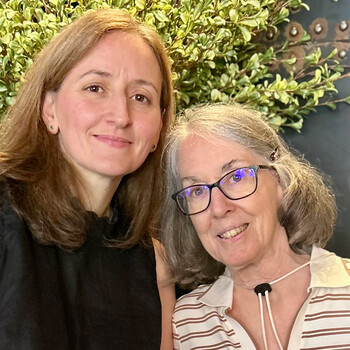
Mentoring is also something AI can’t replace. But, in ways different from AI, it is subject to human biases. To that point, do you think expectations for mentoring are gendered? Have students expected a different sort of mentorship from you than they have from your male colleagues?
Yes. My female friends and colleagues who are still teaching find that their female students expect more help than their male students, and that they as women are expected to do more than a fair share not only of mentoring but also of serving on committees and all the other things that go into the role of a professor. There is no simple solution to this, but learning to say “no” helps and the fact that there are more women in academia helps enormously. When I started as an assistant professor at Harvard in 1969-70 there were only eleven women on a faculty of six hundred and there were no tenured women at all. Making career decisions in isolation does not help one make good decisions.
But I would also add that there are rewards from mentoring: the rush of success when a student writes a first-rate thesis, gets a good job, places a first article. Also, many departments now have equal numbers of female and male professors, and in such cases, women are less likely to bear an overload of advising. Moreover, in such settings women students have fewer fears about their own careers, although they still worry more than men about how they are going to combine childrearing with career if they hope to have (or have already had) children.
How do you find the right balance between independence and support in the mentor/mentee relationship?
Mentoring, like parenting, has to have a balance between guidance and allowing —even fostering — independence. And that balance isn’t easy to achieve. But there is also something else in intellectual mentoring that doesn’t apply in the same way to parenting or even to teaching undergraduates. Because I think that, in the kind of mentoring that comes out of graduate-school teaching, there has to be a kind of “fit.” Sometimes students see, in the way a teacher thinks, something that releases in them what they really want to say and do. When there is a fit like that, there doesn’t even have to be personal attention.
This is not to say that the other things — caring, attentiveness — don’t matter. They do. And indeed, they matter more with a student whose mind is different from yours. You have to try somehow to help that student be whatever he or she can achieve. And sometimes there are students with limited gifts, and you have to try to set them, too, on the right path — the right path for them. One student of mine came from a little town in Ohio and wanted to go back to take a job as pastor in a small church there. He asked me to write a letter of recommendation. “But,” I said,” you got only a C+ in my class. Don’t you want to ask someone else?” “No,” he said. “You’ll write the best letter for me because you know me.” So I wrote it.
Sometimes in mentoring you feel as if what you are giving is not your best and not what the student needs most, but even showing that you care helps. Listening — being attentive — helps most of all.