
In The Vanishing Family, journalist Robert Kolker ’91CC follows three generations of a family plagued by frontotemporal dementia, or FTD, a little-known condition that could give us insight into preventing and treating dementia as a whole.
This book is in many ways a natural follow-up to your best-selling Hidden Valley Road, about a family of twelve siblings, half of whom develop schizophrenia. How did this new book come to be?
This family actually found me, and I was hesitant at first. I had spent several years learning about schizophrenia, whose genetic underpinnings are still largely unknown. But I learned that their variety of dementia, FTD, was caused by one particular genetic mutation. They knew what the mutation was and could actually look at it. That raised a number of questions that I was excited to explore, and made it a very different kind of book than Hidden Valley Road.
Unlike Alzheimer’s and other forms of dementia, FTD strikes during midlife and initially impacts self-regulation, impulse control, and social behavior rather than memory and cognition. Why is that important?
Neuroscientists are fascinated by FTD for exactly this reason — it’s where the study of the physical brain crosses over into fields like psychiatry. FTD is misdiagnosed all the time, often mistaken for things like depression and addiction; the personality changes are vivid. Being able to identify and study FTD patients has helped scientists establish links between what’s going on in the brain and certain changes in human behavior — for example, the role that the frontal lobe plays in impulse and reward systems. And even as it looks very different from Alzheimer’s and strikes much sooner, it actually might be a key to understanding Alzheimer’s better.
What is that key?
When we look inside the brain of a deceased Alzheimer’s patient, we see a lot of different things going on, and after a hundred years of study we’re still not sure what’s causing what and why. The two major proteins that seem to be a part of Alzheimer’s are the beta amyloid and the tau. Many varieties of FTD, we now know, are caused by a tau mutation. When you look at this family’s mutation under a microscope, it looks a lot like an Alzheimer’s mutation. If scientists can come up with a successful treatment for this family, there’s no reason that it couldn’t be tested on people with Alzheimer’s to see if it helps them as well. This is frequently the way that researchers treat complex diseases: One disease can be a sort of test kitchen for another.
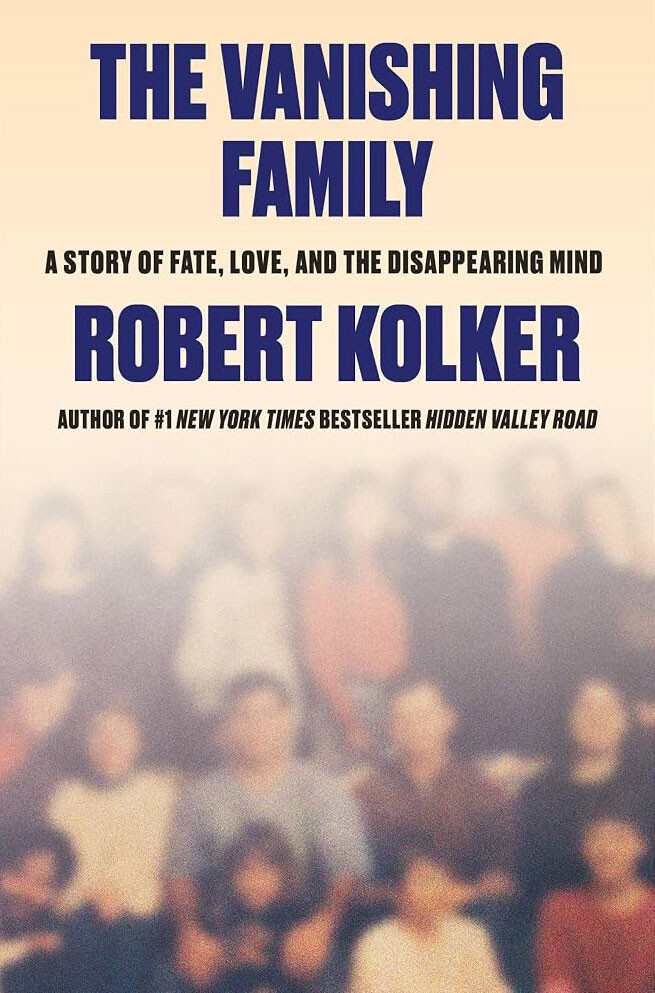
FTD is caused by an inherited genetic mutation. There is a test for it, and much of the book focuses on the heart-wrenching decisions that this family has to make around that test. After spending time with them, how did your feelings about this kind of genetic crystal ball change?
I’m a reporter, so at first I thought that I would want all the information I could get. But walking a mile in their shoes, I could understand the complexities. Some of the latest generation is finding out in their twenties that their lives will change drastically. It impacts their ambition, their ability to dream about the future. People realize that their careers might be destroyed if this information comes out. And then there are people who have watched a parent go through it, and they want a moment’s grace — a period of time when they can live their life, before they know what will happen to them. So actually there are a lot of reasons not to look into the crystal ball. More than the science, that’s what’s at the heart of the book — it’s an emotional story of a family trying to understand and negotiate these changes among the people they love.
It’s devastating to read about a family that has been dealt such a difficult hand. How close are we to a cure?
We’re on the cusp of a genetic editing revolution, and the future looks promising in a lot of ways. But the cures themselves are proving more arduous than we imagined. It’s not going to be just a quick injection and then watching the genes change. It’s going to be a brutal period of experimentation, and will take a tremendous amount of money, before we come up with the right ways to do it. But I have a lot of hope. For this family, this disease is something that keeps happening generation to generation, and it has been repeatedly misdiagnosed and mistreated and misunderstood. Now we finally know what it is. And hopefully we won’t lose another generation.
This article appears in the Fall 2026 print edition of Columbia Magazine with the title "Race for the Cure."