

  • Arts & Humanities
  • Science & Technology
  • Health & Medicine
  • Alumni
  • On Campus
  • Books
Issues
  • About
  • Subscribe
  • Contact Us
  • School Abbreviations
  • Arts & Humanities
  • Science & Technology
  • Health & Medicine
  • Alumni
  • On Campus
  • Books
Science & Technology

What the Ocean Floor Can Tell Us About Climate Change

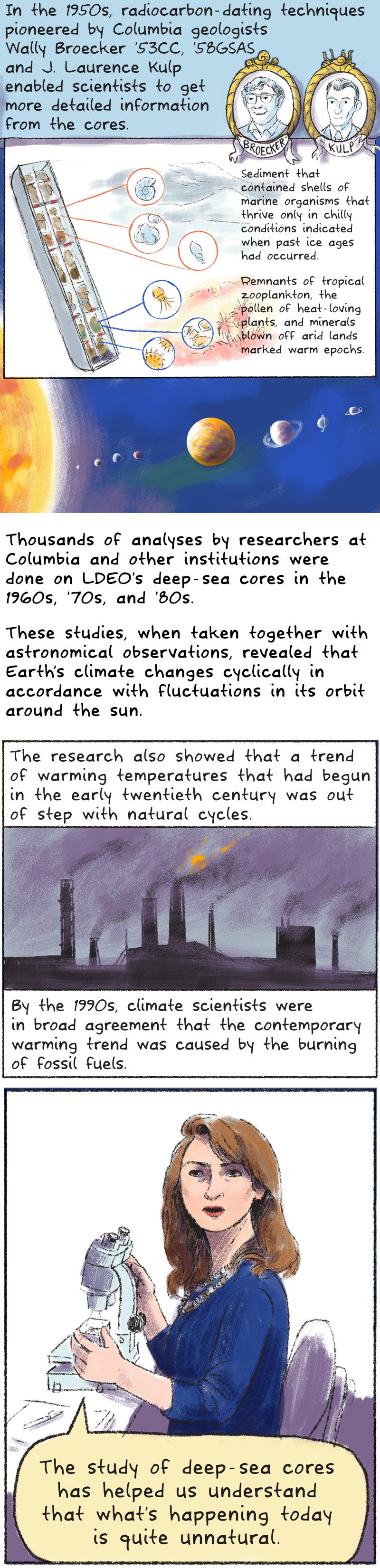
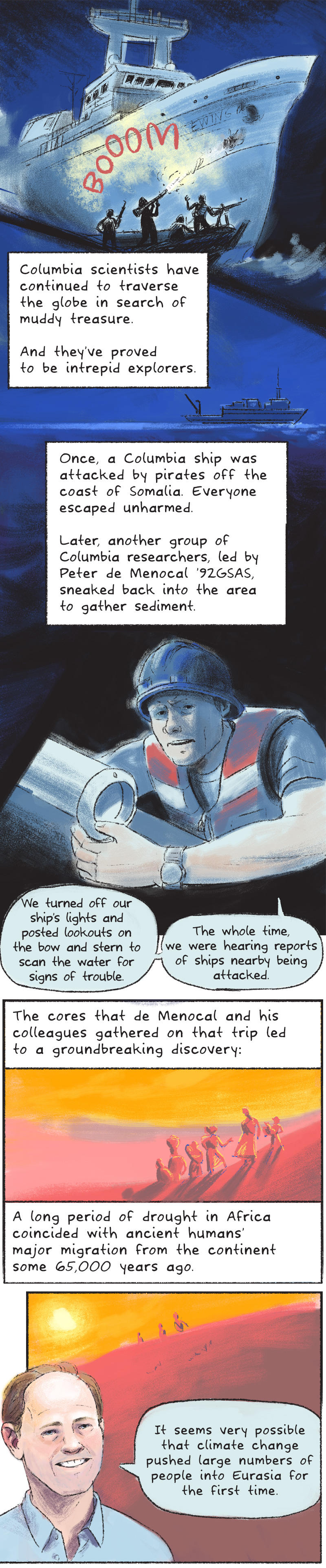
Deep-sea sediment provides a trove of information about our planet’s past and future. Illustrations by Jackie Roche.

By
David J. Craig
|
Winter 2018-19
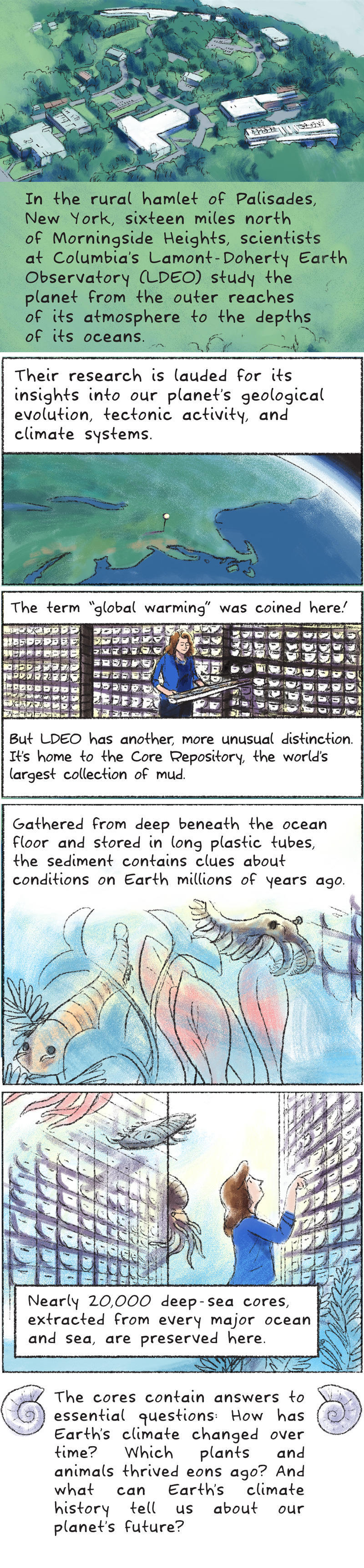
Core_P1
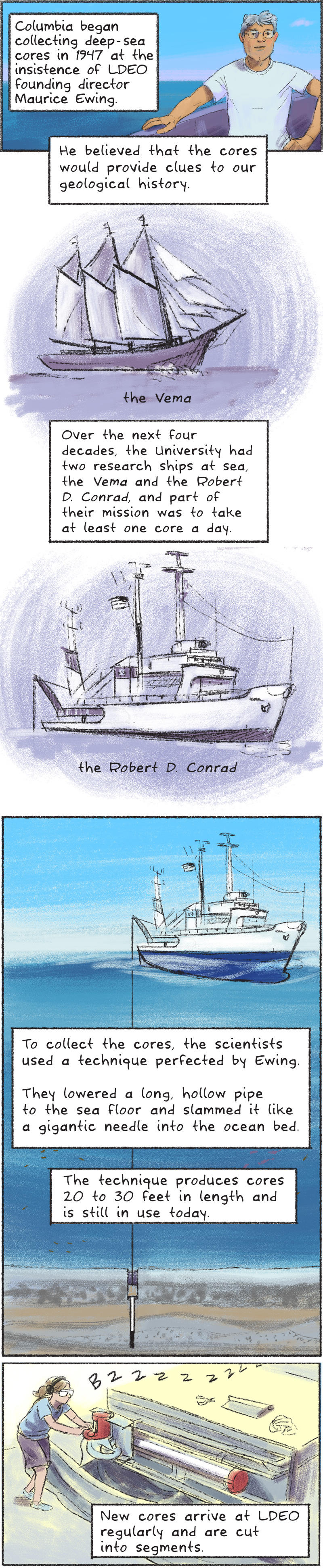
Core_P2
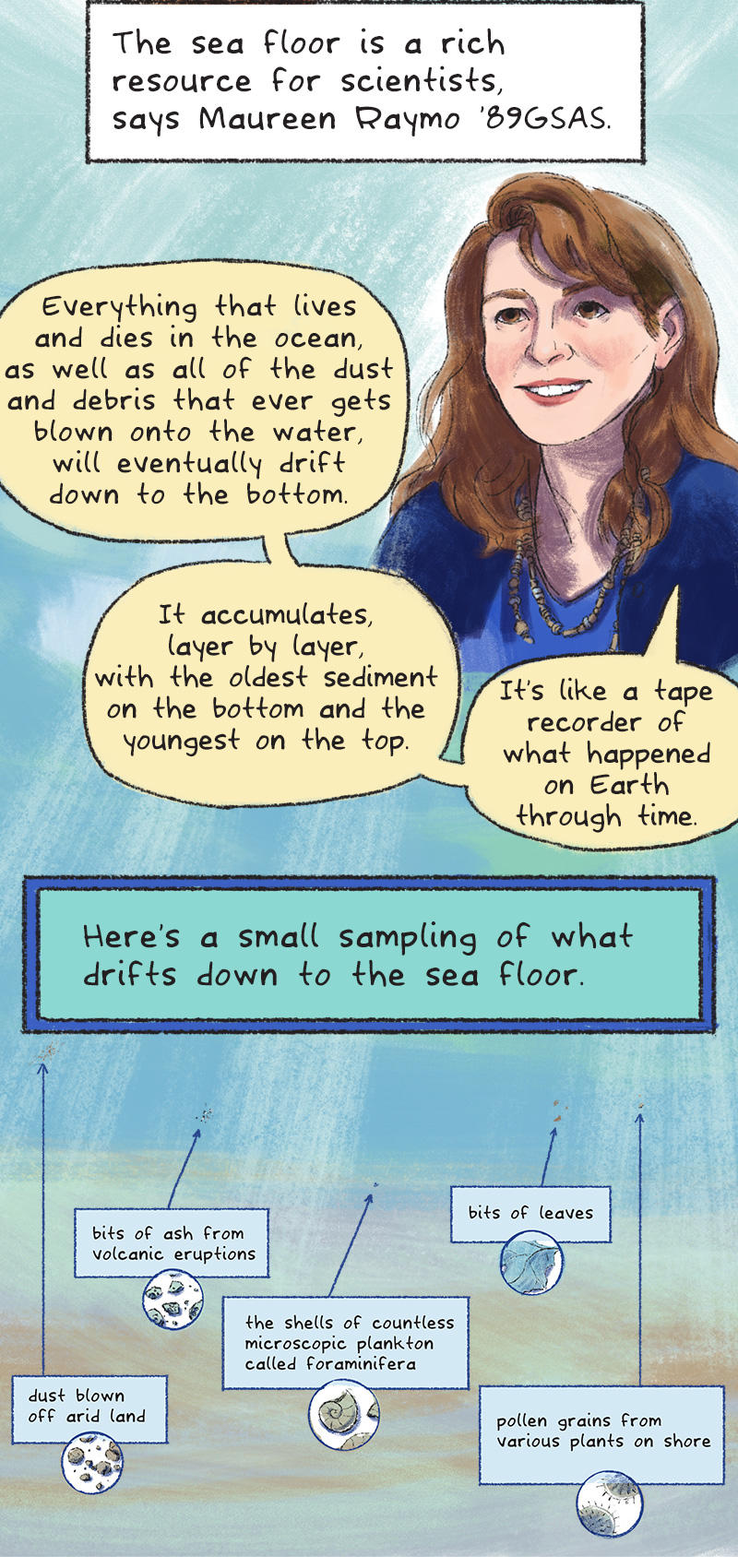
CORE_P3
CORE_P4
CORE_P5
CORE_P6
Read more from
David J. Craig
Related Stories
  • The Ice Detectives
    Ice caps
    Science & Technology
    The Ice Detectives
  • Urban Design’s New Wave
    KATE_ORFF_HERO-article2
    Science & Technology
    Urban Design’s New Wave
  • School of Rock
    3.18_EXPL_Barbados_1
    Science & Technology
    School of Rock
  • Deep Beneath the Dead Sea, a Harbinger of Future Drought
    the Dead Sea
    Science & Technology
    Deep Beneath the Dead Sea, a Harbinger of Future Drought
Top Stories
Why Depression Rates Are Higher Among Liberals
Clearing the Path to Parenthood
From Columbia to The Pitt
The Pacifist's Guide to Satanism
How Frozen Visionary Jennifer Lee Got Her Disney Ending
crown Guide to school abbreviations
All categories >
Read more from
David J. Craig

More From Science & Technology

The Psychology Behind Police Shootings
A shadow of a man against the ground

The Psychology Behind Police Shootings

New Columbia research reveals brain mechanisms that may be at work when cops shoot unarmed Black men

Why You Can’t Always Trust Your Memory
Illustration of a brain with post-it notes

Why You Can’t Always Trust Your Memory

Erin Kendall Braun ’09GS, ’18GSAS, a cognitive neuroscientist and memory expert, brings her insight to the courtroom and beyond

How the Challenger Disaster Became a Case Study of the ‘Normalization of Deviance’
The Challenger explosion

How the Challenger Disaster Became a Case Study of the ‘Normalization of Deviance’

Forty years after the tragedy, Columbia sociologist Diane Vaughan reflects on her landmark work on organizational decision-making

Stay Connected.

Sign up for our newsletter.

General Data Protection Regulation

Columbia University Privacy Notice

  • Latest Issue
  • Past Issues
  • Arts & Humanities
  • Science & Technology
  • Health & Medicine
  • Alumni Newsmakers
  • On Campus
  • Books
  • About
  • Subscribe
  • Advertising
  • Staff
  • Awards
  • Contact Us
  • School Abbreviations
  • Donate
  • columbia.edu
  • Alumni Association
  • Update Your Information
  • Disability Services

©2026 Columbia University