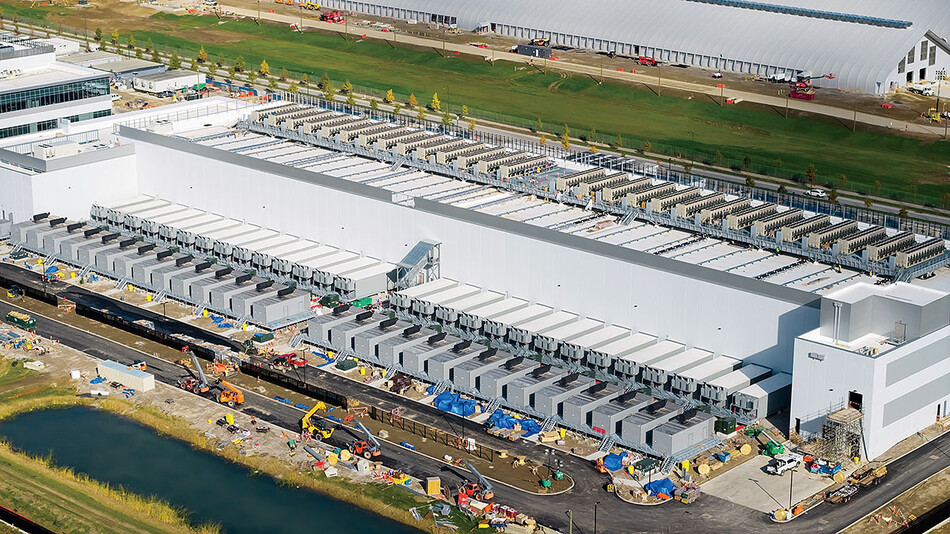
It’s easy to think of AI as a kind of software magic floating in the cloud. But behind every chatbot response sits a sprawling physical architecture — warehouses full of servers, giant cooling systems, substations, and transformers that can occupy hundreds of acres. In the US, there are currently more than five hundred “hyper-scale” data centers, with nearly as many now in the works.
According to a new paper by Stijn Van Nieuwerburgh, a professor of real estate at Columbia Business School, the scale of this build-out now rivals or exceeds the biggest infrastructure booms in American history, including the laying of the railroads and the creation of the interstate highway system. He estimates that investments in AI infrastructure will account for roughly 2.8 percent of GDP over the course of the expansion and that they’re already driving nearly all economic growth in the country. “We’d basically be in a recession right now without data centers,” Van Nieuwerburgh says. “That’s how big AI is.”
This growth comes with hidden risks, Van Nieuwerburgh writes, because cloud giants like Amazon, Microsoft, and Google are increasingly relying on outside investors and complex financing structures to pay for their data centers. If enthusiasm for generative AI cools, he says, the effects could ripple outward through pension funds, real-estate investment trusts, and other lenders.
Van Nieuwerburgh says it’s vital that policymakers and investors monitor how money is flowing through the system and watch out for signs of crisis. “It’s very hard to get the timing right with these big build-outs, and often what ends up happening is we get overexcited and accrue too much debt,” he says. “That doesn’t mean these are not important, productive investments. What I’m arguing is that we need to be careful and think through the risks.”