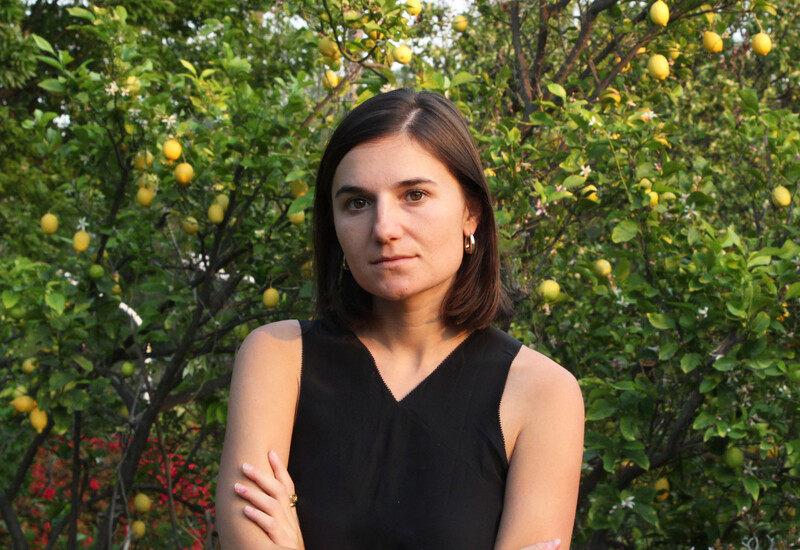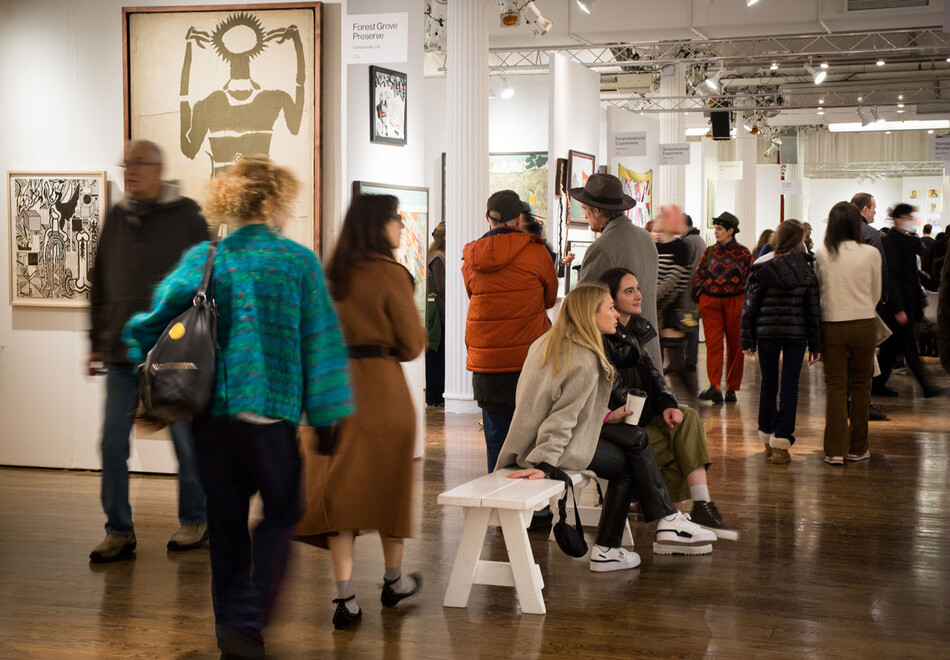
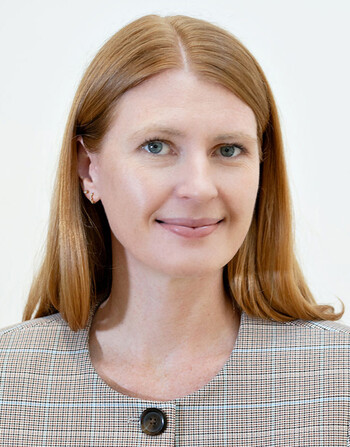
Elizabeth Denny ’10GSAS is the director of the Outsider Art Fair, an annual exposition of works by self-taught artists. This year’s event, held at the Metropolitan Pavilion in New York City’s Chelsea neighborhood, runs from March 19–22.
What exactly is outsider art?
Outsider art is art made by people who don’t have formal training, and it can take a variety of forms. The genre got its start in the Art Brut movement — French for “raw art” — of the 1940s: graffiti and works by psychiatric patients, prisoners, people with disabilities, and others on the societal margins were considered “raw.”
Outsider art is the evolution of that movement, and the definition has broadened to include self-taught creators from a variety of backgrounds. Many are world-class artists and should be appreciated as such. What brings them together is their non-traditional paths.
What are some highlights from this year’s fair?
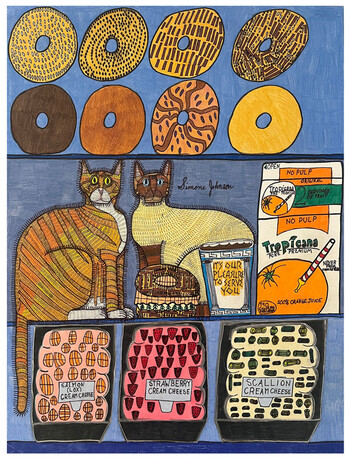
We have several studios that will be showcasing art by people with developmental disabilities. One of the artists, Simone Johnson, exhibited by the gallery Pure Vision Arts, creates detailed, whimsical illustrations of New York City bodegas — cats included — and another, Montrel Beverly, presented by Sage Studio, makes elaborate sculptures out of pipe cleaners. You won’t see these types of exhibitions at most other art fairs.
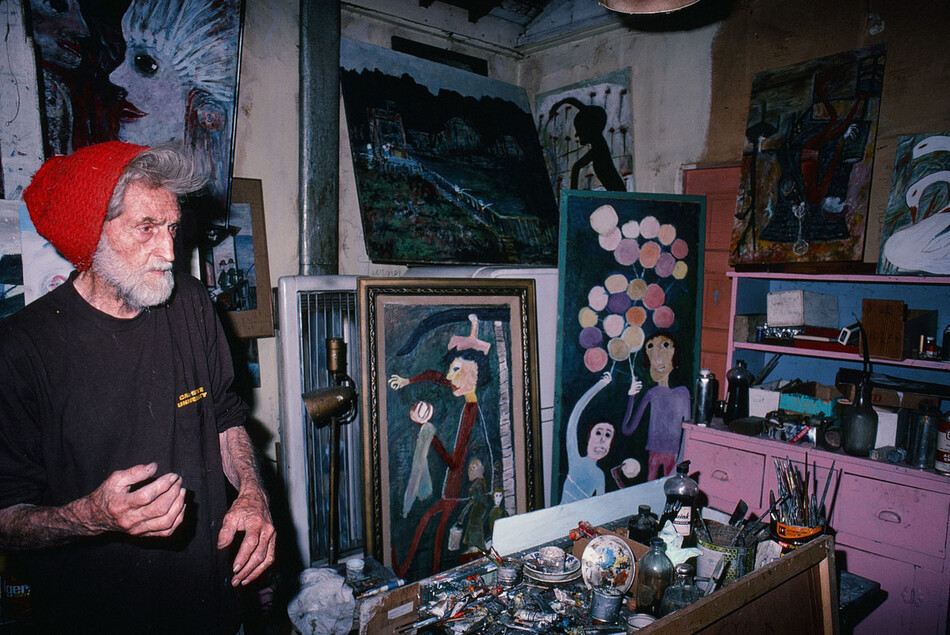
The Gallery of Everything is showcasing work by South Carolina outsider artist Sam Doyle, who is known for his painted portraits on roofing tin and other metal, and SHRINE Gallery will have a replica of the home and studio of painter Jon Serl. Serl was a vaudeville performer who worked as an actor and voiceover artist for early sound films before turning to painting in his fifties. He was known for living in a disorderly home that he himself described as a “dump.” At the fair, you’ll see Serl’s easel and a recreation of the doodles on his messy kitchen floor. I think seeing his studio gives you a powerful window into his life and environment.
Those are just a few examples of the art on display. Visitors will experience the scope and history of outsider art through artists like Doyle and Serl, and also get a sense of what it means to be a contemporary artist working in this area today.
It sounds like accessibility is a major draw.
Absolutely. You don’t need to walk in here knowing the “codes” of the art world. It really is about art being for everybody, on both the creator side and the spectator side. The featured artists don’t necessarily have the kind of self-consciousness that comes with operating and succeeding in the competitive, commercialized art world. That’s why we consider them outsider artists. That said, the fair is also loved and respected by the traditional art establishment. Dealers, collectors, and non-outsider artists visit every year.
Can an artist still be an outsider artist if they’ve been embraced by the mainstream art world?
Yes. In fact, some of the artists shown at the Outsider Art Fair are also in major museum exhibitions. Marlon Mullen, a painter on the autism spectrum who got his start at a studio for developmentally disabled artists in California, was just in a show at MoMA. We have an upcoming talk at the fair on the late southern folk artist Minnie Evans, who currently has a solo retrospective at the High Museum in Atlanta that will move to the Whitney.
You became the Outsider Art Fair’s director in 2025. What drew you to this genre?
I did my master’s in art history at Columbia in the late aughts, focusing on modern art, and I studied with wonderful professors like Jonathan Crary, Alexander Alberro, and Noam M. Elcott. I loved the academic side of my studies, but I frequently found myself up at Prentice Hall to see what the MFA students were up to.
Eventually, I took my own hint that I wanted to work in the contemporary-art world, and I ended up starting my own gallery in 2013. Fellow gallerists on the scene helped introduce me to outsider art and its power. At that point in my career, art had started to feel so professionalized — it was all about the business and the market. But seeing outsider artists express themselves in such unique ways without commercial pressure was a breath of fresh air. The genre helped bring me back to the question of why people make art to begin with.