How Writer A’Lelia Bundles, Descendant of Madam C. J. Walker, Found Her Subject
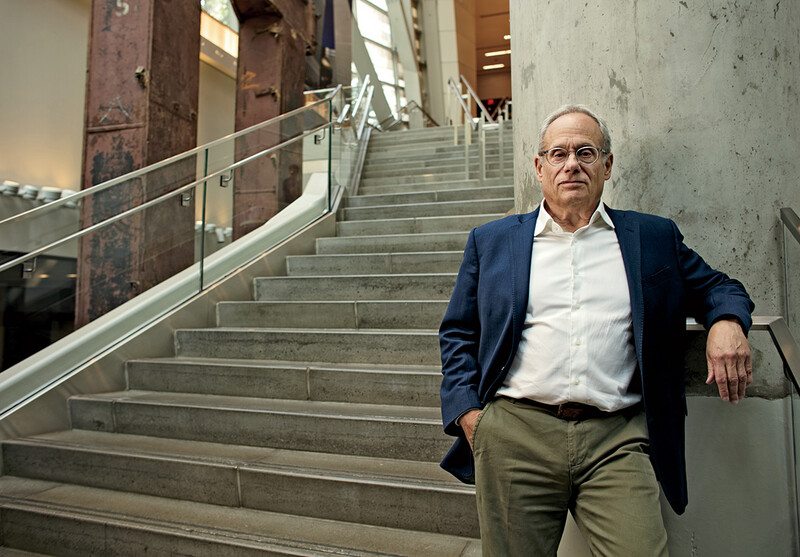
Seated at her writing table in her house in Washington, DC, A’Lelia Bundles ’76JRN is never far from her ancestors. The table, plumed with handwritten notes and pink and yellow Post-its, is surrounded by stacks of folders and boxes stuffed with archival records related to her subjects. Behind her is a bulletin board covered with glamorous ragtime era and Jazz Age portraits of her family, whose remarkable American stories Bundles has brought to life in two elegant, deeply researched historical biographies: On Her Own Ground: The Life and Times of Madam C.J. Walker (2001) and, just published last year, Joy Goddess: A’Lelia Walker and the Harlem Renaissance.
As a girl, Bundles was beguiled by the family relics in her grandfather’s apartment: the silk dresses, the Tiffany crystal vases, the mother-of-pearl opera glasses, the ostrich feather fan, the Ming dynasty figurines. The faintest perfume of a faded era still clung to the mysterious objects, and Bundles imagined that someday she would tell the world about the fascinating women behind them. Bundles’s great-great-grandmother, Madam C. J. Walker (1867–1919), was a hair-care entrepreneur and philanthropist who rose from the cotton fields of the Deep South to start her own business and become America’s first woman self-made millionaire. And Walker’s only child, A’Lelia Walker — Bundles’s great--grandmother — became the star socialite of 1920s Harlem.
“The line was always that Madam Walker made the money and A’Lelia Walker spent it, that A’Lelia threw big parties and wasn’t much of an arts patron,” Bundles says. “But what I found in writing the new book is that A’Lelia was really an original: someone who, like the children of all famous, self-made people, was struggling to find her identity.” It was -A’Lelia who, in 1913, coaxed her mother to open a branch of her Indianapolis-based hair-and-beauty business in New York City, and it was A’Lelia whose generosity nourished the Harlem Renaissance, an artistic and cultural boom that lasted roughly from the end of World War I to the late 1930s. “She brought together this wonderful universe of people,” Bundles says. “Nobody else could have done it.”
“She brought together this wonderful universe of people. Nobody else could have done it.”
After Madam Walker died in 1919, A’Lelia Walker inherited her mother’s property, including two adjacent townhouses on West 136th Street, which she converted into a single dwelling. In 1927, A’Lelia established a salon there, which she called the Dark Tower, and it quickly became a social hub of the Harlem Renaissance. Behind rose-colored curtains, Black and white artists and intellectuals intermingled in their own social bubble, rejecting the outside world of frank and legal racism and homophobia. Guests drank bootleg champagne or bathtub gin and caroused in an open, exuberant atmosphere that flowed from the hostess. On a given Dark Tower evening, you might brush past Zora Neale Hurston ’28BC, or spot W. E. B. DuBois, James Weldon Johnson, or singer Alberta Hunter, or become an item for Black society columnist and former Columbia Journalism School student Bessye Bearden, mother of artist Romare Bearden. Poet Langston Hughes, who attended Columbia’s School of Mines (now Columbia Engineering), was a Dark Tower regular.
“Hughes was a generation younger than A’Lelia and really saw her as a muse,” Bundles says. “He wrote the poem that was read at her funeral, and in his memoir The Big Sea, he wrote about her parties. He called her the joy goddess of Harlem.”
For all Bundles’s skills as a biographer, it’s notable that she was not tuned in to the subject of history while growing up in Indianapolis in the 1950s and 1960s. “There was nothing about Black people in my textbooks,” says Bundles, who attended predominantly white public schools. “The only time I remember Black people being mentioned in my junior-year history text was as slaves. And there was a paragraph about Black people that said, ‘and the slaves were contented.’ I get prickles when I remember that.”
Fortunately, her grandfather Marion R. Perry — a lawyer and the husband of A’Lelia Walker’s adopted daughter, Fanny Mae Bryant — cared a lot about history. He was guardian of the ostrich feather fan and other Walker heirlooms, and he often spoke of his grandfather, who had been elected to public office in Arkansas during Reconstruction. By the late 1960s, when Bundles was in high school, she became interested in other Walker artifacts, such as the items on her grandfather’s bookshelf: first editions of Cane (1923), by novelist Jean Toomer, and Color (1925), by poet Countee Cullen. Both books had come from A’Lelia Walker’s library. “That was my first awareness that there was a whole body of literature that wasn’t being taught in schools,” Bundles says.
After the assassination of Martin Luther King Jr., in 1968, Black Power was ascendant, and hair became a political battleground. Bundles watched self-consciously as her peers turned away from the norms built by Madam Walker, whose beauty empire hinged on scalp conditioners and straightening combs. In this new and highly charged era of social and historical awareness, Bundles questioned whether she would ever write about the matriarch — after all, she herself had started wearing an Afro. It wasn’t until she graduated from Harvard and enrolled at Columbia that the past, in a sense, caught up with her.
“I never carried a sign that said, ‘I’m related to America’s first self-made woman millionaire,’ ” Bundles says with her ready laugh. But her first name was a clue, and of the few people on campus in 1975 who could have possibly made the connection, one of them, Phyllis Garland, an editor at Jet and Ebony and the only Black woman on the J-school faculty, was Bundles’s adviser.
When the two sat down to discuss thesis topics, Bundles pitched a few ideas, none of them memorable. At the end of the conversation, Garland said, “Your name is A’Lelia. Do you have any connection to Madam C. J. Walker and A’Lelia Walker?”
“Yes, that’s my family,” Bundles said.
“That,” said Garland, “is what you’re going to write about.”
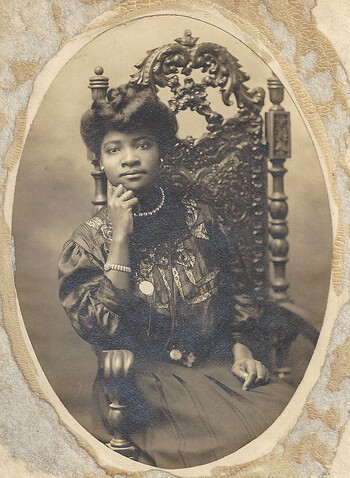
Bundles was thrilled. Her professor had validated Madam Walker as a worthy topic, even if the publishing world wasn’t clamoring for books by or about people of color. So Bundles started her research, and turned up the first surprise: Madam Walker had been twice divorced. Bundles hesitated. What exactly was she getting into?
She decided to consult her mother, A’Lelia Mae Perry Bundles, who was vice president of the Madam C. J. Walker Manufacturing Company. A’Lelia Mae and her husband, who was president of a rival (and, by the 1960s, more successful) hair-care business, had raised their three children in a middle-class Black suburb of Indianapolis. Bundles recalls how her mother would leave the office every day at four to cook dinner, and wake up early in the morning to make breakfast. She was president of the PTA and active on the school board. “She was Supermom,” Bundles says.
In the summer of 1975, while Bundles was wrestling with her great-great-grandmother’s life, A’Lelia Mae was diagnosed with lung cancer. She was in the hospital when her daughter came home for Christmas break. Bundles, twenty-three, could not grasp that her mother was about to die. At her bedside she sought her counsel.
“I said, ‘Mommy, I’m finding in my research that Madam Walker was not perfect — what do I do?’ ” Bundles recalls. “And she said, ‘Tell the truth, baby. It’s all right to tell the truth.’ That was such a gift.”
It was one of their last conversations. “My mother died a few days before I was supposed to be back at school,” Bundles says. “I was in a fog, and I’m not sure I should have gone back, but I did. I wrote the paper that semester. It wasn’t a great paper, but I wrote it. And that meant that I had started the journey.”
In the late 1970s, when Bundles ventured from J-school into the world of television news, there were very few Black women on either side of the camera. Bundles was hired by NBC and placed in a management-training program in New York. She loved the city and wanted to stay: Her plan was to make a living in journalism while chiseling away, whenever she could, at the life of Madam Walker.
But in 1977, the network sent her to the Houston bureau. That year, the US Commission on Civil Rights released a study called Window Dressing on the Set: Women and Minorities in Television, which found that non-whites and women, and especially Black women, “continue to be underrepresented in dramatic programs and on the news . . . and are almost totally excluded from decision-making positions.” In this context, Houston did not sound promising. “But it turned out to be the best thing that could have happened,” Bundles says. “It was a small bureau with wonderful people who embraced me and mentored me.”
Her territory was Texas and Oklahoma, where she covered everything from prison rodeos to hurricanes to grain-elevator explosions. In the summer of 1978, the Ku Klux Klan held a rally in Tupelo, Mississippi. That was the Atlanta bureau’s zone, but it was shorthanded, and the network called Houston. “Our bureau chief, Arthur Lord, who was Jewish, said, ‘Bundles, you’re going,’ ” Bundles recalls. “Everyone else in the bureau was like, ‘Really, Arthur?’ But he said to me, ‘You’re a reporter. Go do this story.’ ”
Lord made sure that the cameraman was a local who would have her back. So Bundles flew to Memphis, rented the only car available, and headed to Mississippi. “There I was, driving into downtown Tupelo, with my big Afro, in a red Camaro,” she says. “It was unbelievable. There was a caravan of Klansmen on Main Street. Part of the producer’s role was to find a pay phone so you can call in information, and I had to go into a pool hall. Not everyone in there was excited to see me. That night, the Klan held a cross burning.”
The assignment was an important lesson for Bundles: an assertion of the right of the press to go anywhere. “The Klan at that time was more bluster than anything else,” she says. “But now I think about how dangerous things can be for reporters.”
In Bundles’s third year, Lord was transferred to Los Angeles. His successor was sent to Houston after screwing up at the Chicago bureau, where he’d been replaced by a Black woman. “This guy was definitely not feeling me,” Bundles says. “It was an ugly, unpleasant situation, which I endured as long as I could.” She lobbied for a transfer and got one — to Atlanta, where a horror was unfolding. From 1979 to 1981, the bodies of some twenty-nine young Black people, mostly boys, turned up in the woods, in the river, in empty buildings. For Bundles, covering the Atlanta child murders was “excruciating.”
During this distressing and frightening time, she continued her research into Madam Walker. In 1982 she met with Alex Haley, the author of Roots and coauthor of The Autobiography of Malcolm X, who wanted to do a Madam Walker miniseries and book. “Alex started talking about all the researchers he was going to hire for this project,” says Bundles, laughing. “I said, ‘Mr. Haley, I wrote my master’s paper at Columbia about Madam Walker. I’d be happy to be one of those researchers.’ ”
So Bundles began working with Haley. When she wasn’t busy at NBC covering Jesse Jackson’s presidential campaign or the vice-presidential run of Geraldine Ferraro, she was delving into all things Madam. She interviewed aging luminaries of Harlem, visited libraries, courthouses, and historical societies, and combed through the thousands of pages of documents that had been kept by Madam Walker’s secretary. The project ended with Haley’s death in 1992. That same year, Bundles’s young-adult biography, Madam C. J. Walker: Entrepreneur (1991), won an American Book Award.
But Bundles’s job was wearing on her. “In the bureaus we described ourselves as firemen: We wore beepers, and ‘when news broke, we fixed it,’ ” she says. “I was always on call, always on the road, and it was just impossible to have a life.” She got a transfer to Washington, DC, to work on a TV news magazine, then left for ABC’s World News Tonight in New York, where she was producer for Carole Simpson, the first Black woman network anchor.
Bundles’s beat with Simpson was social issues, and their stories included people of color. “We could put our spin on it,” Bundles says. “We had our nice little niche, but there were other things going on that showed a clear lack of consciousness. For instance, whenever somebody did a story on welfare, the B-roll in the library was of young Black mothers, pregnant, with many children. Those images were shown over and over again.” When Bundles questioned this, the response was simply ‘that’s the B-roll we have.’ Her bosses in New York then asked her to help analyze the number of times people of color were on the air and what roles they were in. How many Black doctors, lawyers, and other professionals could be found on TV?
“We were putting together a database of people of color who were scientists and ambassadors, so that when we needed a Black person, we could talk to someone other than Jesse Jackson,” Bundles says. “Then one of my colleagues, who must not have liked this project, leaked it to The Wall Street Journal, and I got a call from somebody there saying, ‘Why are you doing this? Isn’t this reverse discrimination?’ ”
In the end, these steps toward inclusion did not have the effect Bundles had hoped. “The truth is that most people were not interested in changing. And they didn’t have to.”
Frustrated, Bundles began plotting her next move. One day in 1996, Robin Sproul, who was then just a few years into her long tenure as ABC’s Washington bureau chief, invited Bundles to lunch. Sproul knew of Bundles’s struggles with her bosses in New York, and told Bundles that she needed a deputy bureau chief in Washington. It was an offer, and Bundles accepted.
For the next four years, Bundles co-led the Washington bureau, and in 2000 she was named director of talent development for the news division at ABC. After twenty-four years in the business, she became an executive.
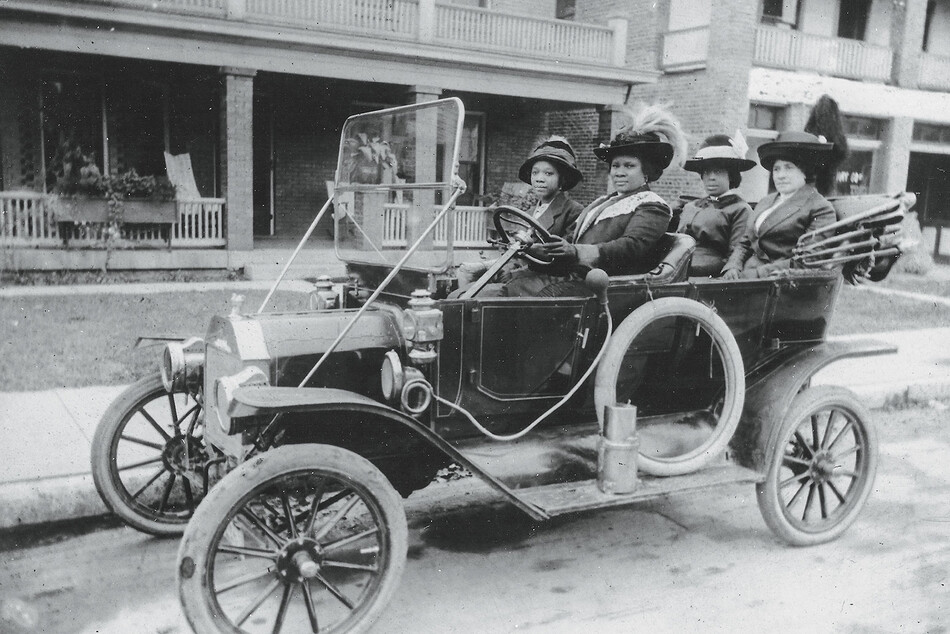
She also became a sophomore author, publishing On Her Own Ground in 2000, which was reissued in 2020 under the title Self Made. It tells the rags-to-riches story of Sarah Breedlove, born in Louisiana just after the Civil War to formerly enslaved parents. Orphaned at five, married at fourteen, a mother at eighteen, and a widow at twenty, Breedlove was working as a washerwoman in St. Louis when she developed a scalp condition and began losing her hair. Seeking out remedies, she met Annie Malone, a Black entrepreneur who sold a sulfur-based scalp formula, and became Malone’s sales agent. In 1906 she married a newspaperman, Charles Joseph Walker, and began making and selling her own hair products under the name Madam C. J. Walker.
“She put her image on the products, opened a factory in Indianapolis, made a fortune, hired many women, moved to New York, and gave her money away,” says Bundles. A supporter of the arts, Madam Walker also donated liberally to the newly formed NAACP and the Black YMCA in Indianapolis. And, Bundles was surprised to find, Madam Walker was an activist: After the East St. Louis Massacre, in the summer of 1917, when a white mob burned houses and murdered dozens of Black residents, Walker and a group of Harlem leaders traveled to Washington with a petition for President Woodrow Wilson, urging him to support legislation to make lynching a federal crime.
“She opened a factory in Indianapolis, made a fortune, hired many women, moved to New York, and gave her money away.”
“Wilson was supposed to meet with them, but at the last minute he was ‘unavailable,’ ” Bundles says. In fact, the government dispatched a Black spy to follow Walker and her friend Ida B. Wells, the prominent journalist and suffragist. The spy wrote them up in a classified document as “Negro subversives.”
“That’s what made her interesting to me,” Bundles says. “She was so multidimensional — an entrepreneur and pioneer of the modern hair-care industry who employed thousands of Black women as salespeople, empowering them and helping them become economically independent, and also a philanthropist and political activist. Madam Walker was part of that first and second generation out of slavery, when African Americans were creating businesses as well as social and cultural institutions, and had the hope that they were going to stake their claim to America.”
In 2020, Netflix aired Self Made, a miniseries based on the book. Bundles was unhappy with some of the filmmakers’ choices, especially the fictionalized conflict between Walker and the light-skinned character based on Annie Malone. Shortly after the show’s release, Bundles posted a candid essay sharing her qualms about the script. “I had been anticipating Hidden Figures,” she wrote, referring to the 2016 film about three Black women mathematicians at NASA who helped put John Glenn into orbit. “Instead, The Real Housewives of Atlanta was staring back at me from the page.”
She had learned the hard lesson of Hollywoodization. And she vows that if Joy Goddess gets optioned — it’s not hard to imagine a screen version of A’Lelia Walker, the “Black Cinderella” with, in Bundles’s words, “diva-worthy flamboyance,” welcoming the culturati into the smoky, bubbly opulence of the Dark Tower — she will make sure to have a seat in the writers room.
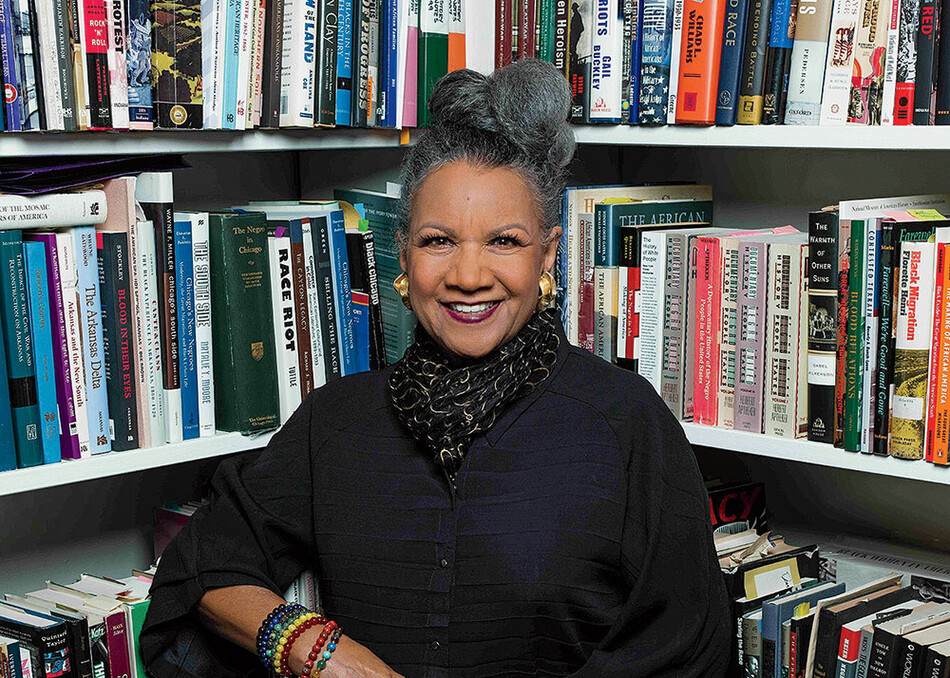
Bundles tries to write every day, but it’s never easy, as she has inherited the family habit of board service. (“I’ve gone overboard,” she jokes.) She served nearly fifteen years as a Columbia Trustee — including eight years as vice chair — and in 2020, Columbia’s Community Scholars program, which began in 2013 as part of the University’s outreach for its Manhattanville expansion, was renamed for her. To date, more than sixty local researchers have participated. Bundles also sits on the boards of the Schlesinger Library for the history of American women, at the Harvard Radcliffe Institute, and the Friends of Woodlawn Cemetery, in the Bronx, where the Walker women are buried.
For Bundles, the story of every American family tells the story of America, and she is humbled to be the chronicler of her own. Such stories, she feels, need to be heard now more than ever.
“There are so many great stories that haven’t been told,” she says — stories that, like the uncorked joy of A’Lelia Walker’s soirees, broaden our sense of what America is, and what it could be.
This article appears in the Spring/Summer 2026 print edition of Columbia Magazine with the title "Renaissance Women."