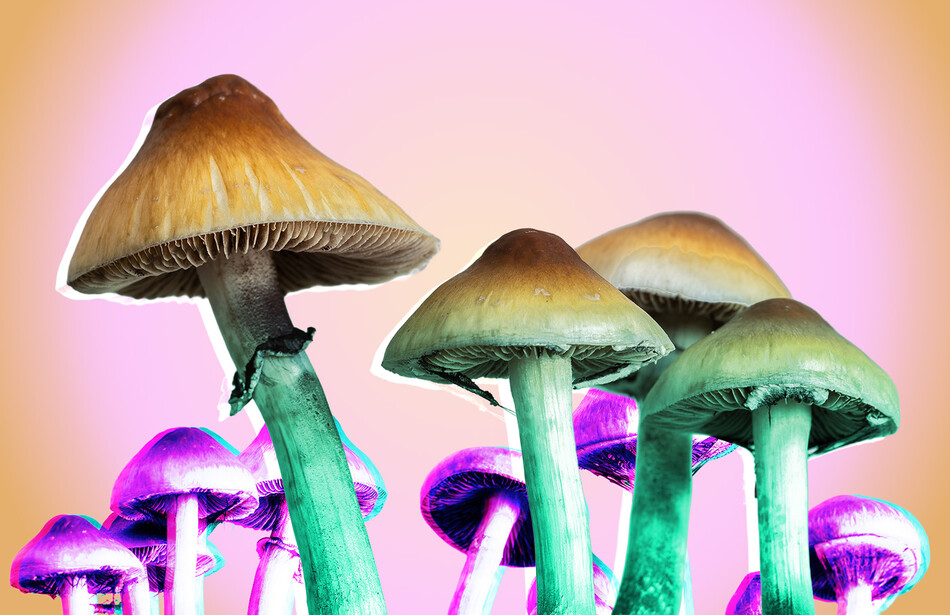
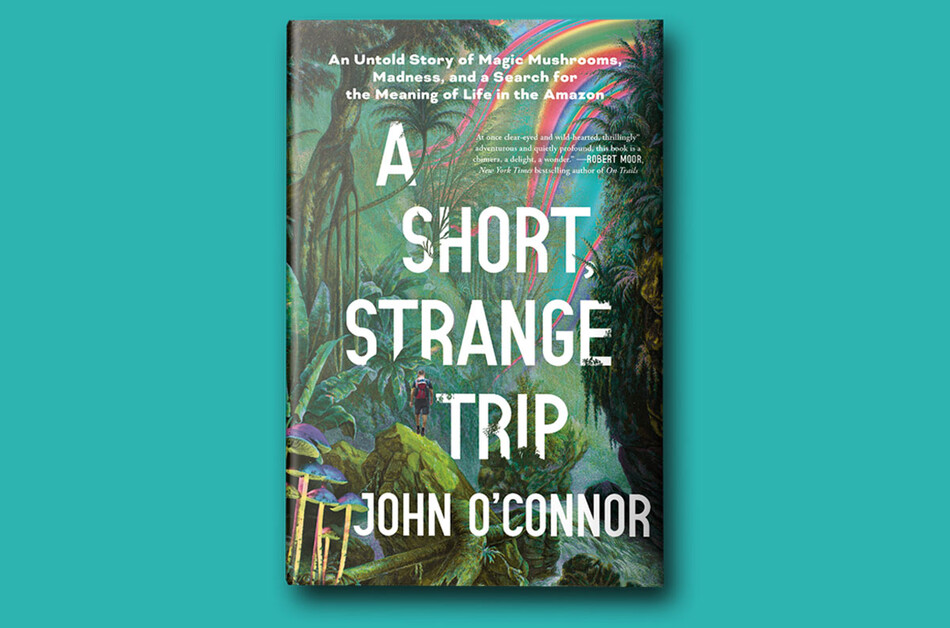
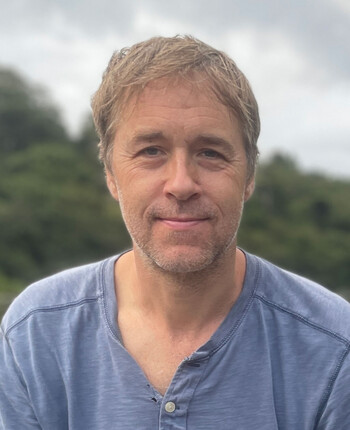
In A Short, Strange Trip, John O’Connor ’03SOA, a travel writer and the author of the 2024 book Finding Bigfoot, looks at the history, impact, and mystique of magic mushrooms and the modern psychedelic movement.
What inspired you to write this book?
During the pandemic, I discovered the book True Hallucinations by Terence McKenna, who was influential in the psychedelic scene of the 1960s through ‘90s. In 1971, Terence and his brother, Dennis, took a famous trip to a town called La Chorrera in the Colombian rainforest in search of an indigenous hallucinogen called oo-koo-hé. They didn’t find the drug, but they ended up taking a lot of psilocybin mushrooms that grew on cattle dung. After bringing spores home to Berkeley, they were among the first Americans to cultivate magic mushrooms at home and sell them. This helped spark a seismic shift in the psychedelic underground by making mushrooms more available.
Around the time that I read the book, my father, who has struggled with alcoholism his entire adult life, had recently undergone a series of psychedelic treatments as a last resort: first ketamine, then psilocybin. Neither treatment worked, and he ended up relapsing. With psychedelics now a billion-dollar industry, I thought that McKenna’s story could be an interesting way of talking about our current moment and how we got here.
McKenna is considered a “mystic” who promoted magic mushrooms as a way to experience heightened levels of consciousness. Do you believe in the power of psychedelics?
I think psychedelics can open figurative doorways, letting us see and perceive things that we didn’t before. The question is how much stock to put into that perception — whether it matters if it’s demonstrably “true,” whether it fits into a larger epistemological framework.
McKenna coined the “Stone Ape Theory,” which claims that homo sapiens evolved after earlier hominids ingested magic mushrooms, and he believed that hallucinogens allow us to transcend time and space. All of that may or may not be true, but there’s a lot of pseudoscience baked into his way of thinking. I do think there is something to the idea of psychedelics opening up our minds. The religious-like sentiment of rapture can feel transformative regardless of whether or not it means anything in a tangible, measurable sense.
Have you ever experienced a serious awakening while on hallucinogens?
I’ve experienced an uptick in normal sensory perception, but I’ve never had a total out-of-body, out-of-mind experience like what you read about in psychedelic literature.
How has the culture and discourse around psychedelics evolved since the 1970s?
I teach a course called “Journalism on Drugs” at Boston College that looks at reporting through the lens of the war on drugs, so this is something that I think about a lot.
In many ways, we are more enlightened now than ever. Both Democrats and Republicans have helped make legislative reforms to some of America’s most pernicious anti-drug laws. Until Biden’s mass pardon, we still had thousands of people in prison in this country for marijuana crimes. Now I see parents hot-boxing in their cars as they pick up their kids at my daughter’s school. Whether that counts as progress, I’m not sure. Psilocybin is legal for therapeutic use in Oregon and for recreational use in Colorado, and I think that’s a good sign.
But it feels like we’ve exchanged one set of priors for another. I was a kid during the Reagan era with all of its “this is your brain on drugs” messaging. Drugs were bad, no questions asked. Now, in some circles, it feels like we’re saying the opposite: all drugs are good, no questions asked.
The truth is probably somewhere in between. Mushrooms and LSD won’t kill you, but we still seem naïve about their potential psychological and physical risks. There’s also a lot in the ether about the efficacy of psychedelics as magic-bullet fixes for mental health and addiction disorders. But they don’t work for everybody. They didn’t work for my father.
In the book, you write about attending a psychedelics industry conference in Denver. What did you find there?
A strange mix of everything: credible experts like the journalist Michael Pollan [’81GSAS] and the researcher Bob Jesse, but also a lot of charlatans, quacks, hucksters, and snake-oil salesmen.
One of the weirdest presentations I attended was a talk from the NFL quarterback Aaron Rodgers, who promoted the connections between ayahuasca and elite athletic performance while providing zero evidence. Just a couple of months later, Rodgers tore his Achilles tendon during his first game of the season.
It was also shocking to see how much commodification and commercialization is going on in the psychedelics world. The top floor of the conference center was teeming with hundreds of vendors selling everything from mushroom massage oil to mushroom coffee to obscure mushroom-related tech products.
Is the large-scale commercialization of psychedelics necessarily a bad thing?
No. There’s a lot of handwringing about this in the psychedelic underground from people who claim that the government has no right to regulate these drugs and that corporations shouldn’t commodify and package them like they do with cigarettes and alcohol. But unfortunately, that’s just how it’s going to be done from a harm-reduction standpoint. At the same time, it’s hard to imagine how something like psilocybin can be fully controlled when you can now buy a DIY kit online, grow mushrooms in your closet, and give them to your friends.
But I think we are headed in the right direction toward finding a balance between over and under-regulation. We can now have conversations about drugs openly and honestly. And certainly, there’s a role to be played by the business community in getting psychedelics to people who need them for therapeutic purposes. Lots of people are finding sustenance and help in these substances who weren’t finding them from the traditional medical establishment. To deny them access to these drugs — some of which, after all, are plants and fungi — because they are new and untested seems a little sadistic to me.