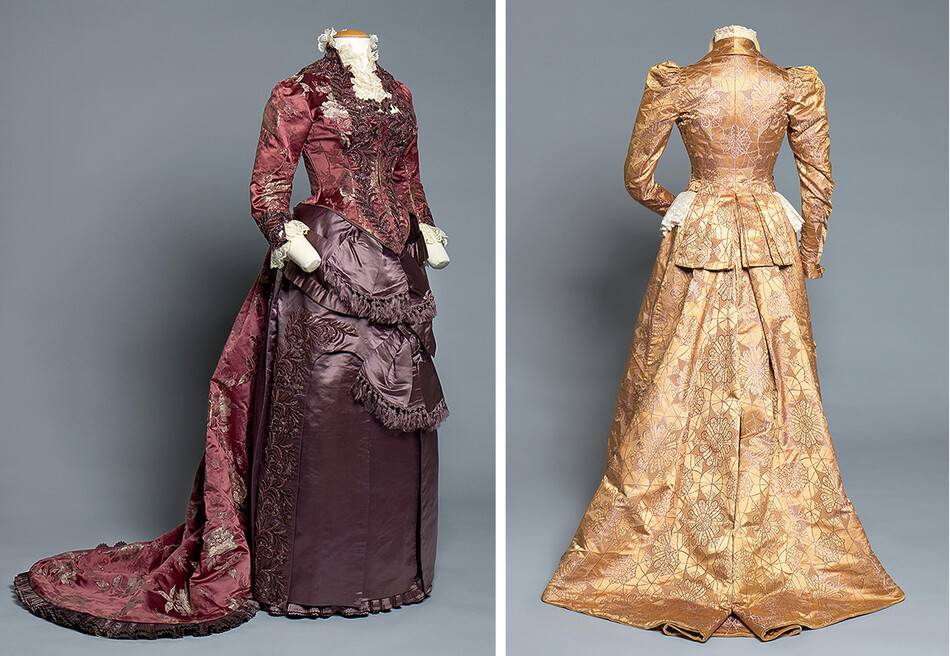
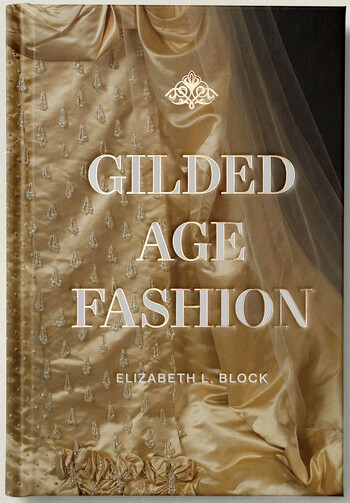
As a scholar of art history, Elizabeth L. Block ’04GSAS has always been fascinated by the Gilded Age: an era of industrial innovation, the novels of Edith Wharton, and decadent attire (as seen, most recently, on the HBO series of the same name). The senior editor in the publications and editorial department at the Metropolitan Museum of Art recently published Gilded Age Fashion, a book showcasing over fifty dresses and accessories from the 1870s through 1900.
What inspired you to write a book on Gilded Age fashion?
I did my PhD on nineteenth-century American portraits of women: paintings by John Singer Sargent, Cecilia Beaux, Mary Cassatt, and others. My interest in how women presented themselves and selected their outfits for portraiture got me thinking about the fashion industry of the time. I wrote my first book, Dressing Up, on women of the late 1800s who were patrons of French couture designers. For Gilded Age Fashion, I wanted to present that information in an accessible manner — no academic jargon — and to show some of the finest dresses and accessories that women in the United States bought and wore.

What are some of the key elements of women’s fashion from that time?
Dresses of the Gilded Age were floor-length, heavily layered, and often had ornate bodices. In the 1870s–80s, many gowns had protruding bustles in the back, but by the end of the century, you start to see more bell-shaped silhouettes. For my book, I wanted to show dresses that were crafted by the finest makers and that have interesting designs. One of my favorites has stalks of wheat embroidered into the fabric.
I also wanted to emphasize how women in the late-nineteenth century were very aware of quality. They knew that French couturiers like the House of Worth had relationships with the finest silk purveyors in Lyon. They knew the fabrics, they knew the best designers, and they had the money to buy whatever they wanted. Influential socialites like Caroline Astor, a member of the “old money” Schermerhorn family who married businessman William Backhouse Astor Jr. 1849CC, and Alva Vanderbilt, the wife of railroad heir William Kissam Vanderbilt who inspired the character of Bertha Russell (played by Carrie Coon) in The Gilded Age, would go to Paris twice a year to have dresses made for the spring and fall social seasons.
Women at this time were also very comfortable around a needle and thread. Even at high levels of society, girls were taught to sew at around age six. The Astors and Vanderbilts weren’t mending their own stockings, but they had knowledge of sewing and respect for what the seamstresses in Paris design houses were doing.
Where did you source the featured garments?
Because I edit exhibition catalogues and the academic journal for the Metropolitan Museum of Art, I have close knowledge of the museum’s Costume Institute collection. I selected a number of gowns from there, but I also wanted to show dresses from around the country. The Western Reserve Historical Society in Cleveland has a wonderful collection of garments, many of which had never before been photographed.
Living in New York, it feels like remnants of the Gilded Age are everywhere.
Definitely. Working at the Met in the Upper East Side, I spend a lot of time walking along Fifth and Madison Avenues. Some of the mansions from the era are still around. The building that houses the Cooper Hewitt, Smithsonian Design Museum belonged to Andrew Carnegie; I love how they retained the original staircase. The Ukrainian Institute and Ralph Lauren flagship store are also in original mansions. In Midtown, you have places like the Morgan Library & Museum. Columbia’s campus in Morningside Heights was built during the same period. So New York is very much a Gilded Age city, but there are also others with great Gilded Age architecture, like Chicago, Cleveland, Philadelphia, and Pittsburgh.
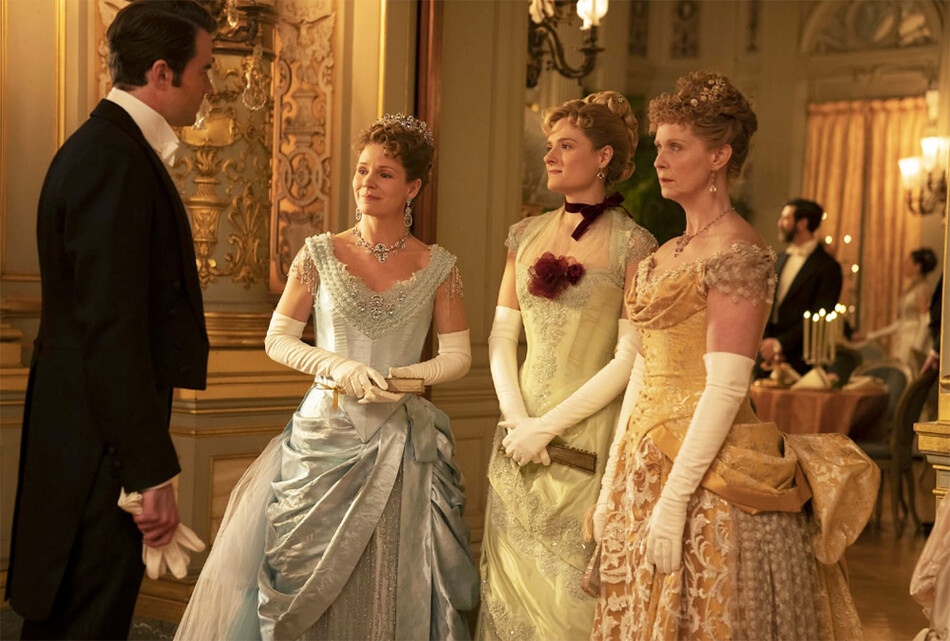
As an expert on this topic, what do you think of the costumes on The Gilded Age television series? Do they match up with reality?
The show’s costume designer, Kasia Walicka-Maimone, is brilliant. There are so many main characters and background actors who all need costumes, and the series is now going into its fourth season. I’m in awe of what she and her team do.
The clothing in the first two seasons is more historically accurate than in the third season, and I think that’s largely for practical reasons. In the third season, you see some of the earlier costumes being reused, but with the addition of sashes or sleeves that aren’t necessarily realistic for the mid-1880s. I’ve noticed big puffy sleeves that would fit more in the 1890s. Sometimes I’ll watch the show and think, “that looks like a fashion plate from 1895.”
Many of the color combinations are accurate and based on original designs. But in some cases, the palettes are exaggerated: for instance, you’ll see the character of Marian Brook (played by Louisa Jacobson) wearing bright, lemony yellows paired with turquoise. The costumes for Gladys Russell (played by Taissa Farmiga) are very realistic when she’s a teenager, but when she’s a newlywed, they get much grander and a bit exaggerated.
All of that said, The Gilded Age is a drama, not a documentary, and it should have artistic license. The costumes in particular are not only a gift to people who love period dramas but also to us historians of the nineteenth century. The show has brought more interest in fashion and accessories from the era to the general public. For me, that’s incredibly valuable.