A Response to Authoritarian Attacks on Universities
What was the impetus for this book?
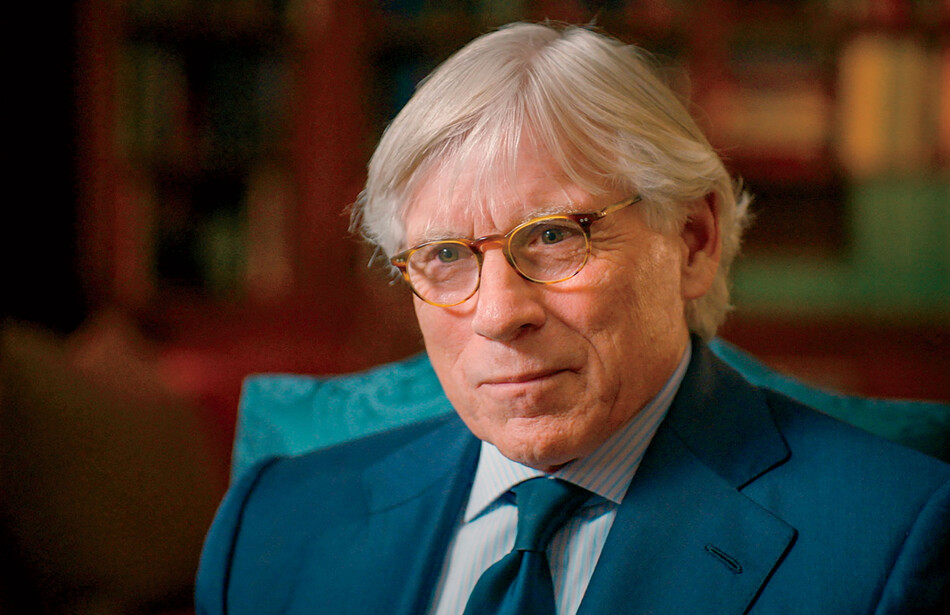
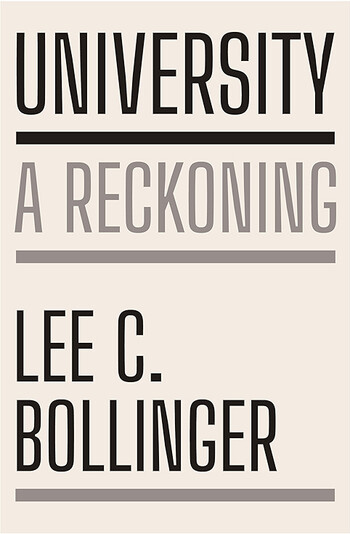
I’ve been thinking about these ideas, these institutions, for most of my life: universities, the First Amendment, democracy, authoritarianism. And then, of course, the unprecedented assault by the Trump administration on universities really made me want to write a defense of universities, which I felt were not being adequately defended or explained, as well as argue for their vital role in the society. I wanted to assert that our university system is the best in the world, and to explain that this success is rooted in a unique and somewhat odd structure that has evolved over the last century.
Your book pegs that evolution to a turning point in the interpretation of the First Amendment. When did this happen, and how?
In the very first cases in the Supreme Court of 1919, the court upheld the convictions of various people who dissented from America’s involvement in World War I, including presidential candidate Eugene Debs. Then, very quickly, Oliver Wendell Holmes changed course and articulated this magnificent, foundational ideal of freedom of speech and press in America, calling for protection of “freedom for the thought that we hate” and conveying the notion of “the marketplace of ideas.” At the same time, universities were growing from small colleges to powerful research institutions that were organizing around what I call the scholarly temperament, and they developed the idea of academic freedom.
With the First Amendment, the courts were trying to determine what the protections against government censorship should be. That took many years and many cases, and liberals and conservatives alike on the courts adopted an extremely strong protection for speech in America — greater than any protection of any society today or in history.
“We need to think about how to bring the jurisprudence of the First Amendment into a conception of the university.”
But in a system of freedom of expression, of protection of extreme speech, we are grappling with how to achieve this value of the search for truth or knowledge, and overcome our natural intolerance for speech we don’t like. And that’s the tension that’s so beautiful in the First Amendment. It’s like the First Amendment is setting an example for the society about what our values are, and we need to think about how to bring the jurisprudence of the First Amendment into a conception of the university, which deserves the sort of protection and autonomy that we have given to the press.
You’ve been president of both a state school, the University of Michigan, and a private one, Columbia. How does the First Amendment apply in each?
The First Amendment applies to what is called state action. So if the government says you cannot say a certain thing, you have a First Amendment case to go to court and say, “The government can’t tell me I can’t say those things.” If a private organization says, “Anybody who is part of this organization cannot say these things,” that’s not subject to the First Amendment. It’s not state action — it’s private action. So that’s the principle, and it’s quite meaningful as it plays out with universities.
Public universities are public state actors, and therefore they must abide by the First Amendment. You cannot, at a public university, establish a rule that students and faculty will not be able to criticize the university administration, or that students and faculty cannot take positions on certain controversial issues in public debate on the campus. Private institutions, even though they receive federal funds, are not subject to the First Amendment. And in theory, they could set rules preventing students from discussing certain subjects. But every major private university in the United States has said, “We are going to voluntarily live by the First Amendment.”
Now, when you follow that framework, you become subject to noxious speech, offensive speech, speech that is harmful and hurtful to others, but that can be protected — we know this from cases like Brandenburg v. Ohio, where the Klan held a rally and made racist and antisemitic statements. People may, in the abstract, say, “Well, that’s fine.” But what actually happens — as I know from countless experiences — is that people don’t understand why that speech should be protected. Of course, nothing is set in stone, and you can debate whether that framework is right or wrong. But it’s the framework we have now, and leaders must make sure people understand it.
With democracy and free speech under attack, what can universities do to strengthen their public standing?
Universities, like any other institution, have flaws and issues to be addressed. But the public has accepted too easily the negative characterizations of universities promoted by certain political segments, which are meant to diminish the university’s identity in society. I think it’s useful to look at the traditional role of the press in America, which has, over the past half century, with the help of the Supreme Court and the Constitution, forged this very important identity as the fourth branch of the society, responsible for informing the public, according to professional standards of journalism. And that has served it well. And I think universities need to craft and assert our particular identity too, as the fifth branch.
Why do you think the government has been attacking universities?
In authoritarianism, the government tries to politicize the civil service and institutions within government that are intended to provide independent, objective information, such as the Bureau of Labor Statistics or the Federal Reserve Board. And it attacks its critics — law firms, the press, universities, business.
Until recently, universities have been relatively secure from that kind of assault. You would have to go back to the McCarthy period in the 1950s to see something comparable to what’s happening today. For many decades we lived free from government efforts to seize control of universities and suppress criticism and independent thought. And in this time, we forged individualistic identities. We want our students and our faculty to think of themselves as loyal to our particular institution, and at the same time, we’re competing for students and faculty against other schools. So we’ve set up a system in which institutions have individual identities and compete with one another, and this makes us more vulnerable to authoritarian efforts to undermine us.
So what can universities do?
First, we need to acknowledge that we would be stronger if we had more collective resistance and more collective action. One idea would be something like the equivalent of a NATO charter, with an Article 5 for universities in the US: If any institution among us is attacked, all of us will come to its defense. That would not be hard to implement.
And not only do we need the capacity for more collective resistance by universities, but we also need to be prepared to join with other sectors of society that are under attack: the press, law firms, and so on. So there has to be collective action across the board. If you look at any of the scholarship on authoritarian risks in a society, the point will be made that only the cross-sector resistance by civil society will be effective in defeating those authoritarian moves.
That said, the government has enormous power, and if a government is intent on destroying democracy and destroying great institutions that have taken a century or more to create, I’m afraid it has it within its powers to do so.