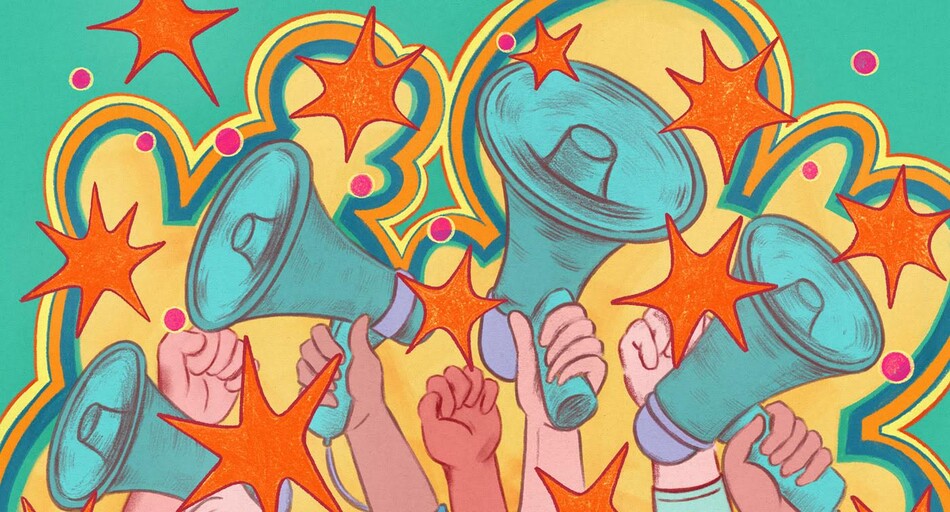
Autocracy, a form of government in which power is concentrated in the hands of a single ruler, is a spectrum: no two autocracies are exactly alike, but their similarities are stronger than their differences. This was evident on a recent afternoon at Columbia Law School, where Tejal Jesrani, an instructor at the Human Rights Clinic at the law school’s Human Rights Institute, welcomed four activists from four different countries, who recounted their struggles under despotic regimes.
The panel, part of a series called Legal Machinery of Repression, included Evgenia Kara-Murza, a Russian activist whose husband, the journalist Vladimir Kara-Murza, was poisoned and jailed for opposing Vladimir Putin and the war in Ukraine; Francisco Pineda, a Salvadoran farmer and environmentalist who led a citizen movement against a proposed gold-mining operation that threatened the local water supply; Tania Bruguera, a Cuban artist who was arrested and jailed for her satirical performance-art pieces calling for free expression; and Marcel Gomes, a Brazilian investigative journalist who linked the world’s biggest meatpacking company to illegal deforestation in the Amazon.
The panelists’ stories together provided a kind of composite sketch of authoritarian control. Pineda told of El Salvador president Nayib Bukele’s desire to open up land to industrial gold mining, which requires enormous amounts of water and toxic chemicals. Pineda’s fight began two decades ago, when the government granted the mining company Pacific Rim an exploratory permit. He faced death threats, and four of his colleagues were murdered, allegedly by people with ties to Pacific Rim. But the campaign was successful, culminating in a 2017 law, passed unanimously by the Salvadoran legislature, banning metal mining in the country.
Bukele was elected in 2019 on a platform of ending gang violence, and he promptly began consolidating his authority, expanding police powers and eroding civil rights. In 2024, the legislature reversed the mining ban. Bukele has promised jobs and economic growth, but Pineda contends that he wants to enrich himself. “Those that are hoarding the money want even more,” Pineda said through a student interpreter. He accused Bukele of criminalizing activists by branding them as terrorists. “As people,” he said, “the only thing we have left is to scream.”
That same scream can be heard all around the world. “In today’s Russia, white is called black and black is called white,” said Kara-Murza, who is the advocacy director for the nonprofit Free Russia Foundation in Washington. She spoke about her husband’s two poisonings (he survived both and is out of prison) and described a climate of fear under Putin, with thousands of arrests and “prison sentences for high treason for refusing to bow down and be silent.”
In Cuba, too, said the artist Bruguera, the government criminalizes activists. “Dictators are not creative,” she observed. And yet, she warned, the longer they are in power, the easier it is for them to stay there. One of the biggest challenges to enacting reforms in Cuba, she said, is that after sixty-six years of communist dictatorship, “the memory of freedom has been erased.” This erasure has produced a nebulous discontent: “You feel that something is wrong, but you don’t know what it is, because there’s nothing to compare it with.”
Brazil’s situation is very different. In 2018 the country elected Jair Bolsonaro, a far-right populist, to the presidency. As the journalist Gomes explained, Bolsonaro dismantled environmental protections, leading to a spike of illegal burning and clearing in the Amazon rainforest. Gomes traced some of the destruction to the meatpacking giant JBS, which was grazing cattle on the cleared land. He organized an international boycott and got six major European retailers to stop selling JBS products.
Bolsonaro, meanwhile, served one term before being voted out in 2022 and was later convicted of plotting a coup to remain in power. In September 2025, the Brazilian Supreme Federal Court sentenced him to twenty-seven years in prison.
Gomes joined the other speakers in lauding, in Kara-Murza’s words, “the resistance, resilience, and incredible courage” of justice-seeking activists living under autocracy. And he ended on a pragmatic note: All dictators, he said, “end up dead or in jail. The important thing is to stick together.”
This article appears in the Winter 2025-26 print edition of Columbia Magazine with the title "Speak Up, Speak Out."