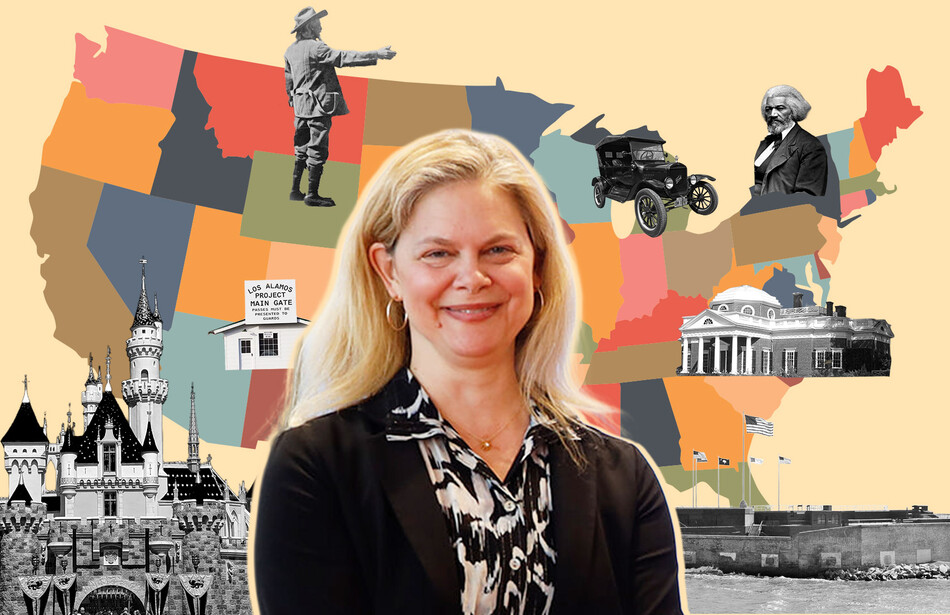
In This Land Is Your Land, a guide to some of America’s most consequential (and at times controversial) historical sites, Pulitzer Prize-winning historian Beverly Gage ’04GSAS tells the story of the United States through visits to museums, theme parks, battle reenactments, and more as the nation celebrates 250 years.
What inspired you to write this book?
In 2023, I was looking ahead to the 250th anniversary of the Declaration of Independence. I had observed how history was being discussed and fought over in recent years, and I thought that maybe I could intervene. Come 2026, we were going to need a way to think about our history that wasn’t all rah-rah patriotism or total pessimism.
I also wanted to get out of the office. I had just published a big biography of J. Edgar Hoover, which took me about a decade to write, and I wanted another adventure. I’ve always loved road travel.
How are historical sites such as museums and monuments integral in shaping our sense of history?
A lot of Americans learn their history from places more than they do from books or even in the classroom. Historical sites tell a different kind of history; they’re more immediate connections to the past. In an era of screens and algorithms that feed us what we already know or reinforce our biases, museums and other sites open their doors to anyone who wants to walk in, learn, and have a conversation. In our current moment, I think they’re a meaningful way of engaging not only the past but also the present.
As a scholar of US history, was there anything particularly new or surprising that you learned during your travels?
I’m a specialist of twentieth-century American history, so this was a chance for me to go back to 1776 and look at the big events of the eighteenth and nineteenth centuries in a way that I hadn’t done since studying for my oral exams at Columbia in the late 1990s.
During my travels, I became very attentive to the ways in which historical periods that seem very different on the surface were contending with the country’s founding traditions and documents in similar ways. I also went down a lot of rabbit holes. While researching a chapter on Virginia, I became very interested in this brief moment in the state’s history when the legal restrictions on manumission — the voluntary freeing of slaves — were loosened. A small but significant number of Virginia slave owners decided to completely emancipate all of the enslaved people in their households. Learning about this time gave me more perspective on figures like Thomas Jefferson and James Madison who lived in that same world but made very different decisions.
The book mentions that it was usually women who made the efforts to establish and preserve American historical sites — places like Mount Vernon, George Washington’s Virginia plantation, and the Hermitage, Andrew Jackson’s Nashville mansion.
There’s a real paradox: Most historic sites are still devoted to men, but women were often the engines behind the creation of these sites. They’ve been the fundraisers, the planners, the docents, and the curators going back to the nineteenth century. There aren’t a whole lot of places devoted to women in history, but there is the impact of women’s creativity and labor just about everywhere you go.
How have previous US anniversaries driven large-scale historical preservation efforts?
The centennial in 1876 was a huge blowout event in Philadelphia. Something like twenty percent of the American population actually went to Philadelphia for the grand fair that was held. Independence Hall was restored for the centennial, and Valley Forge, where the continental troops camped out from 1777–78, emerged as a tourist destination.
The years around 1926, celebrating 150 years, saw the rise of “Colonial Williamsburg” as an attraction and the opening of Thomas Jefferson’s Monticello as a public museum. The 1976 bicentennial was more conflicted because it happened during the aftermath of the Vietnam War, Watergate, and other crises, but it still instigated a huge investment in public history. A study in the 1980s found that at least a quarter of all existing historical sites came out of that era.
How is 2026 different?
2026 is in some ways the most muted of the big anniversaries that the country has experienced. We aren’t seeing much substantive investment in public history or historical sites. One of the strange things about this moment is the crackdown on and even defunding of institutions and organizations that have been the engines of public history. So this year looks very different from 1976.
There are still some attempts at large-scale commemorations, mostly at the local level. Philadelphia is holding celebrations, and New York is having a tall ships fleet come as it did for the bicentennial. In DC, the Trump administration is holding what it’s calling the “Great American State Fair” along the Mall, intended as a gesture to the World’s Fairs of the past, as well as a Grand Prix motor race and other events. There’s some indication that President Trump may finally build his “Garden of American Heroes,” a statuary garden of people that he thinks are great from the past.
But I’m not sure if most Americans are going to mark this moment at all. I think for a lot of people, 2026 is a moment of real ambivalence about the country. One of the things that I wanted to do with this book was to give people a set of tools: not only for going on fun and interesting historical road trips, but also for reconciling the fundamental tension of whether you can really know the history of this country in a serious, deep way and still come out saying that you love this country.
6 American History Regions Worth Visiting
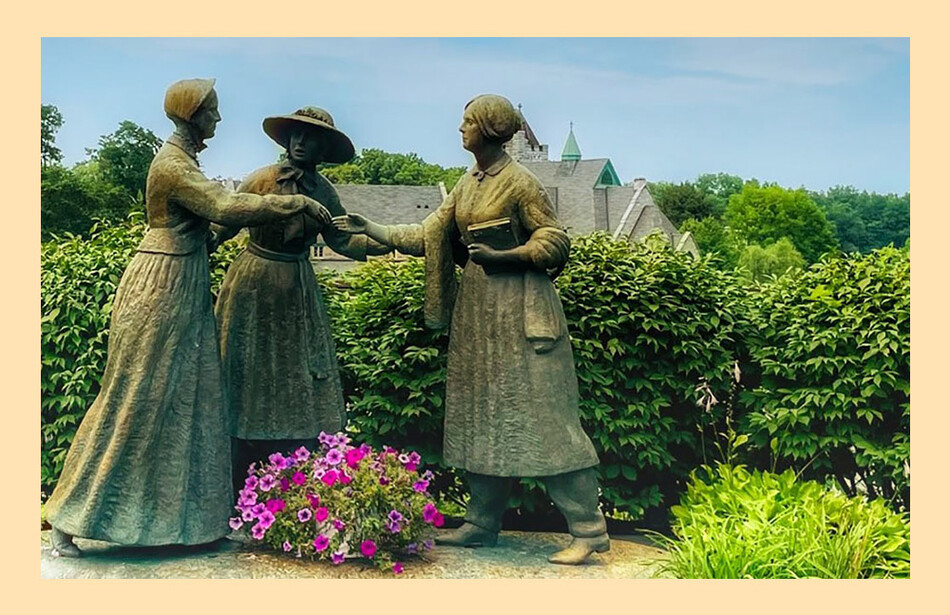
Upstate New York
Upstate New York isn’t a place that most people would think of visiting for historical tourism. It doesn’t have one big site like Independence Hall or the Alamo. But during the 1830s through 1850s and beyond, as a result of the Erie Canal, it became a place where many people sought economic prosperity.
It also emerged as a concentrated region of visionaries and activists. Towering figures of American history like the abolitionists Frederick Douglass, Harriet Tubman, and John Brown, and the women’s movement leaders Elizabeth Cady Stanton and Susan B. Anthony, were all living in towns near each other and thinking about new ways forward for the United States. Traveling along the Erie Canal corridor, you can visit a lot of small-house museums that tell the stories of these figures and their engagement with the rest of the country.
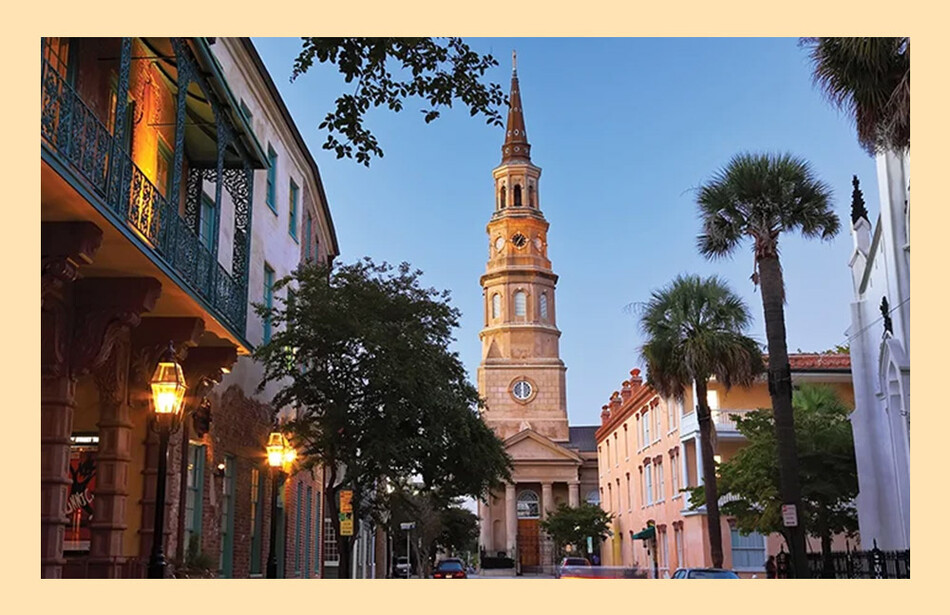
South Carolina
I wanted to look at the Civil War period without visiting every battleground, so I went to Charleston, the birthplace of secession. Fort Sumter, the site of the first Civil War battle, is still standing, and the historic downtown district is very well preserved. At the same time, the city continues to transform itself with new museums and monuments as ways of engaging with the region’s complicated history.
The historian Eric Foner, who taught at Columbia for many years, has done a lot of work with the National Park Service on establishing sites devoted to the history of Reconstruction. There’s a region south of Charleston called the Sea Islands where the Union army came in very early and emancipated the enslaved people, making the area the first community of newly-freed people in the south. The Reconstruction Era National Historical Park, a cluster of sites that tell the history of the region, opened in the city of Beaufort in 2017.
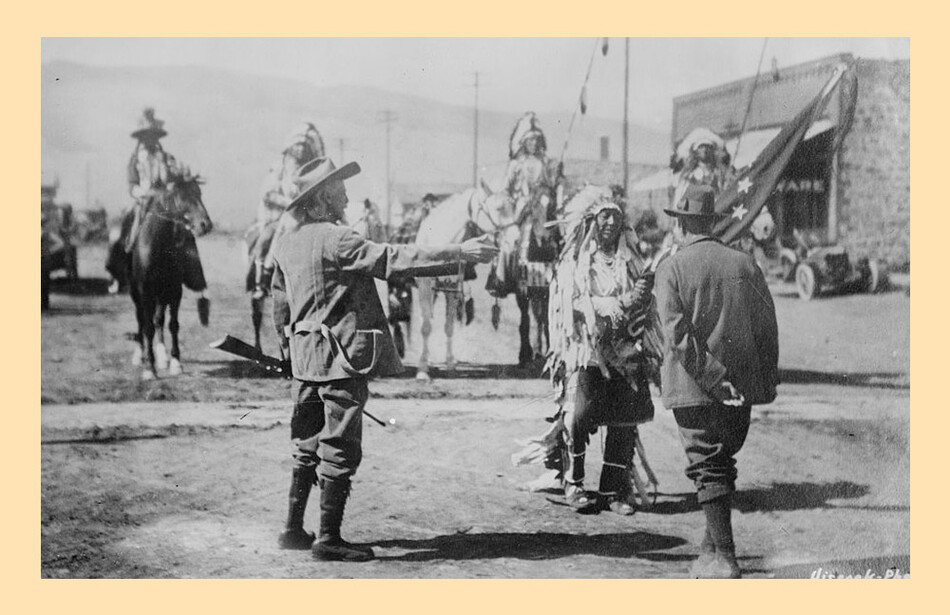
The “Wild West”
The “wild west” typically refers to the area of Montana, Wyoming, and the Dakotas in the 1870s through 1890s. This was the period of the “closing of the frontier,” or the settlement of the west and the conflicts that ensued with native peoples there. I wanted to visit the myth of “how the west was won” and see the local places that were once promoted as representing America as a whole.
One of the great myth makers of this era was “Buffalo Bill” Cody, an Iowa-born United States Cavalry scout who killed and scalped a Cheyenne warrior as revenge for General Custer’s defeat at the Battle of Little Bighorn. Cody went on to star in an elaborate play about the event. There’s a whole museum devoted to his legacy in Cody, Wyoming, a town named after him. Western sites are fascinating for their violent and troubled histories, but also for looking at how those stories have been told over time.
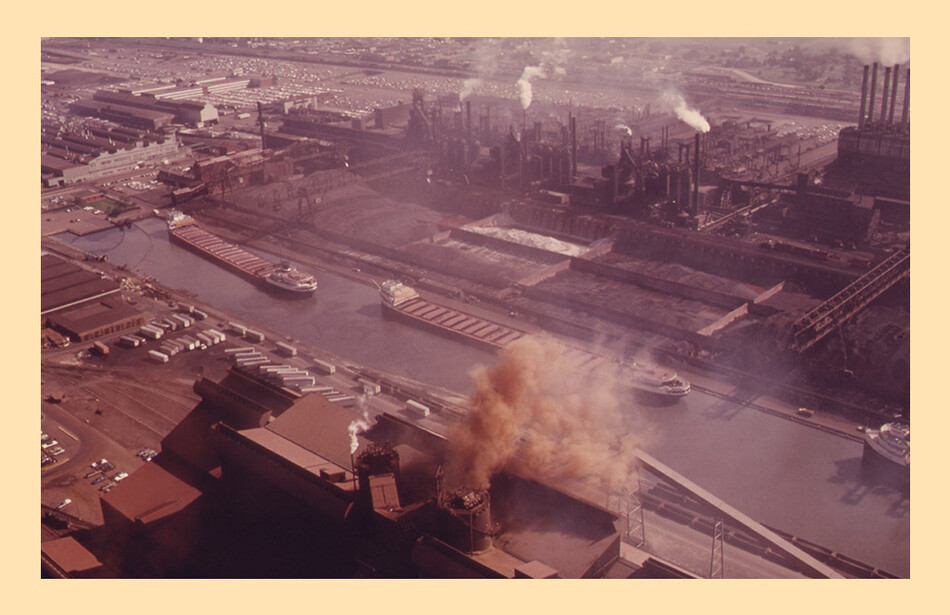
Dearborn, Michigan
The history of America’s industrial heyday has largely disappeared or sits in ruins in places like western Pennsylvania. Henry Ford’s River Rouge Facility in Dearborn, Michigan, outside Detroit, is an exception. The factory is critical to the history of American auto production but also to the labor movement that took off in the 1930s.
Henry Ford was passionate about preserving his own vision of American history. At the plant, there’s an onsite museum and a living history village complete with Model Ts, glassblowing demonstrations, farming displays, and more. You can also go on tours of the River Rouge complex, which was once the largest industrial facility in the world. It’s an incredible marvel. People all over the world used to come see it. Now it’s a little chopped up and not operational in the ways that it once was, but it’s still a working part of the Ford Motor Company. They build the F-I50 pickup trucks there.
The Southwest
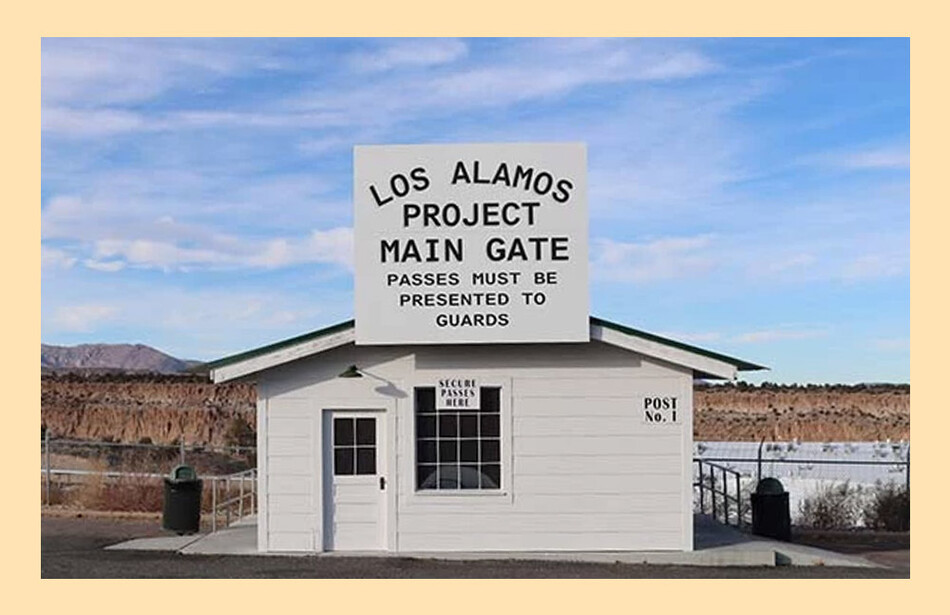
To explore the periods of World War II and the Cold War, I could have gone almost anywhere in the country, because they had such a dramatic impact on the United States. The Los Alamos National Laboratory in New Mexico is still an active government site, so you can’t visit it, but you can go to the site of the Manhattan Project — the creation of the first nuclear bomb.
We tend to think of nuclear science as being invented at Los Alamos, but other places around the country also played a role. A lot of the research took place at Columbia, hence the name “Manhattan Project.” Many scientists who ended up in this incredibly isolated place came from bustling, urban university settings like Columbia and the University of Chicago. Today, Los Alamos is a more populated area than it was back then, but during the 1940s, it was a new, top-secret little city in the mountains. Visiting today still gives a sense of what it was like at that moment.
During my trip to the Southwest, I also visited the city of Roswell, known for its UFO lore and a collection of now-defunct underground nuclear missile silos. I ended up staying in an empty silo that had been converted into a bunker-style AirBnb.
Southern California
As with any good road trip, I felt that I had to end in California. As you get closer to the present, there are fewer monuments and sites to visit. But Southern California is really saturated with late-twentieth-century history like the Nixon and Reagan presidential libraries, and various new memorials have been installed in recent decades.
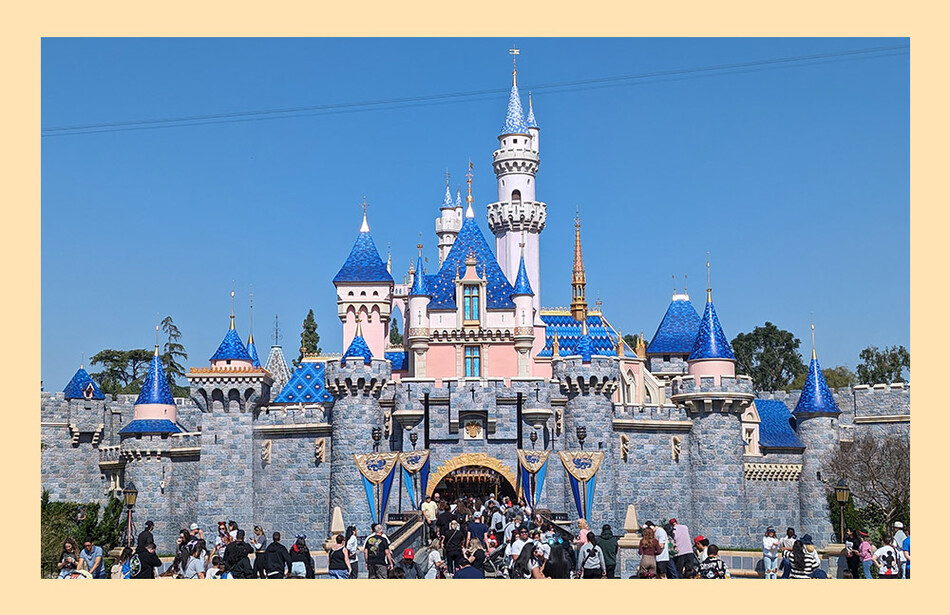
One of the most significant and influential sites in American history is Disneyland. Most people don’t think of the theme park in this way, but when Walt Disney opened it in 1955, part of his goal was to tell the story of the United States. Main Street USA, still the centerpiece of Disneyland, is supposed to be a recreation of the period of Disney’s childhood in the early twentieth century. The Frontierland section depicts a triumphal version of the American west, and the “Great Moments with Mr. Lincoln” show, first introduced in 1965, features an animatronic Abraham Lincoln discussing the Civil War and reading the Gettysburg Address.