5 Alumni Museum Curators Shaping the Art World Today
Aimee Ng
The Frick Collection
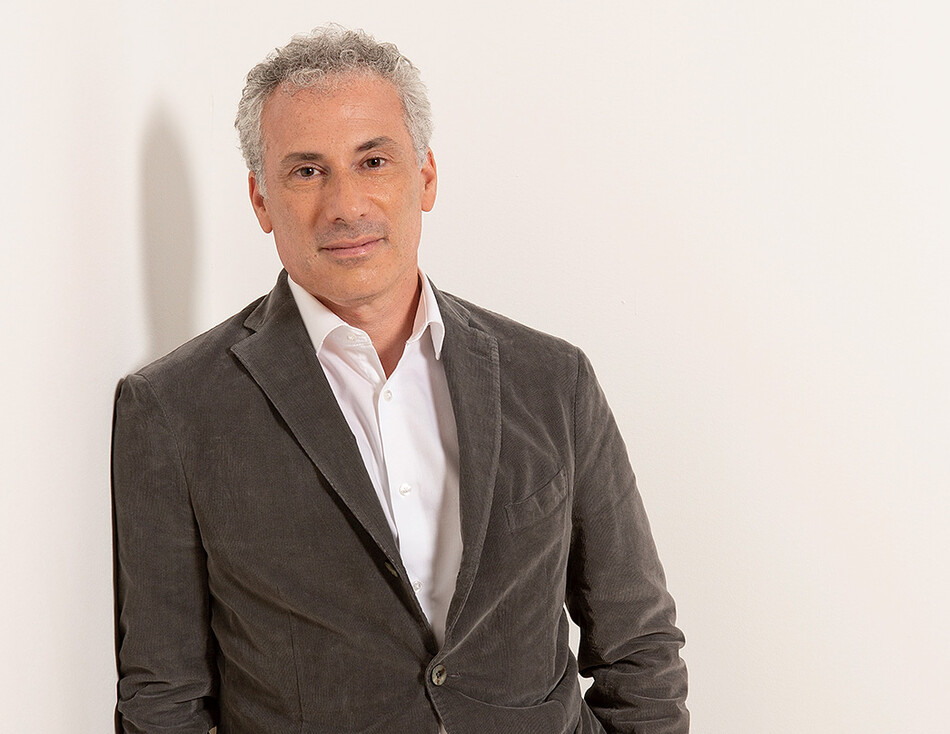
Walking into Gainsborough: The Fashion of Portraiture, an exhibition at the Frick Collection, you are greeted by a stylish cast of characters (and a few Pomeranians) in various textures of lace, silk, satin, and chiffon, posed against pastoral backdrops or in elegant Georgian rooms. The twenty-five portraits on display are by Thomas Gainsborough, an eighteenth-century British painter known for his lush blend of photographic precision and loose, feathery brushwork.
The show, which opened in February and runs until May 25, is curated by Aimee Ng ’12GSAS, who was promoted in November 2025 to the role of Peter Jay Sharp Chief Curator at the Frick. “Gainsborough was one of the more important artists to Henry Clay Frick when he was building his collection,” explains Ng, who has been with the Upper East Side museum — the former mansion of the Gilded Age steel tycoon — since 2015. “Yet the Frick itself has never had a focused Gainsborough exhibition.”
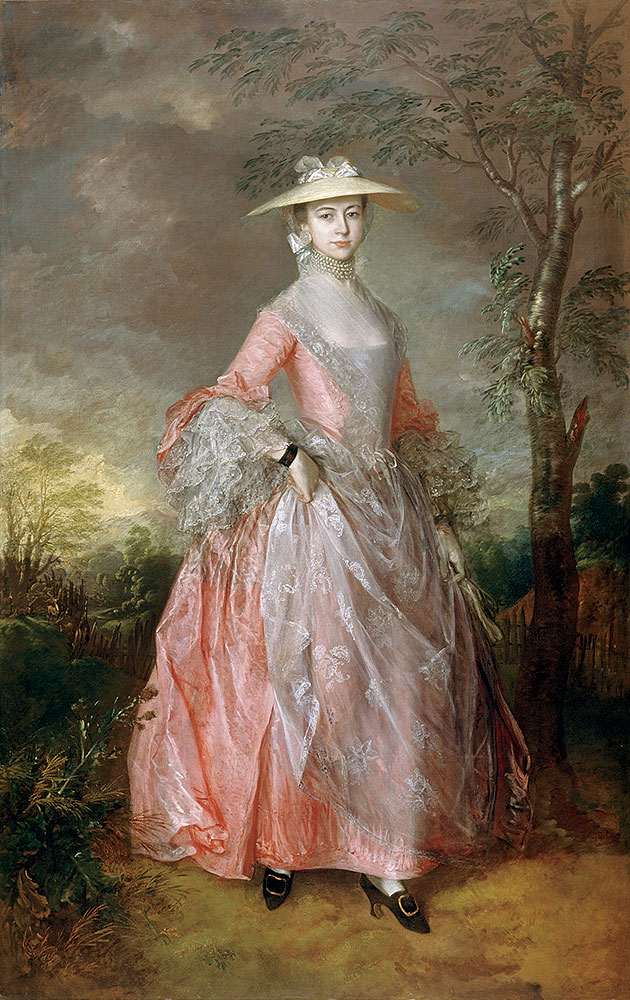
For Ng, Gainsborough’s art is both timeless and timely. “For one thing, he was a pretty damn good painter, and I think that’s sometimes forgotten,” she says. The artist’s life and career also overlapped with the founding of the United States, which turns 250 this year. “The stories Gainsborough told through portraits of figures from King George III all the way down to servants are all wrapped up in the birth of this country.”
As the Frick’s chief curator, Ng oversees the museum’s entire curatorial department, including around three dozen staff members and a collection of approximately 2,500 paintings, sculptures, decorative objects, and medals, mostly from Europe in the thirteenth through nineteenth centuries. For the museum’s first major overhaul since 1935, a significant renovation and expansion that wrapped up last year, Ng helped conceive of the placement of artwork in the upstairs rooms, which previously held offices. The addition of 30 percent more gallery space now allows the Frick to mount loan exhibitions without de-installing works from the permanent collection.
Bringing Gainsborough: The Fashion of Portraiture to life required years of planning and a labyrinthine borrowing process. “A curator has to have many informal conversations with institutions about whether or not, for instance, the Duke of Norfolk is willing to lend his portrait of Bernard Howard,” says Ng. “At the end of the day, even if you’ve got a great idea, if you don’t have lenders who are on board, you don’t have an exhibition.”
Ng’s connection to the Frick goes back to her time as a Columbia graduate student in art history, when she took a course on French painting under Louis XV, taught by Colin B. Bailey, the Frick’s chief curator at the time (he’s now director of the Morgan Library & Museum). Bailey would take students on field trips to the Frick to study its rococo treasures up close. “That was important exposure for me to the wider application of art-history training in a museum setting,” says Ng, who wrote her PhD dissertation on sixteenth-century Italian Renaissance painting. “Having that bridge through a faculty member was really eye-opening.”
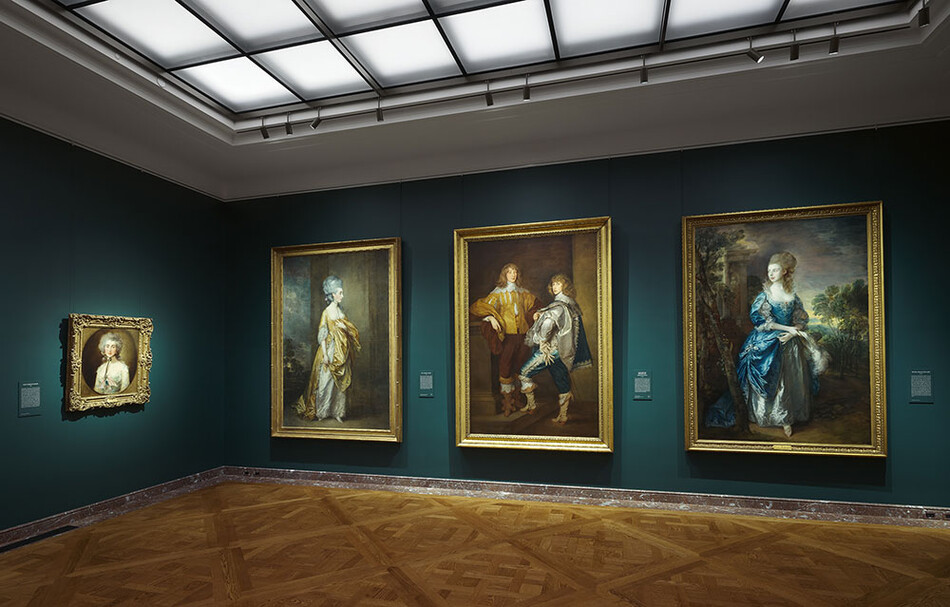
Since joining the Frick, Ng has sought out ways to attract new audiences and keep existing fans engaged. During the pandemic, she cohosted the Cocktails with a Curator video series, which explored highlights from the museum’s collection — each talk accompanied by a drink recipe. This year, the museum has leaned in to New York City’s status as a fashion epicenter to promote the Gainsborough exhibition and an affiliated showcase of French engravings from the time of Marie Antoinette. “I think fashion is an appealing topic for people who may not otherwise feel that welcome in the fine-art world,” says Ng.
Though beautiful art tends to speak for itself, it’s the stories behind the people and places depicted in historic works — whether the scandalous courtesan Grace Dalrymple Elliott (mistress to the future King George IV, then to the Duke of Orléans), the subject of two known Gainsborough portraits, or Lady Skipwith, a baronet’s wife and equestrian captured in a pensive gaze by Joshua Reynolds in 1787 — that give Ng the most fodder for connecting today’s audiences with the past. At the Gainsborough exhibition, wall placards and an audio guide narrated by Ng offer intriguing backstories for the long-gone aristocrats and commoners hanging in the galleries.
“The general audience is not as interested in the nitty-gritty scholarly details as they are in the types of human stories and dramas that fuel literature and movies,” says Ng. “Storytelling humanizes what some might see as old, dusty things and reminds us of the lives that each one of these objects represents.”
Josh Siegel
The Museum of Modern Art
The Museum of Modern Art might be best known for Van Gogh’s Starry Night, wall-sized Monet water lilies, and a world-class collection of Picassos. But the Midtown Manhattan behemoth is also home to an influential film program that, since the museum’s early days, has brought together a spirited community of local cinephiles.
Josh Siegel ’92CC has been a face of that program since 1993, when he joined MoMA as a curatorial assistant. “I’m a senior veteran at this point,” he says. As a curator of film, Siegel serves on festival selection committees and organizes screenings at the museum’s in-house cinemas — MoMA shows upward of four films a day, in addition to the moving images projected inside galleries — while appealing to an eclectic array of tastes among the museum’s roughly 130,000 members. “Programming ranges from the first-ever comprehensive retrospectives of filmmakers like Spike Jonze, Dziga Vertov, Frederick Wiseman, and Sarah Maldoror to premieres of new films by Gus Van Sant, Lucrecia Martel, or Apichatpong Weerasethakul,” he says.
Siegel is also involved with the museum’s robust film restoration and archiving program, an initiative that goes back to the 1930s. “We’ve collected a diverse range of films from the start — works by everyone from Sergei Eisenstein to Walt Disney, at a time when Disney didn’t even understand that he was making art,” says Siegel, who in 2002 founded To Save and Project: The MoMA International Festival of Film Preservation, dedicated to showcasing newly restored works.
Once thought of as purely commercial entities, movies weren’t widely regarded as museum-worthy until the second half of the twentieth century. “The sad reality is that around eighty percent of all the films made before 1955 are gone forever, whether through loss or deterioration or neglect,” says Siegel. “So it’s essential to save what remains and make it available to the world.”
This restoration work is no less critical in the digital age. “With streaming platforms like Netflix or even the Criterion Channel, people assume that movies are infinitely reproducible, but they’re not,” explains Siegel. “If you save sixteen- or thirty-five-millimeter film prints properly, they’ll last for roughly five hundred years. A digital file will last maybe five or ten years before the format becomes obsolete — think about floppy disks and DVDs. Digital material is expensive to store and needs to be migrated from one format to another on a continuous basis.”
While Siegel takes pride in introducing audiences to obscure foreign art-house films or rediscovered gems of the silent era, when it comes to archiving and curating, he makes no distinction between “highbrow” and “lowbrow” media. “One of my proudest moments was getting Jackass into the permanent collection of MoMA,” he says. “It belongs to a long tradition of physical comedy, of slapstick, of cruel humor. It goes all the way back to the origins of cinema.”
Growing up in the city, Siegel started his cultural education early. “My life in New York was one long internship, everywhere from the Met to the Bronx Zoo,” he recalls. He fondly remembers climbing atop the Picasso goat in MoMA’s sculpture garden — “at a time when you were allowed to do that.” After attending Columbia Prep and completing Core Curriculum work in high school, Siegel studied at Columbia College, majoring in English and history. He wrote an undergraduate thesis on depictions of childhood in films from the Great Depression, with English and comparative literature professor Robert O’Meally as his adviser.
“The liberal-arts education that I received helped make me the voraciously curious person that I am today,” says Siegel, who stays connected with the University by providing studio critiques to School of the Arts MFA students. “Columbia has an imperative to preserve its Core Curriculum and core values. Without the humanities, we’ll be diminished as citizens and have lost a piece of our souls.”
Denise Murrell
The Metropolitan Museum of Art
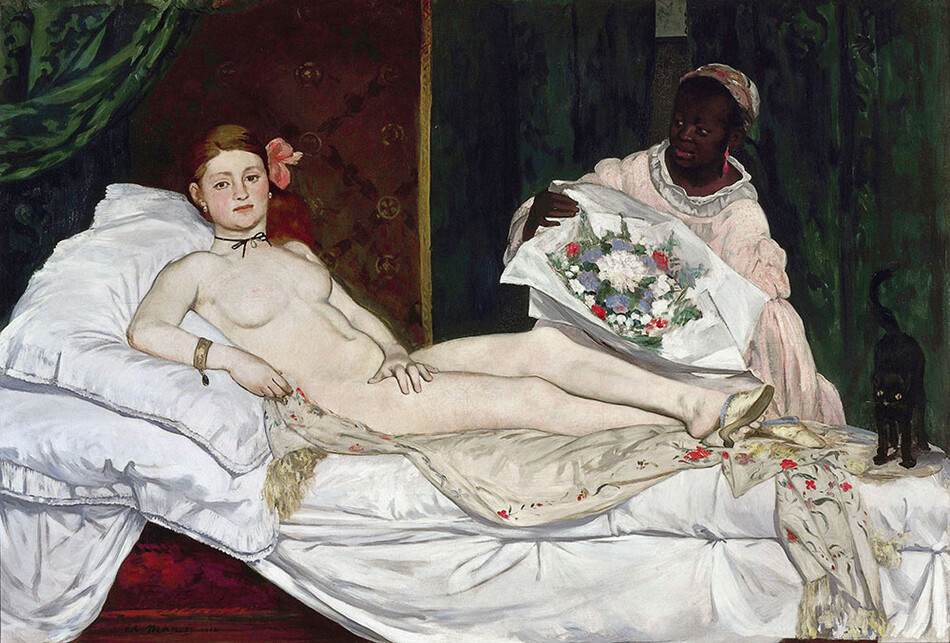
When Denise Murrell ’14GSAS set out to write her Columbia PhD dissertation on the use of Black models in modern and contemporary art, she couldn’t have predicted how far the project would take her. The idea first came to Murrell while studying Édouard Manet’s 1863 painting Olympia, which shows a naked white courtesan sprawled out on a divan beside a Black maid holding flowers. Murrell realized that most scholarship focused only on the courtesan.

“I wanted to point out that there were two women in that painting,” recalls Murrell, “and that while the woman who posed for the Black figure, whom Manet refers to as Laure in his notes, was in some ways an example of exoticized tropes of servitude, her modern attire indicates that she was part of the free Black community in Paris that interacted with nineteenth-century artistic circles. That community had been all but ignored by art historians.”
In 2018 at the Columbia Wallach Art Gallery, Murrell curated a show based on her dissertation, Posing Modernity: The Black Model from Manet and Matisse to Today — the first major international loan exhibition to be held at the gallery’s new space, on the Manhattanville campus. In 2019, the show traveled all the way to the Musée d’Orsay in Paris — where Olympia permanently resides — under the title Le Modèle noir, de Géricault à Matisse.
Since that breakthrough exhibit, Murrell’s profile in the art world has continued to rise. In 2020, she joined the Metropolitan Museum of Art as an associate curator, and in 2022 was given the inaugural title of Merryl H. and James S. Tisch Curator at Large, reporting to the Office of the Director. “In this role, I develop exhibitions, make acquisitions, and collaborate across departments,” says Murrell, who divides her time primarily between the Modern and Contemporary Art and European Paintings Departments while also contributing as a guest lecturer, essayist, and advisory committee member for other institutions.
While at the Met, Murrell has established herself as one of the art world’s go-to voices on the Harlem Renaissance. Her debut show, Harlem Renaissance and Transatlantic Modernism, in 2024, marked the first significant exhibition in New York City focused on the period in nearly forty years. “We were trying to re-center the Harlem Renaissance within the narratives of American art, but also foreground the fact that this was an international movement,” explains Murrell. “Most of the Harlem artists spent extended periods of time in Europe, especially France, and shared stylistic similarities with modernists like Matisse, Picasso, and Munch.”
A large part of Murrell’s work involves expanding the Met’s permanent collection to feature historically underrepresented groups. “I’ve focused a great deal on artists of color — African American and the broader African diaspora — but also on representations of Black subjects by other artists,” she says.
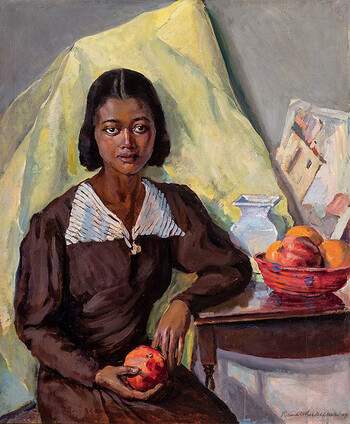
Her acquisitions include the 1934 painting Girl in a Red Dress by Charles Alston ’29CC, ’31TC, works by Harlem Renaissance portraitist Laura Wheeler Waring, the Met’s first painting by contemporary artist Titus Kaphar, and an 1873 terra-cotta bust of the playwright Alexandre Dumas fils, who was mixed race, by Jean-Baptiste Carpeaux. Other than the Carpeaux, which is in the European sculpture galleries, Murrell’s acquisitions will be showcased in the Met’s forthcoming Tang Wing for Modern and Contemporary Art, which is scheduled to open in 2030. “The new wing will have fifty percent more space than the current wing, so therefore a much broader capacity to showcase more voices and narratives,” says Murrell. Until then, Met visitors can find some of the acquired works on temporary display in the museum’s Robert Lehman Wing.
Murrell’s entry into the art world was far from conventional. After graduating from the University of North Carolina at Chapel Hill as a first-generation college student, she earned an MBA from Harvard and spent over twenty years working in finance and consulting. Living in New York City and traveling internationally exposed her to the world of museums and galleries. “Museums became a part of my life in a way they had not been before,” says Murrell, who joined museum supporter groups and began taking evening classes in art history at Hunter College. What had started out as a curiosity escalated into a passion, and Murrell ended up enrolling in graduate school at Columbia while working a full-time finance job. “I would take half a day of vacation time per week to attend afternoon classes,” she says.
Now an accomplished curator at America’s largest and most-visited art museum, Murrell hopes to spark that same enthusiasm in others — especially people who might be discovering art late in life or in unconventional ways. “I try to develop exhibitions and create publications that speak to audiences who are not necessarily initiated,” she says. “I think that is a key component of what all museums need to do in order to broaden the groups of people who come on a regular basis.”

Connie H. Choi
Studio Museum in Harlem
Back when she was a Columbia graduate student focused on art of the mid-twentieth century, Connie H. Choi ’19GSAS lived in Harlem and paid regular visits to the Studio Museum, one of the nation’s top institutions dedicated to artists of African descent. “It was my neighborhood museum, and I would walk by it whenever I went to campus,” says Choi, who wrote her PhD dissertation on the relationships between education, photography, and the civil rights movement. “My deep connection really came out of being a Columbia student.”
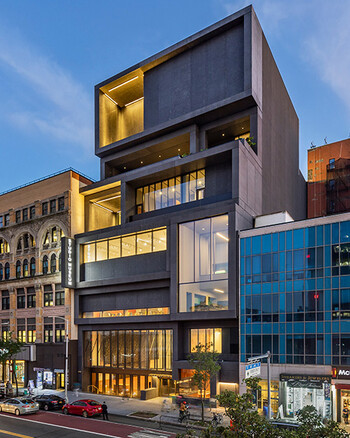
Today, Choi plays an important role in stewarding the museum’s collection and direction. After joining the Studio Museum as an associate curator in 2017, Choi was promoted to curator in 2022 — a job that covers everything from researching the permanent collection to overseeing new acquisitions. “Since we have limited storage, we also need to think strategically about space, to ensure that we can properly care for all the works that we are bringing in,” she says.
Choi also organizes temporary exhibitions — her show on the sculptor and activist Tom Lloyd just closed in March — at the museum’s new building on 125th Street. Since the reopening in fall 2025, Choi has helped oversee an exhibition called From Now: A Collection in Context, which showcases selections from the permanent collection, rotating every few weeks. Featured artists have included historic heavy hitters like Jean-Michel Basquiat and Romare Bearden, as well as active artists such as Derrick Adams ’03SOA and Allison Janae Hamilton ’10GSAS, ’17SOA. “Every time people visit, hopefully they will see new works,” says Choi.
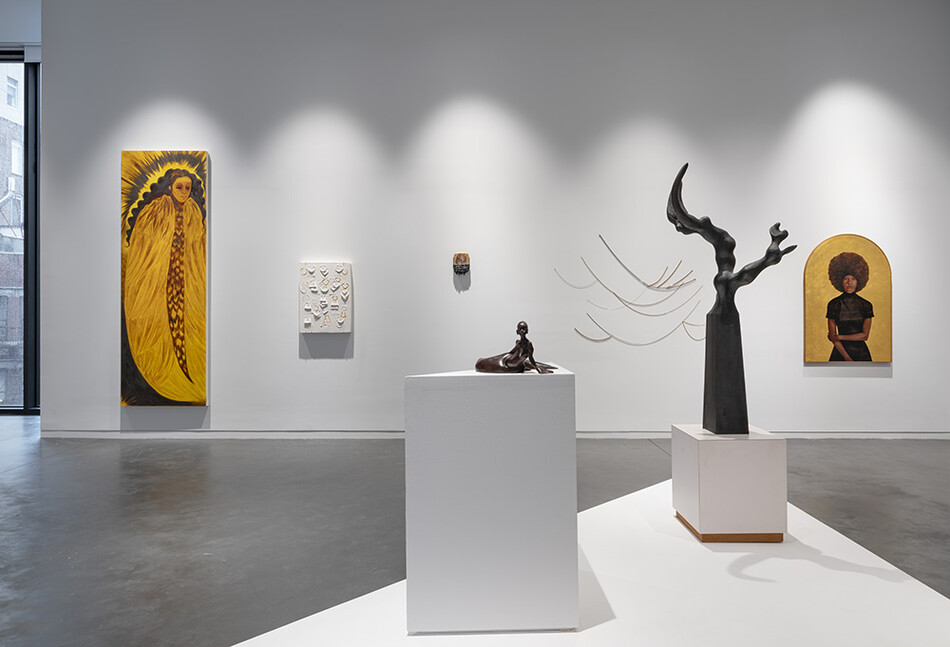
While the Studio Museum’s previous space, a former bank, had low ceilings and limited exhibition capacity, the 82,000-square-foot new building on the same site allows for more — and larger — artworks to be showcased. “Our third-floor gallery has a twenty-eight-foot-high, barrel-vaulted ceiling, which makes the possibilities of what can be installed nearly endless,” says Choi.
The upgraded design also encourages deeper engagement with the surrounding community — an effort bolstered by the Studio Museum’s pay-what-you-can fee structure and free admission on Sundays. “Beautiful floor-to-ceiling windows on the north and south facades allow the building to feel as porous as possible, erasing the boundary between the museum and the street and bringing Harlem inside,” says Choi. “This is in an incredibly vibrant neighborhood, home to cultural organizations like the Apollo Theater. We want to celebrate the spirit of what it actually means to live in Harlem.”
Drew Sawyer
Whitney Museum of American Art
Drew Sawyer ’16GSAS spent a long stretch of 2024 and 2025 trying to answer a specific question: How do you capture the look, sound, and mood of American art at this moment? It’s a pursuit that has challenged generations of curators since 1932, when the Whitney Museum of American Art hosted its first invitational painting exhibition. The tradition, which later became a biennial showcasing all artistic media, helped raise the profiles of artists like Jackson Pollock, Robert Rauschenberg, and Cindy Sherman. This year marks the event’s eighty-second edition.
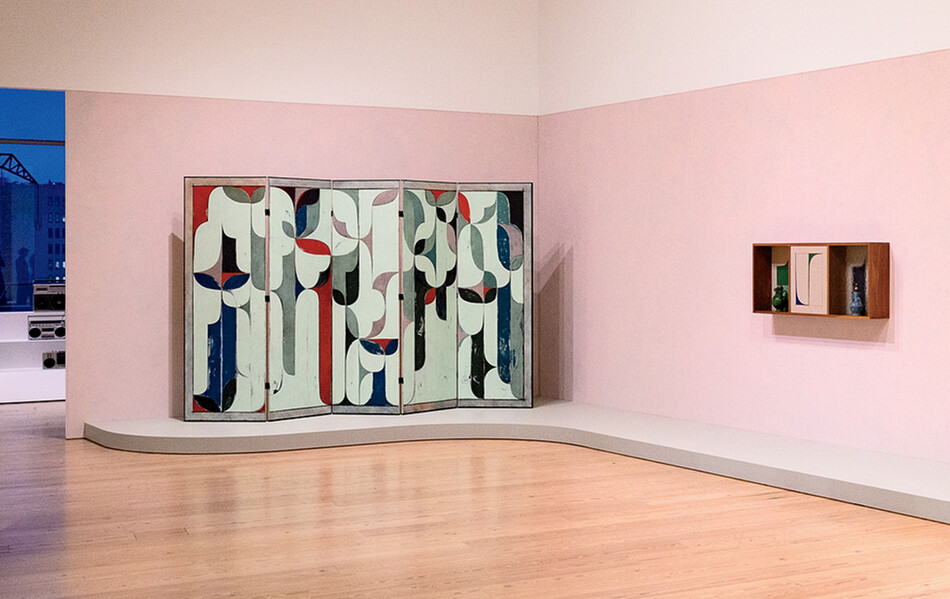
Planning the Whitney Biennial, which opened in March and lasts until August 23 at the museum’s Meatpacking District building, sent Sawyer on a deep dive into the contemporary art scene alongside fellow curator Marcela Guerrero. “We did a little more than three hundred studio visits over the course of twelve months,” says Sawyer, the museum’s Sondra Gilman Curator of Photography. Sawyer and Guerrero, the selected co-curators for the 2026 biennial, didn’t initially approach the project with a specific theme in mind, but after connecting with multiple artists, they landed on the concept of relationality. “We wanted to think more broadly about what it means to be in relation to one another, to our environment, to other species, to other countries,” Sawyer says.
The curators also broadened the scope of American art in their search. “We traveled to a lot of places and met with a lot of artists from countries or regions where there has been US military intervention,” says Sawyer. The exhibition features work by Japanese photographer Mao Ishikawa, who was born in Okinawa during the US occupation after World War II, and Berlin-based Afghan artist Aziz Hazara, who makes art using objects left by the US military after its 2021 Afghanistan withdrawal.
The biennial features a total of fifty-six individual artists, duos, and collectives — including Columbia alumni Kamrooz Aram ’03SOA, an Iranian American artist whose work recalls Middle Eastern decorative art; Ten Izu ’14CC, a member of the multimedia collective CFGNY; and Michelle Lopez ’92BC, who is known for her provocative installations made of industrial material — and spans genres from sculpture to immersive soundscape. “We were particularly drawn to artists who have atmospheric installations,” says Sawyer.
Originally from Iowa, Sawyer came to Columbia in 2006 for graduate school, eventually completing his PhD in art history with a focus on American art. “Columbia’s proximity to major institutions and the gallery scene allowed me to participate in the art world in ways that I wouldn’t have been able to outside of New York City,” he says. Since coming to the Whitney from the Brooklyn Museum in 2023, Sawyer has planned exhibitions and public programs, overseen photography acquisitions, served on the museum’s replication committee, and kept an eye out for emerging artists.
Though planning the biennial required digging into a range of artistic media, Sawyer’s primary mandate at the Whitney is photography in its many forms, whether aesthetic, conceptual, or commercial. “Photography circulates in so many different contexts, from journalism and fashion in magazines to more institutional uses like science and historical surveys,” he says. “It’s also a contested medium, especially today with issues around AI and the generation of fake images. There’s a long history of debate around photography and its relationship to reality. I’ve always been drawn to those questions.”