Artificial intelligence is now used for everything from coding to customer service. Martina Guzmán ’08JRN, a Detroit-based independent journalist who covers immigrant communities, has devised yet another helpful purpose: monitoring disinformation and conspiracy theories blasted over foreign-language radio.
Verdad (Spanish for “truth”), a free app Guzmán founded in 2024, uses AI to scour dozens of radio stations — most of them Spanish-language broadcasters in the US — twenty-four hours a day, recording and transcribing segments that may contain false or misleading messaging around vaccines, immigration, foreign conflicts, and other hot topics.
“The problem of disinformation on Spanish radio has been an absolute blind spot for journalists,” says Guzmán, who is also the founder and director of the Race and Justice Reporting Initiative at Wayne State University Law School’s Damon J. Keith Center for Civil Rights. “People underestimate radio’s impact among Latinos. It’s how many of them get basic information, how they hear music from their home countries, and how they connect culturally to the greater diaspora. It informs how they look at issues and how they vote.”
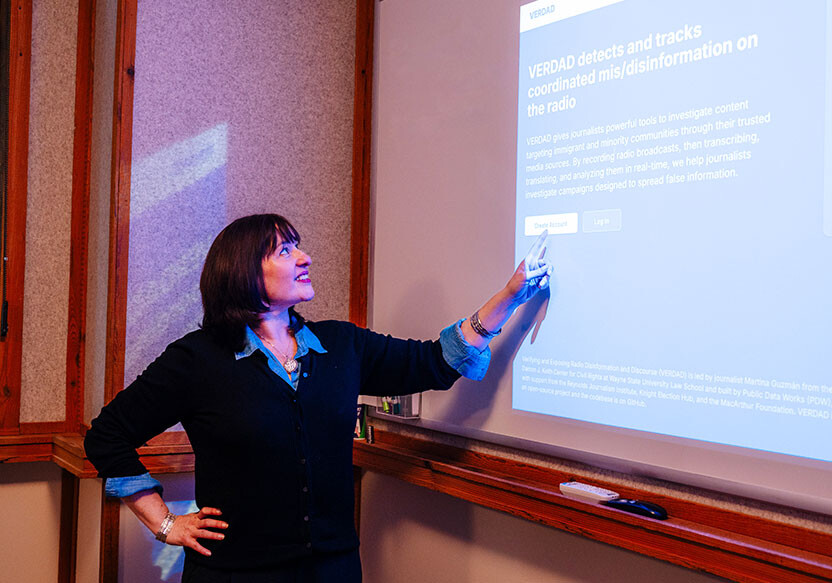
Aimed primarily at investigative journalists and researchers studying the spread of disinformation, Verdad automatically translates broadcasts into English and allows users to filter past radio segments by station, region, language, subject, and right-wing or left-wing bias. “There have been tools for monitoring social media and WhatsApp, but nothing for radio,” says Guzmán, who is working on expanding Verdad’s reach to more stations and regions while improving the tool’s accuracy and precision. “Once you hear something on the radio, it disappears immediately. There’s also a barrier for people who don’t understand that language. Verdad is meant to help reporters and academics get a clearer picture of what immigrant communities are actually hearing.”
This article appears in the Winter 2025-26 print edition of Columbia Magazine with the title "Mixed Signals."