Three days before Christmas 1984, aboard a No. 2 subway train, Bernhard Goetz, a thirty-seven-year-old white electrical engineer and Manhattanite who was obsessed with the city’s crime problem, opened fire on four Black teenagers from the Bronx. Though the teens were acting rowdy, they had not mugged or assaulted Goetz or any other rider. After Troy Canty asked him for five dollars, Goetz pulled his Smith & Wesson .38 revolver out of a quick-draw holster and shot him. He then shot Barry Allen in the back and James Ramseur in the arm and chest. Finally, Goetz shot Darrell Cabey twice, severing his spine and leaving him paralyzed from the abdomen down.
Despite this carnage, sympathy flowed primarily to the perpetrator. The Daily News called the subway shooter “a big-city folk hero, a living legend with a list of names that would insure him a permanent place in the city’s Crime Hall of Fame: The Avenging Angel, the Death Wish Gunman, the Subway Vigilante,” and rival rag the New York Post was equally effusive. The tabloids were reflecting the prevailing public sentiment; the New York Police Department’s tip line was flooded with messages of support for the shooter.
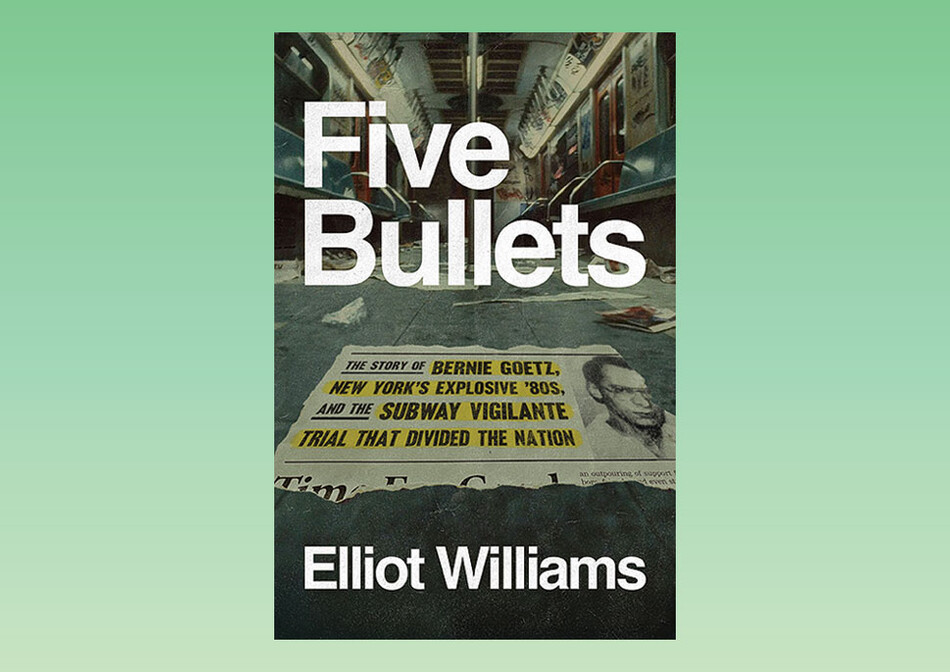
“To many, this guy wasn’t a violent criminal: he was Batman,” writes CNN legal analyst Elliot Williams ’02JRN, ’02LAW in his fascinating new book Five Bullets, an examination of the shocking incident and the divisive trial that followed.
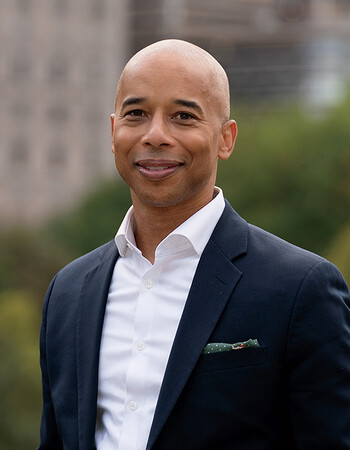
Williams, who was born in Brooklyn to Jamaican immigrant parents in the 1970s and who recalls learning about the “subway vigilante” on the nightly news, makes sense of how Goetz became a cause célèbre by contextualizing the case. In the 1980s, the city was confronting an ever-rising violent-crime rate and austerity budgets that hampered the police and the courts. It was a “powder keg,” Williams writes, primed for “the right person — who was most likely a white man — to be embraced for stepping outside the law.” Five Bullets explores how a wide variety of organizations and figures — many still active today — used the case to further their own goals. The National Rifle Association paid $20,000 toward Goetz’s criminal-defense fund, using the case to push back against New York’s concealed-carry laws, which Goetz had violated. Curtis Sliwa, founder of the civilian patrol group the Guardian Angels (and 2025 mayoral candidate), embodied Goetz’s worldview “that leaders had failed to make the world safe and that it fell to individuals to step in,” Williams writes; they provided security at the trial. For preacher and civil-rights activist Al Sharpton, who argued that the reaction to the case would have been completely different had the victims been white and the shooter Black, “the precedent to me was more important than the individuals involved,” as he told Williams. “A kid might have been rowdy on a train and said something threatening. And therefore you got the right to blow their brains out?”
By meticulously reconstructing the shooting and trial through court transcripts, archival newspaper reports, and interviews with key figures — including Goetz himself — Williams lays bare how the case became a “Rorschach test about what safety meant in America and who even has a right to feel safe in the first place.” He’s at his best when weaving commentary on the criminal legal system into his replay of the trial and offering insight into how key decisions by the prosecutor, defense lawyers, judge, and jury shaped the ultimate verdict: Goetz was acquitted on all counts related to violent crime and convicted only of third-degree criminal possession of a weapon.
Five Bullets presents a deeply researched, richly detailed portrait of how a racially divided city came to excuse potentially deadly white-on-Black violence. It also offers an opportunity to reflect on what has and has not changed in New York City in the past forty-plus years. Though the city’s rate of violent crime has dropped precipitously — for instance, there were 1,459 homicides in the city in 1984 and 377 in 2024 — the Goetz case remains eerily relevant. We see its echoes in the 2023 subway killing of Jordan Neely, a Black man experiencing homelessness and mental illness, by Daniel Penny, a white man who was ultimately acquitted of criminally negligent homicide. As Williams writes, “We are still afraid, still haunted by America’s racist past (and present and future), and still very quick to kill strangers.”