Spring/Summer 2026 Issue Feedback
A Fine Edition
I am writing to express my appreciation for the Spring/Summer 2026 issue of the magazine. The entire edition — from the Feedback section and College Walk to Paul Hond’s fascinating article on A’Lelia Bundles — truly recaptured the sense of curiosity and academic vibrancy I felt as a student.
—Debra (Epstein) Brooks ’82SW
Guns and Schools
In response to: What Will It Take to Prevent School Shootings?
The article “Schools Under Siege” (Spring/Summer 2026) is outstanding, the best thing I’ve read about our country’s violent DNA. I can think of only two times in the past few months I have heard the words “gun control” mentioned on TV. Instead, the response is: Buy more guns.
—Judy Krakauer ’52SW
David Craig has provided an evenhanded, thoughtful commentary on the intersection of research and policy on school violence. Like other alums, I am hopeful that this collaboration of the fields of public health, education, and psychiatry will create space in our polarized political landscape to explore solutions.
Expanding that collaboration to include the study of vulnerable populations through the School of Social Work could provide an even broader context to our perspective on school violence.
—Nancy Brown Janus ’98SW
I was disgusted that David Craig ignored two present examples advocating for armed guards and teachers in our schools. The first is here in the US: Many African American church parishioners are now armed, committed to not permitting another Charleston massacre.
And we don’t hear of school shootings or bus shootings anymore in Israel. There’s a good reason for that. Why don’t we learn from this example, and implement those security components that are consistent with our open society?
The missing component for our path forward is to have armed teachers who volunteer for the role and receive extensive training in situation management and neutralization of active shooters.
Obviously, prevention, stricter gun laws, education, mental-health improvements, recognizing threats, and empowering local authorities to confiscate weapons from those who exhibit precursor behavior (indicating potential for future harm to others) are all issues that require renewed commitment and funding.
But citing Australian and Connecticut citizens’ opinions — and ignoring the example of Israel — is poor research, and clearly and plainly biased.
—Gary Lehman ’76CC, ’80BUS
LCB Speaks
In response to: A Response to Authoritarian Attacks on Universities
Former Columbia president Lee Bollinger gave an interesting interview (“Defending the Fifth Branch,” Spring/Summer 2026) with many good points. But his message ended on a pessimistic note that surprised me. He thinks the president can destroy our democracy if he really wants to. I strongly disagree.
President Trump does badly want to destroy our democracy. And his reasons are perfectly understandable: He has indictments and civil suits hanging over his head when he leaves office.
What can Mr. Trump do to prevent this Armageddon for himself? The answer is a lot but maybe not enough. He can get a pardon from his successor for the federal crimes. He can probably prevent a conviction in the Senate, if not an impeachment in the House. What he cannot do, in my opinion, is get all the states’ attorneys to drop their civil and criminal cases against him.
Mr. Bollinger is a world-class lawyer. It surprises me that he has so little faith in the courts and in the many lawyers in Congress.
—Robert Leslie Fisher ’76GSAS
Lee Bollinger is right that American universities need a NATO-style charter. The harder question is how to build one that works. As a Columbia engineer who now runs capital projects at a peer research university, I read his proposal the way I read any plan: The diagnosis is correct; implementation of such a compact is where the proposal lives or dies.
The hardest part is defining the trigger. A workable charter would have to name the narrow class of government actions that count: conditioning grants based on viewpoints, retaliatory visa actions against named faculty, or accreditation pressure tied to curriculum.
The issue is not whether universities should be above criticism. They should not be. The issue is whether criticism becomes coercion, and whether each institution has to discover that distinction alone.
—Jeremy Edmunds ’09SEAS
Viva Alston
In response to: 5 Alumni Museum Curators Shaping the Art World Today
Your piece about curator Denise Murrell of the Met (“The Art of Curation,” Spring/Summer 2026) mentioned that she is instrumental in helping the museum acquire the art of African American painters. The article references Charles Alston as one of those artists but fails to mention that he was a Columbia alum himself: Columbia College 1929, Teachers College 1931.
—Vivian Ducat ’07GSAPP
A Fine Editor
In response to: Jennifer Crewe Retires from Columbia University Press
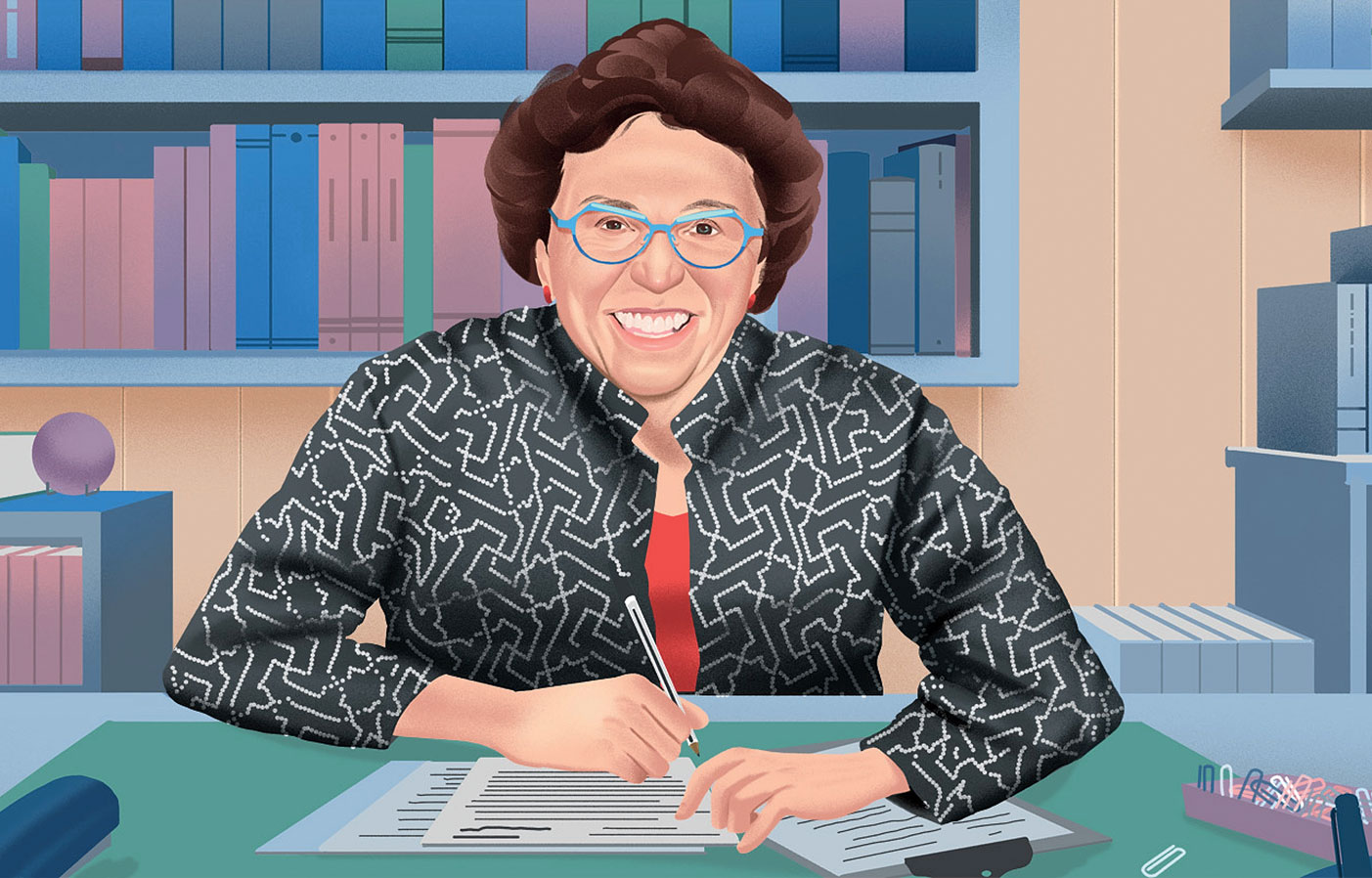
By happenstance, the day I read the encomia about Jennifer Crewe (“The Editor Turns the Page,” College Walk, Spring/Summer 2026), I received CUP’s royalty statement for Theory’s Empire, which Daphne Patai and I published in 2005. That our book is still in print highlights Jennifer’s openness, patience, and sagacity in supporting an extensive volume on the excesses of literary theory at the turn of the century. The eighteen reviews, its being a Book of the Year for the Times Literary Supplement and the subject of articles and a collection of essays, and its continuing polemical presence owe much more to Jennifer than to us.
—Will H. Corral ’84GSAS
Seeing Red
In response to: The New Red Scare
As a former Marxist (including during my time at Columbia), I was not surprised to see the university celebrate a talk called “Confronting McCarthyism” (“The New Red Scare,” College Walk, Spring/Summer 2026). Columbia has been a hotbed of leftism since at least the 1930s. It would be too much to expect the magazine to concede that there really were Communists in the American government in the 1940s and 1950s, that Senator McCarthy’s accusations were based on FBI investigations, and that Communist infiltration had genuine, negative effects on American foreign policy.
—Brad Tupi ’75CC, ’78LAW
Interesting that Michael Meeropol has finally accepted that his parents, Julius and Ethel Rosenberg, were Soviet spies.
Julius Rosenberg’s code name in the spy network was LIBERAL, apparently a joking reference to his starry-eyed view of the Soviet Union, which he had of course never visited. But I wonder if his designation wasn’t also a warning to his spymasters that if he and Ethel ever learned the truth about Stalin and the Soviet Union, they would likely defect to the West.
Sadly, the Rosenbergs’ eyes were never opened. When the US government sentenced them to death, hoping to force them to reveal their spy network, they remained faithful Stalinists to the end, following instructions to assert their innocence and give the USSR a propaganda victory.
—Taras Wolansky ’74CC
“The New Red Scare” evoked bitter memories. As a “red diaper baby,” I paid a price. An American Legion medal that I earned on merit in 1951 was rescinded by an assistant principal who claimed that a son of radical parents did not deserve this award. Two years later, I joined a group of Camp Kinderland alums to protest the electrocution of Julius and Ethel Rosenberg. In 1954 during my freshman year at Columbia College, my left-leaning classmates were afraid to sign petitions or engage in political activity, fearing that it might endanger their future. Now the Red Scare has resurfaced with Donald Trump and his legion of lackeys and admirers. This timely article is a painful reminder of what author Lillian Hellman correctly called “scoundrel time,” coupled with a renewed need for collective action to counter this menace.
—Joseph Dorinson ’58CC
Name Change
In response to: The Columbia-Educated Lawyer Who Helped Write the Declaration of Independence
I enjoyed reading Paul Hond’s article on Robert Livingston (“His Signature Achievement,” Backstory, Spring/-Summer 2026). Mr. Hond mentions that Livingston Hall was renamed Wallach Hall in 1969. I attended Columbia from 1980 to 1984. The renovation of Livingston Hall was completed during fall semester 1981, at which time the University changed its name to Wallach Hall.
—Leon Paley ’84SEAS