In many a classic Disney movie, there’s a princess and there’s an obstacle — something seemingly insurmountable that she’ll have to overcome to get the life she wants. For Cinderella and Snow White, it’s a wicked stepmother; for Sleeping Beauty, an evil fairy. Prince Charming doesn’t usually come easy.
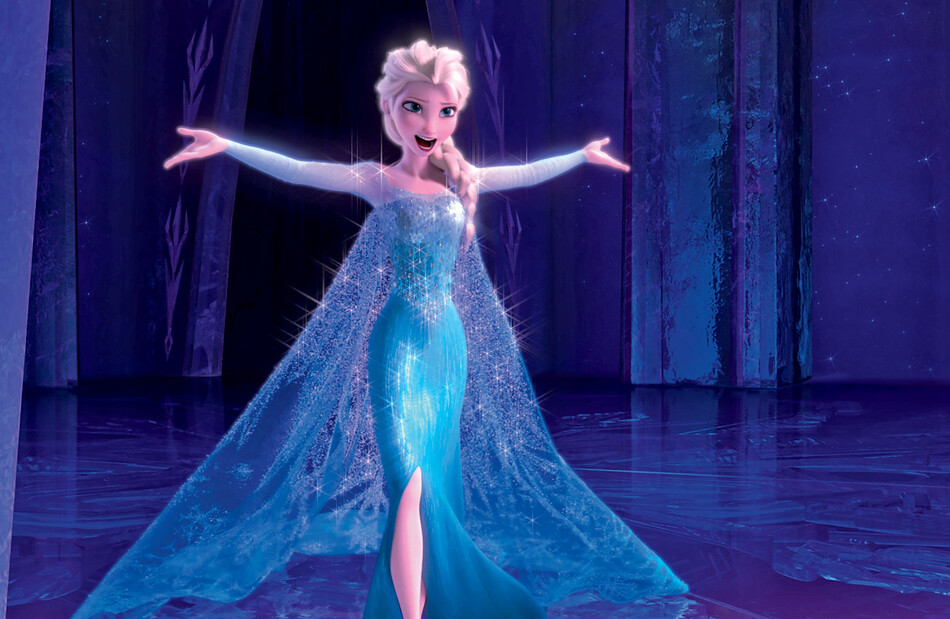
Frozen, the 2013 mega-blockbuster (at its peak, the fifth-highest-grossing film of all time), is in some ways no different. Queen Elsa of Arendelle has spent much of her life in isolation — first locked in her bedroom, then cloistered in an ice palace on top of a snowy mountain — away from the people she loves and unable to rule her kingdom. But Elsa’s exile is self-imposed. Born with magical powers that can turn things to snow or ice, Elsa doesn’t know how to control her gift and believes she has to suppress it to avoid hurting the people around her. Mired in insecurity, she sequesters herself, becoming her own worst enemy.
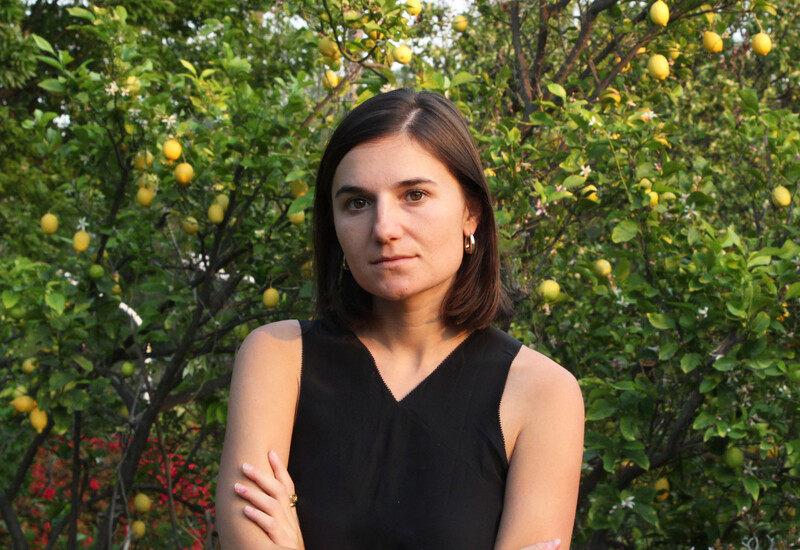
It’s hard to see how Jennifer Lee ’05SOA, the enormously successful writer and codirector of Frozen and its 2019 sequel Frozen 2, has anything in common with her now famous heroine. A visionary and revered filmmaker, Lee has been defined by the glass ceilings she has shattered — she won the Academy Award for best animated feature for Frozen and was the first female director of a Walt Disney Animation Studios feature film and the first female director of a film that earned more than a billion dollars at the box office. She’s the creative force behind Disney hits like Wreck-It Ralph, Zootopia, and A Wrinkle in Time. And she’s also the first woman to lead Disney Animation Studios, serving as chief creative officer from 2018 to 2024.
But like Elsa, Lee was almost stymied by self-doubt. Ostracized as a kid for her wild imagination, it took her a long time to realize that what she saw as a flaw was actually a superpower. Finding a way to harness it was what led her to greatness.
Lee grew up in a big Irish-Italian family in Barrington, Rhode Island, a picturesque New England town just south of Providence. Her neighborhood was close-knit — “I feel like I knew someone on every block” — but Lee was a dreamy kid, often lost in her own world.
“They didn’t test for things like ADHD back then, but I had every marker of it,” she says. “I was always reading or drawing. I lived in my head.”
When Lee was a young child, she was given a Cinderella doll (“I know this will sound almost implausible now,” Lee says, “but I was a huge Disney fan”), and she began to make up elaborate stories about it. Other favorite gifts were an easel and paints and a Disney how-to-draw book, which Lee used to illustrate her stories. School was tough for her; she had a hard time focusing and went through a period of being severely bullied.
“I was a little bit of a mess, in hand-me-down clothes, with my hair all over the place, always daydreaming,” she says. “It made me an easy target.”
But Lee says the torment only intensified her imagination. Lying in bed at night, she’d burrow into her fantasy life, creating epic adventures where wrongs were righted and bullies avenged, where good things happened to good people and where she had control.
“Even then, I was focused on the underdog,” she says. “It was important to me that there was justice and fairness in my stories.”
Lee idolized her older sister, Amy, a responsible high achiever who sometimes helped motivate her whirligig of a sibling — a dynamic that might sound familiar to fans of the Frozen-verse.
“She was the Elsa to my Anna,” Lee confirms.
After graduating from high school, Lee followed Amy to the University of New Hampshire, where she majored in English. But her college years were also marred by tragedy. When Lee was just twenty, her boyfriend died in a boating accident. The loss was incomprehensible, but Lee says it gave her the courage to make bolder choices in her life.
“When you wake up so young with such loss, there is no doubt, only grief,” Lee said in a 2014 keynote speech at UNH’s commencement. “In that grief, you see clearly. The world drips with color. Death exaggerates the significance of your life. And for a brief moment, you know better than to waste a single second doubting.”
For Lee, that meant making the leap after graduation to again follow her sister — this time to New York City, a place she had always loved. The two shared an apartment and spent their free time enjoying all that the city had to offer.
“I went to every museum, every gallery. I was hanging out with performance artists and bands in Williamsburg,” she says. “The way the city just takes over and gets you into things you never would have imagined … Moving to New York was the best decision I could have made at that point.”
Lee landed a job at Random House, as a graphic designer for the audiobook division. Being in the publishing world gave her nearly unlimited access to books, which she says she hoarded and read voraciously, and which made her aware of the kinds of careers she might flourish in.
“I think as a kid, when I was making up those stories in my head, I had no sense that this was something I could actually do for a living,” Lee says. “Working in publishing made it feel more concrete.”
During a meeting at Random House, Lee overheard a conversation between two colleagues that caught her attention. “It was nothing earth-shattering,” she says. “The meeting had sort of turned away from business into life, and there was something about the nuance of these two colleagues opening up about their families that stuck with me.” She wrote down the conversation and then kept going, making it into a scene. It was the first screenwriting she ever did.
She enrolled in a screenwriting class at NYU, where she wrote her first complete script, and then started thinking about full-time film programs. Right away, Columbia stood out. She didn’t know yet whether she wanted to focus on writing or direction, and the Columbia program would give her experience in both, as well as in producing. But Lee, the scrappy kid from Rhode Island who used to daydream through class, didn’t think she had any business at an Ivy League school.
“Never in a million years did I think I was going to get in,” says Lee, who was honored this past November at the School of the Arts’ sixtieth-anniversary gala. “Getting accepted to Columbia was my first big moment of validation — the first accomplishment that really aligned with this deep passion that I had inside of me. I remember getting in and distinctly feeling like my life was going to change.”
At Columbia, Lee experimented with different genres, though animation didn’t emerge then as a serious possibility. “It wasn’t because I didn’t love it,” Lee says. “I’ve been pretty obsessed with animation since I was a kid. It just ended up not being a focus during film school.” Instead what Lee got was a master class in the fundamentals of filmmaking — what makes any movie great, whether it’s a supernatural romance (yes, that was one of her Columbia projects) or a period drama.
“The first thing you study is character. You learn that insecure characters, characters that don’t think they’re good enough, aren’t very interesting. They’re not inspiring or hopeful, and nobody wants to watch them,” Lee said in her speech at UNH. “The only characters that are worse are perfect characters. They are lifeless and generic and boring, and they never feel authentic. The best characters, the ones that we want to remember, are flawed and one of a kind.”
Lee says that she would not be the filmmaker she is today without the instruction and mentorship of her Columbia professors. Three that stood out were Eric Mendelsohn, for directing, and Malia Scotch Marmo ’88SOA and Andy Bienen ’96SOA, for screenwriting. Mendelsohn, she says, gave her a “perfect, bold, really thoughtful introduction to direction.” On the writing side, Scotch Marmo taught her how to build narrative structure. (“Even now I see so many promising screenwriters who don’t know how to end a film,” Lee says. “I never have that problem, because Malia taught me.”) And Bienen was instrumental in helping her learn how to effectively revise; Lee appreciated his rewriting class so much that she petitioned to take it a second time.
“The greatest revelation from his class was to never be precious about your work,” Lee says. “Which has been enormously freeing. I used to be afraid of revision; now I can’t wait until I’m done with a draft so that I can rewrite it. And that’s what lets me take creative leaps.”
Bienen remembers Lee as being warm, upbeat, and truly excited to learn.
“When I look back on my most successful students, they all have one thing in common,” he says. “They were eager to make themselves better, to make their craft better. They volunteered for every opportunity to do so. And Jenn is no exception to that.”
Aside from the essential work in the classroom, Lee says that she tried to take advantage of all that Columbia had to offer. She was an older student, in her early thirties — in fact, her daughter, Agatha, was born during her second year at Columbia — and she says that perspective made her value the time and resources in a way she might not have if she had come straight from undergrad.
“When I look back at my time at Columbia, the best thing for me was that I was just working constantly, getting ideas constantly,” she says. “I could completely play, try all sorts of different things. I could make mistakes and ask the hard questions without any real-world consequences.”
In 2004, Lee won the Ezra Litwak Award for Distinction in Screenwriting at the Columbia University Film Festival for her first feature screenplay, Hinged on Stars, about a boy who loses his parents. She says that win was pivotal to her career: it helped her to secure an agent, which in turn led to production companies optioning two of her early screenplays, The Way Between in 2006 and The Roundup in 2008.
Columbia also introduced Lee to someone who would become a crucial figure in her life and career: Phil Johnston ’04SOA, another older student, whom she met on the first day of orientation. “I think we both just came to Columbia with a little more life experience than our classmates,” Johnston says. “We clicked immediately.”
Lee and Johnston got in the habit of meeting regularly to read each other’s work, which Lee says was a “great collaborative experience.” While they shared similar taste and sensibilities, Johnston says, they had different styles; his work tended to be more comedic, while Lee’s was more dramatic.
“She’s just really smart and thoughtful and had, even then, an acute understanding of complex characters,” Johnston says. “She was interested in so many things — dreams, metaphysics, actual physics. I could go on forever.”
Johnston also helped Lee finally tackle some of her deep insecurities.
“I think every artist wrestles with self-doubt, especially when you put so much of yourself in your work,” he says. “She wasn’t sure if what she was doing was good or interesting. And I think she needed someone from the outside to tell her that it absolutely was.”
After the two graduated, Lee cobbled together several freelance projects, while Johnston wrote the 2011 comedy Cedar Rapids, starring Ed Helms and John C. Reilly. From there, Johnston moved to Disney to work on Wreck-It Ralph, an animated comedy about an arcade-game villain with superhero dreams. Johnston worked on the film for about a year and a half before he had to leave to start another job. He recommended that Lee join the team.
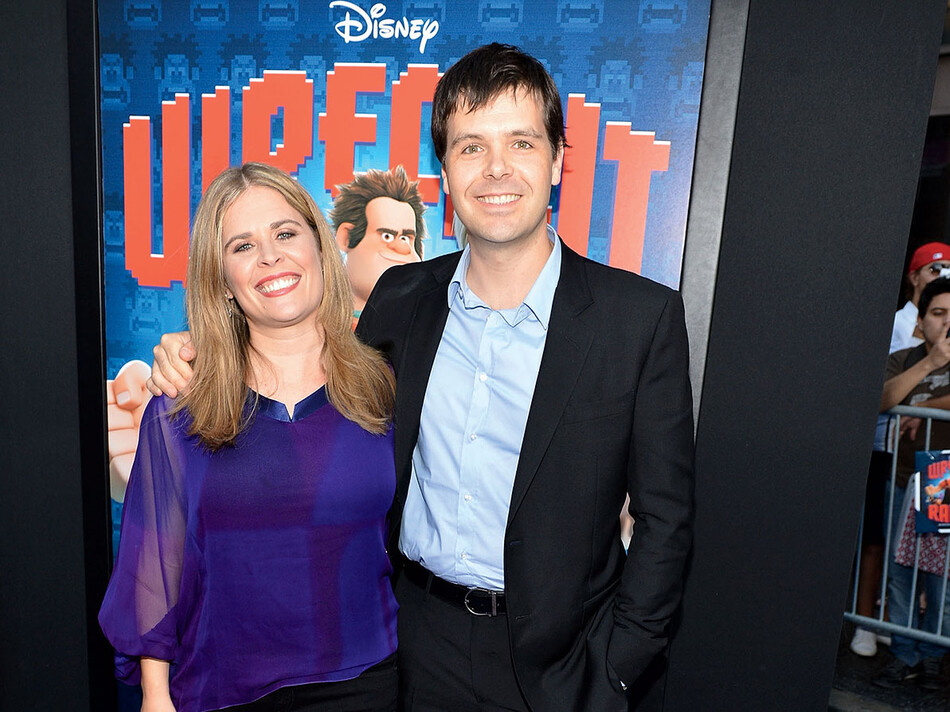
“We knew we needed another writer to come on, and honestly Jenn was the only option for me,” Johnston says. “She’s so smart with structure, and I knew that she would be able to handle the pressure and manage all of the big personalities in the room.”
Lee came to Disney for what was supposed to be an eight-week assignment. But it was extended to full-time and ultimately earned her a cowriting credit on the movie — which turned out to be a critical and commercial success, earning Oscar and Golden Globe nominations for best animated feature.
After Wreck-It Ralph, Lee started writing for Moana, another Disney animated project in development. But then she was approached by another team that had been working to adapt Hans Christian Andersen’s 1844 fairy tale “The Snow Queen.” Lee watched an early version and wasn’t convinced.
She initially turned the project down because she was excited about Moana. But the team persuaded her to spend a week with them in the writers’ room. By the end of that time, she was sold.
Lee is credited with changing the direction of Frozen in ways that surely contributed to its success. At its inception, it was much more of an action-adventure film, and she wanted to go more musical, with more comedic elements. “You can’t just do a straightforward story anymore,” she says. “People get bored. You have to add layers to it. It has to be evocative.”
Twelve years, one sequel, and one Broadway musical later, the world that Lee created and her complex, beautifully flawed characters live on in a way that most children’s movies don’t. Open the door to any preschool classroom today and you’re bound to hear “Let It Go” blaring from the speakers and see kids in powder-blue Elsa dresses sprawled on the rug. Trick-or-treating routes this past fall were nearly as littered with goofy Olaf snowman suits as they were a decade ago. What is it that made Frozen resonate so deeply?
“No matter how hard I try to answer that, I can’t,” Lee says. Still, she concedes that one reason may be that she and her colleagues were committed to forging their own path, to “flipping tropes” of the typical princess movie.
“There’s an archetype of the Disney princess that doesn’t do anything,” Lee says. “She just waits around for something to happen to her. Frozen was one of the first movies that really put the princesses at the center of the action.”
Another nontraditional element is that rather than starting with an ordinary girl who wants to become a princess, we learn from Elsa and Anna, born royal but orphaned at a young age, that inheriting a throne can be a mixed blessing. “I wanted it to be about how you deal with your responsibilities in life,” Lee says. “Being royalty didn’t just give Elsa and Anna luxuries, it gave them responsibilities.”
“Frozen was one of the first movies that really put the princesses at the center of the action.”
And while many classic Disney movies are love stories, Lee said she wasn’t interested in the classic prince-meets-princess tale. There is romance in Frozen, but as in life, it’s complicated: What Anna thinks is love at first sight turns out to be anything but. “Elsa is crippled by fear,” Lee says. “But Anna is held back by a love that she doesn’t understand.” As in many fairy tales, true love prevails and restores the kingdom to glory. But it isn’t romantic love that breaks Elsa’s spell — it’s the love between the two sisters.
“That was our true north,” Lee says. “We really wanted to see another kind of love represented.”
It’s unusual in animated films to start out as a writer and become a director — most directors start out as animators. But after writing Frozen, Lee was asked to codirect it (alongside Chris Buck), becoming the first woman ever to direct a Disney animated feature film. Lee says that she thinks her unusual combination of experience contributed to that decision; she didn’t come from a strict screenwriting background. And the collaborative approach, she says, is consistent with the Disney ethos. “When Walt Disney worked, the story artist would be drawing simultaneously. They would craft it together.”
In addition to the monumentally successful Frozen and its 2019 sequel Frozen 2 (which she also codirected), Lee has contributed to many of the other successful Disney films of the past decade. She wrote for Zootopia as well as Moana, and she shared screenwriting credit for the 2018 adaptation of Madeleine L’Engle’s A Wrinkle in Time.
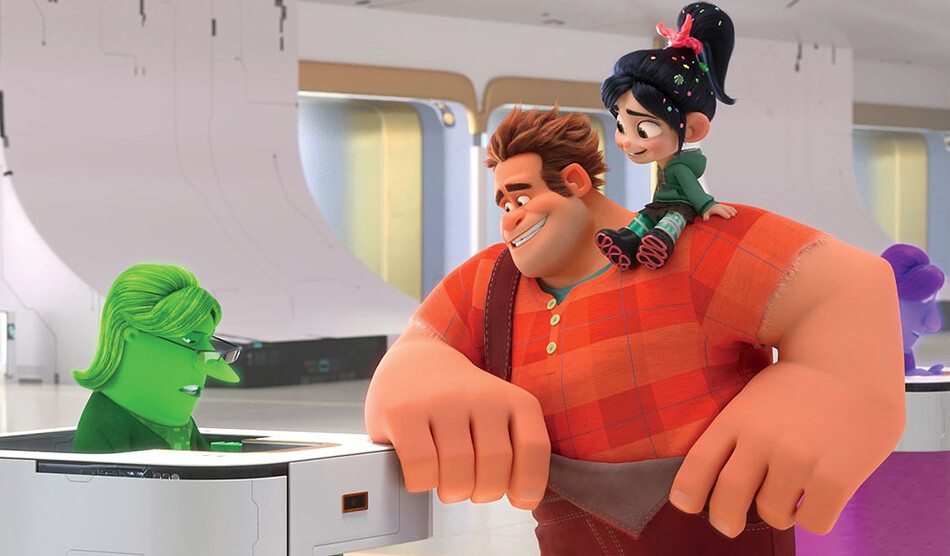
In 2018, Lee broke another barrier when she took over as Disney Animation’s chief creative officer, becoming the first woman to hold that role. In her six years as CCO, she oversaw the production of Ralph Breaks the Internet (the sequel to Wreck-It Ralph), Raya and the Last Dragon, Encanto, Strange World, Wish (which she also cowrote), and Moana 2. Lee says that while she had never envisioned herself in the top role, she’s enormously grateful for the time she spent there.
“You’re in the room every day, helping others bring their vision forward,” she says. “You have a hand in every project. You find new patterns, new tools. Without a doubt, it made me a better filmmaker.”
She’s proud of the work the studio did during her tenure, particularly the difficult pandemic years. But in time she found herself itching to get back to the hands-on work of moviemaking. When the studio started to plan for two more Frozen movies, Lee “started to think about where I fit best in the equation.” In 2024, she stepped down as CCO to concentrate on Frozen 3 and Frozen 4.
“What I’ve heard people say is that I’m smiling a lot,” she says about getting back to writing.
Lee isn’t sure what the post-Frozen future holds for her, aside from a long vacation. She’s committed to spending some of her time and resources giving back — helping open doors for young artists like the one she once was. To that end, she has recently decided to establish an endowed fellowship fund at the School of the Arts that will make it possible for film students to receive the same kind of financial-aid package that allowed her to attend Columbia.
But Lee also hopes to have time to devote to her own insatiable curiosity — a value that she says Columbia nurtured. “I love the concept of chapters of life. In my next chapter, I want to spend some time learning and absorbing something new from the world,” she says. “And if and when I write again, it will be with some of that new knowledge.”
Johnston thinks the question isn’t whether Lee will write again but what. He hopes that she will move beyond animation and tackle something totally different.
“She has so many interesting ideas and a sensibility that I feel like could make a perfect tiny indie film just as successfully as she could make the next billion-dollar franchise,” he says. “There are so many layers to her that the world hasn’t seen yet.”
Bienen agrees.
“There’s a reason why Frozen and Frozen 2 are loved all over the world, and it’s not just the great storytelling, and it’s not just the amazing songs,” he once said. “In my view — and I’m not alone — the Frozen movies are luminous films, and they express something profound and wonderful about being human. All of that luminousness and insight comes from Jenn.”
This article appears in the Winter 2025-26 print edition of Columbia Magazine with the title "Letting It Go."